
 EN
EN  English
 Español
 عربى
عربى

Product Consultation
Your email address will not be published. Required fields are marked *

A plant maintenance manager recently asked us whether to rebuild an aging 50 hp rotary screw compressor one more time or replace it. The unit had already been rebuilt twice, discharge temperature was rising, and electricity costs kept climbing. After we ran the numbers, the conclusion was straightforward: replace it with a correctly specified 50 hp air compressor. For a mid-sized plant running two shifts, 50 hp is the right power class for most production loads. But the specific design, single-stage or two-stage, oil-injected or oil-free, and the efficiency data behind the nameplate determine whether that replacement saves money or wastes it.
The "50 hp" on the nameplate refers to the motor's rated shaft power. That is an input figure, not the amount of compressed air you receive. What you pay for is free air delivery (FAD), the volume of air the compressor package produces at a stated discharge pressure. A 50 hp rotary screw compressor typically produces between 160 and 230 cfm at 100 psi, depending on configuration, airend efficiency, and operating conditions.
| Design | FAD range (cfm at 100 psi) | Specific power (kW per 100 cfm) |
|---|---|---|
| Oil-injected, single-stage | 200-230 | 17.5-19.5 |
| Oil-injected, two-stage | 205-230 | 17.0-19.0 |
| Oil-free | 160-200 | 20.0-24.0 |
Specific power is the metric to compare. It expresses how many kilowatts of input power the compressor needs to produce 100 cfm of compressed air at a reference pressure. Electricity represents 70 to 80 percent of the total lifecycle cost of a compressed air system. A difference of 1.5 kW per 100 cfm between two 50 hp machines, running 6,000 hours per year, can add up to thousands of dollars every year. When a supplier quotes a 50 hp compressor, ask for the FAD and specific power values measured according to ISO 1217, not theoretical displacement calculated from rotor geometry.
Start with a conclusion: for most 100-125 psi plant air systems, a modern single-stage oil-injected compressor is sufficient. If your process needs higher pressures, around 145-175 psi, or runs continuously at a very high duty cycle, a two-stage machine is worth the extra first cost.
A single-stage unit compresses air from atmospheric pressure to the final discharge pressure in one step. A two-stage unit compresses partway, cools the air through an intercooler, and then compresses it again. The intercooling step moves the compression process closer to the ideal isothermal curve, so less input energy is wasted as heat. In practical terms, a two-stage 50 hp compressor typically consumes 5 to 8 percent less energy and runs with a lower discharge temperature than a comparable single-stage unit at the same pressure.
The trade-off is purchase price and mechanical complexity. Two-stage rotary screws carry a higher initial cost. If your plant drives pneumatic tools, CNC machines, and assembly lines at 100-125 psi, the single-stage layout remains the most cost-effective option. If your compressor room runs more than 4,000 hours per year and your pressure requirement is closer to 150 psi, the energy savings of a two-stage design usually recover the price premium within two to three years. In larger sizes, two-stage machines are the standard for continuous heavy-duty service.
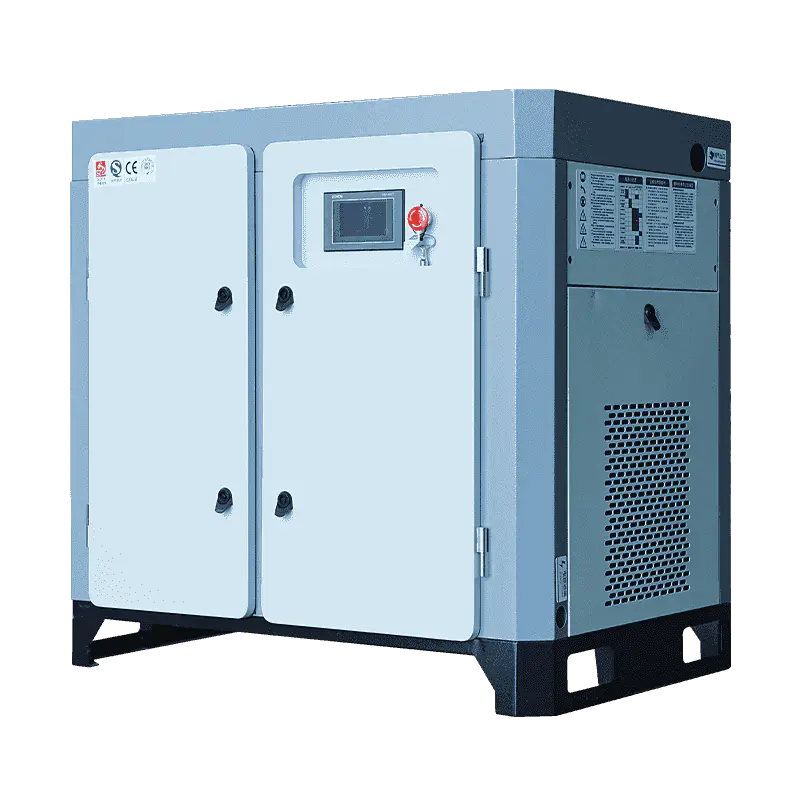
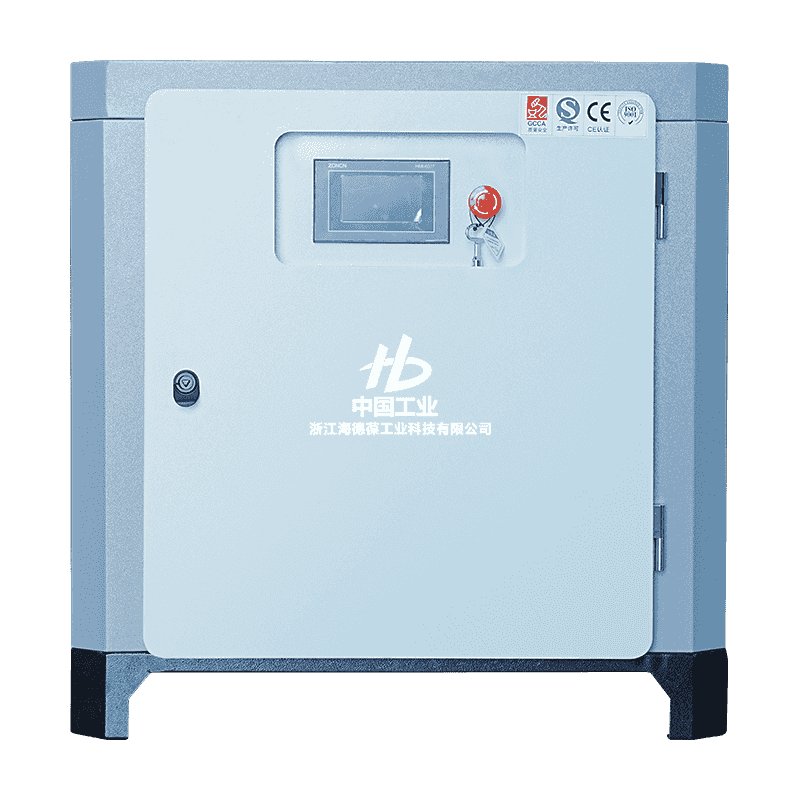
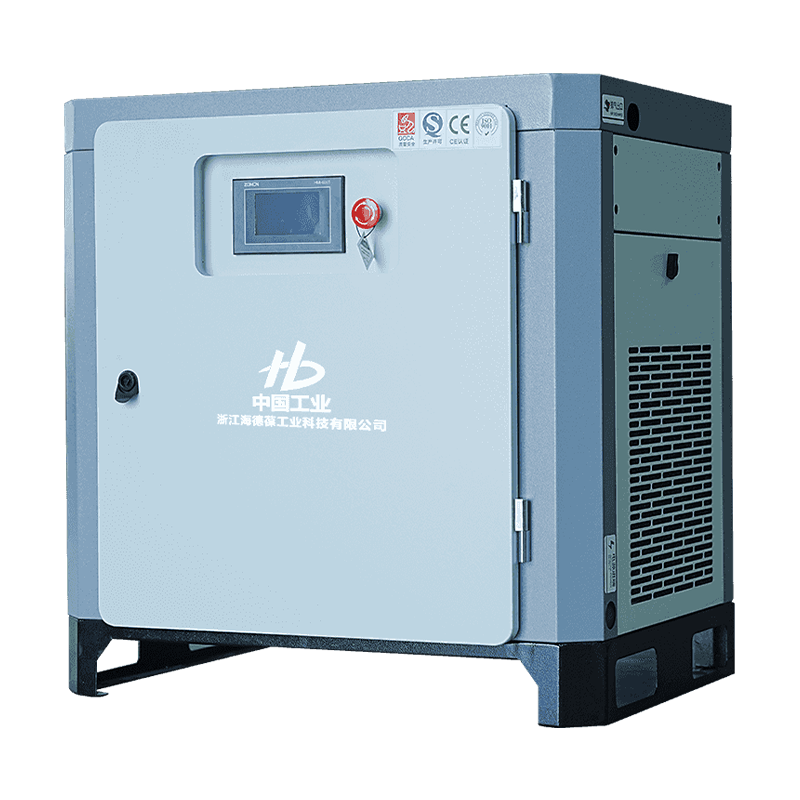
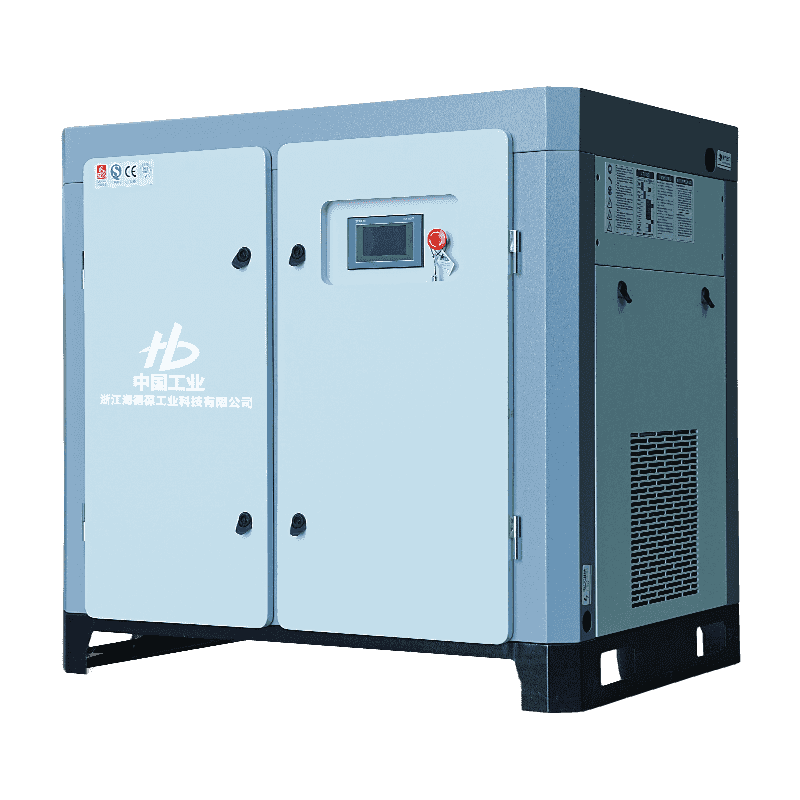
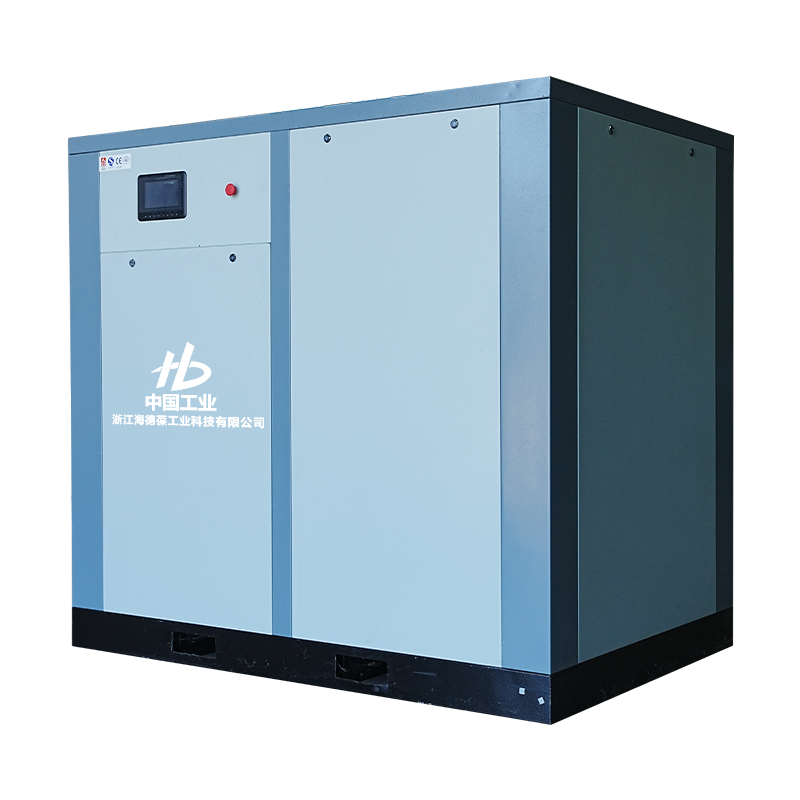
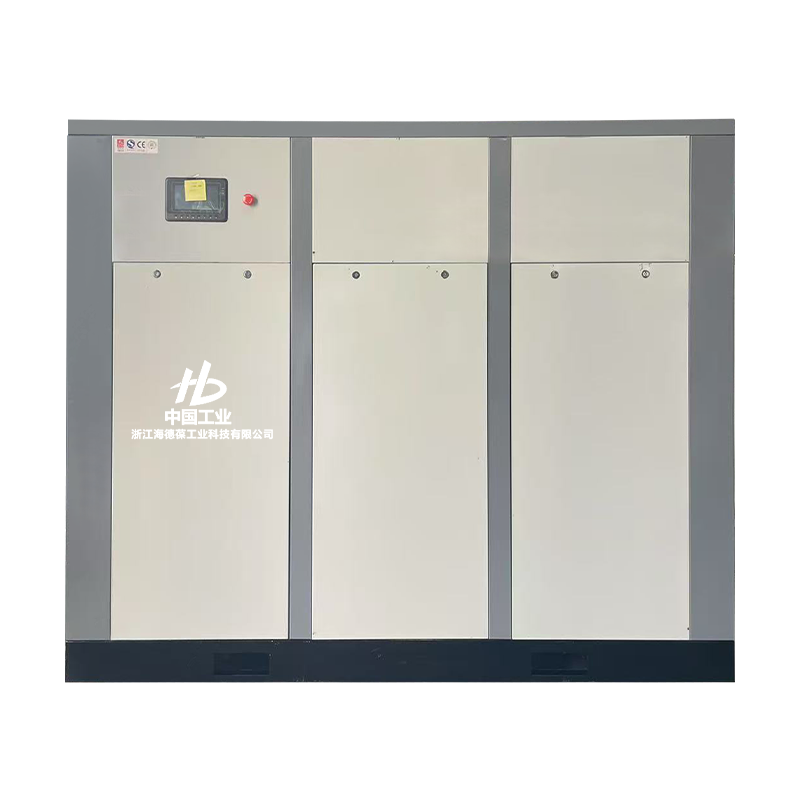
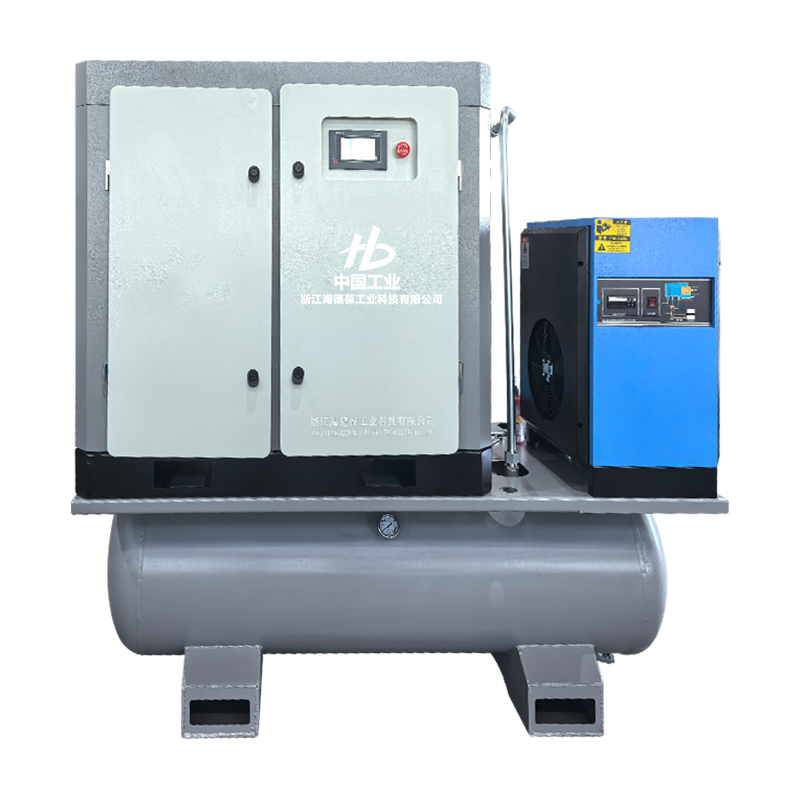
 50HP Oil-Injected Twin Screw Single-Stage Compressor with PM MotorThis 50 hp micro-oil unit is the benchmark for plants operating at 100-125 psi. Its permanent magnet motor and compact design suit general industrial use, offering a cost-effective solution for pneumatic tools and assembly lines.View Product →
For the majority of plants at this power level, a single-stage 50 hp micro-oil unit is the reference configuration to evaluate. It covers the widest range of general industrial applications with the lowest maintenance complexity.
Unless your process is sensitive to oil contamination, choose an oil-injected machine. That is the general rule, and the exceptions come from the application. Oil-injected compressors use oil to seal, lubricate, and cool the airend. A well-maintained unit with a high-efficiency separator leaves about 2 to 3 ppm of residual oil carryover in the discharged air. That level is harmless for pneumatic tools, general fabrication, sandblasting, and most metalworking operations.
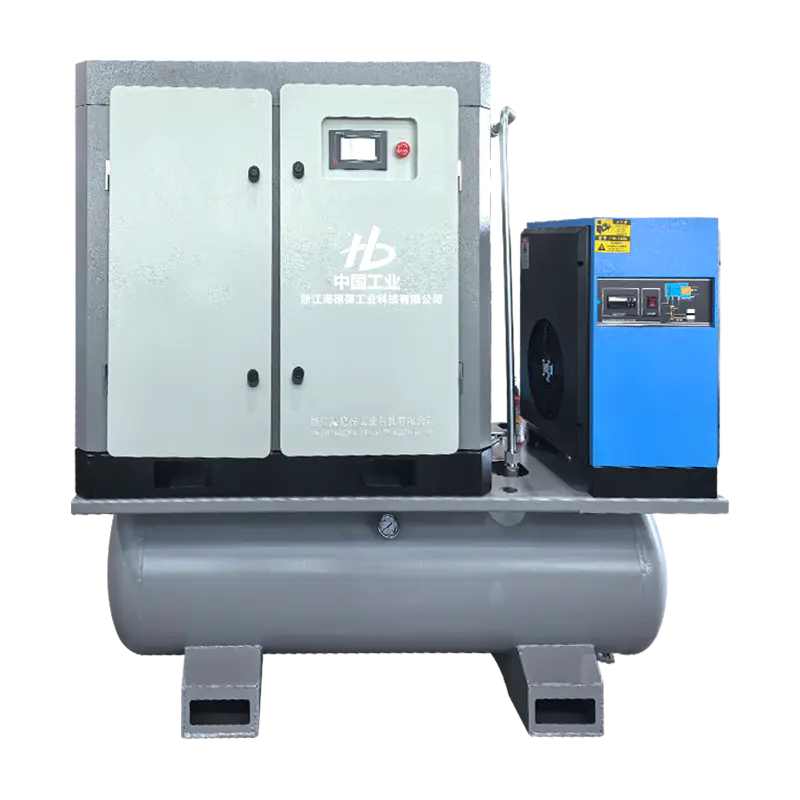
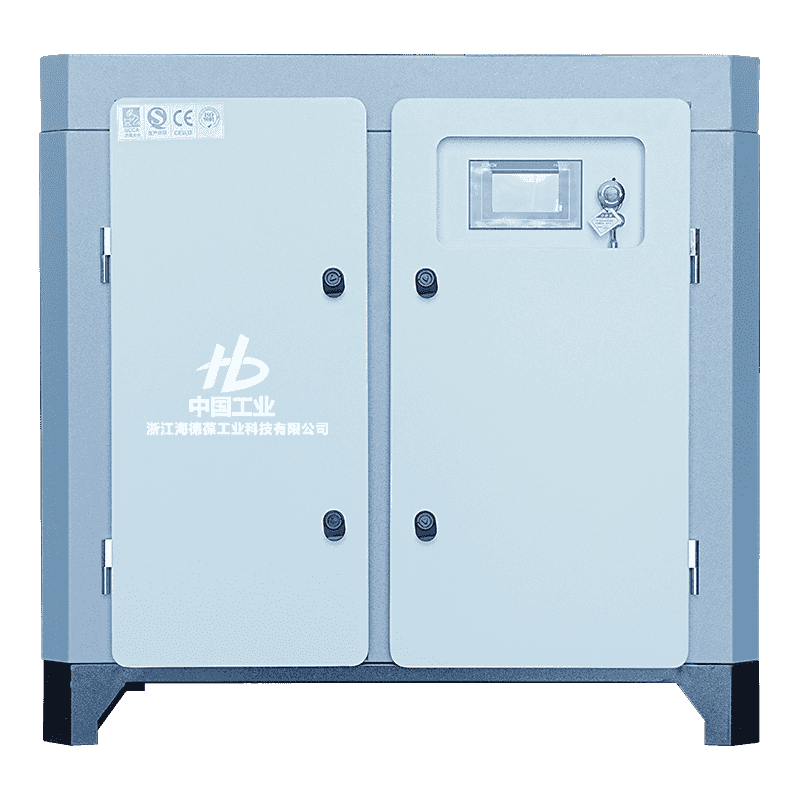
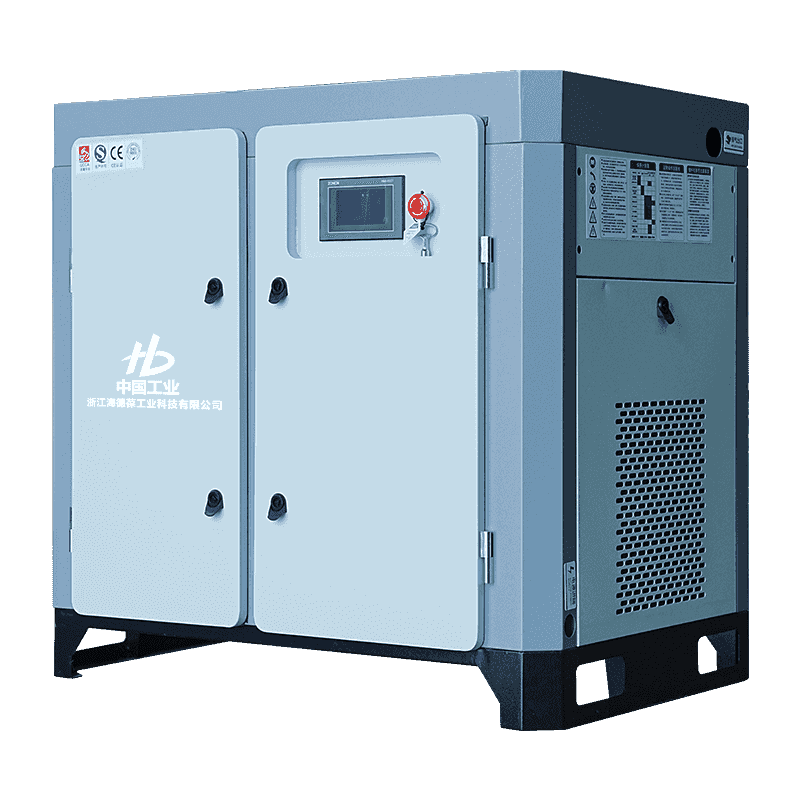
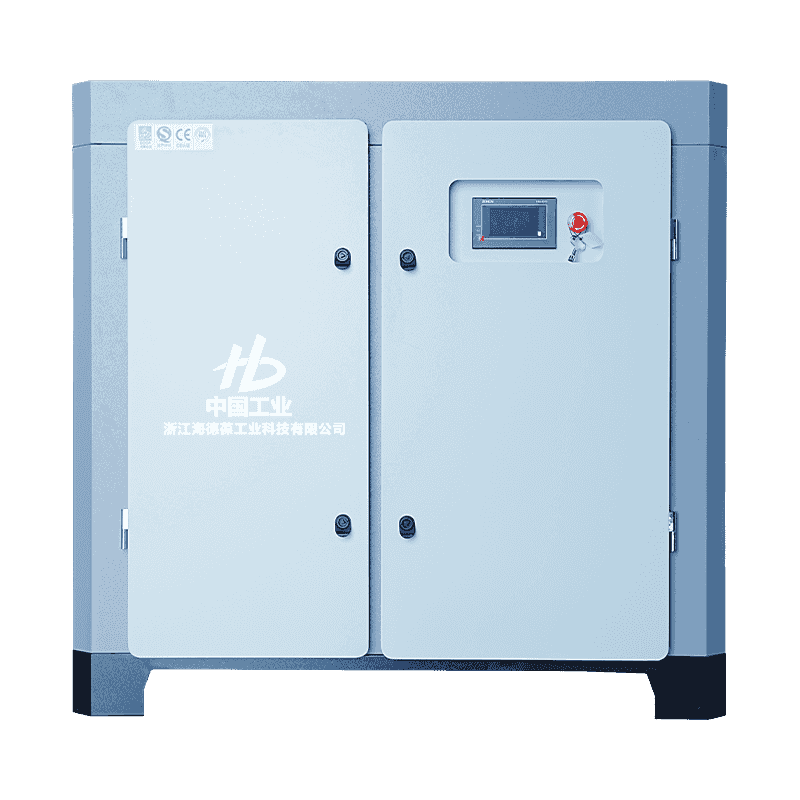
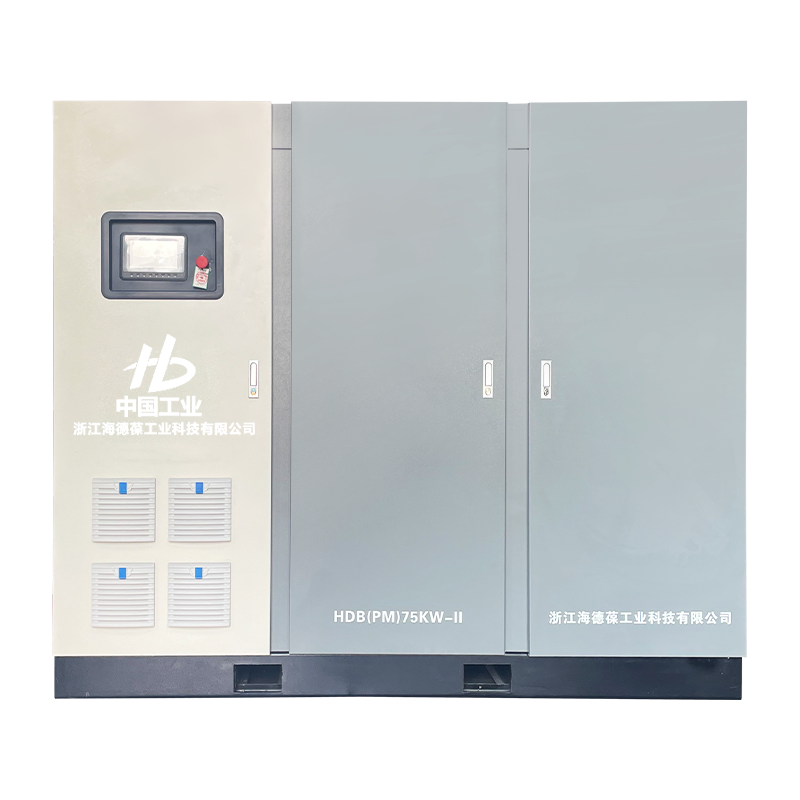
 Micro-Oil Single-Stage Screw Compressor with Frequency ConversionThis oil-injected compressor suits most metalworking and fabrication tasks where residual oil carryover is acceptable. Its variable-frequency drive adjusts speed to load, improving efficiency and reducing energy waste in typical 50 hp applications.View Product →
An oil-injected twin-screw package also offers the lowest specific power of any configuration in the 50 hp class and tolerates high ambient temperatures well. If your quality plan does not demand oil-free air, this is normally the most economical starting point.
Oil-free machines are required when compressed air comes into contact with products or processes where oil cannot be tolerated: food and beverage production, pharmaceuticals, electronics manufacturing, painting, and instrumentation. In these applications, air purity is specified to ISO 8573-1. Oil-free compressors are rated to Class 0 or Class 1, keeping oil aerosol content at or below 0.01 mg/m3 for Class 1, with Class 0 reserved for the most demanding specifications. A genuinely oil-free airend, not additional filtration bolted onto an oil-injected stage, is the only reliable way to hold that level continuously.
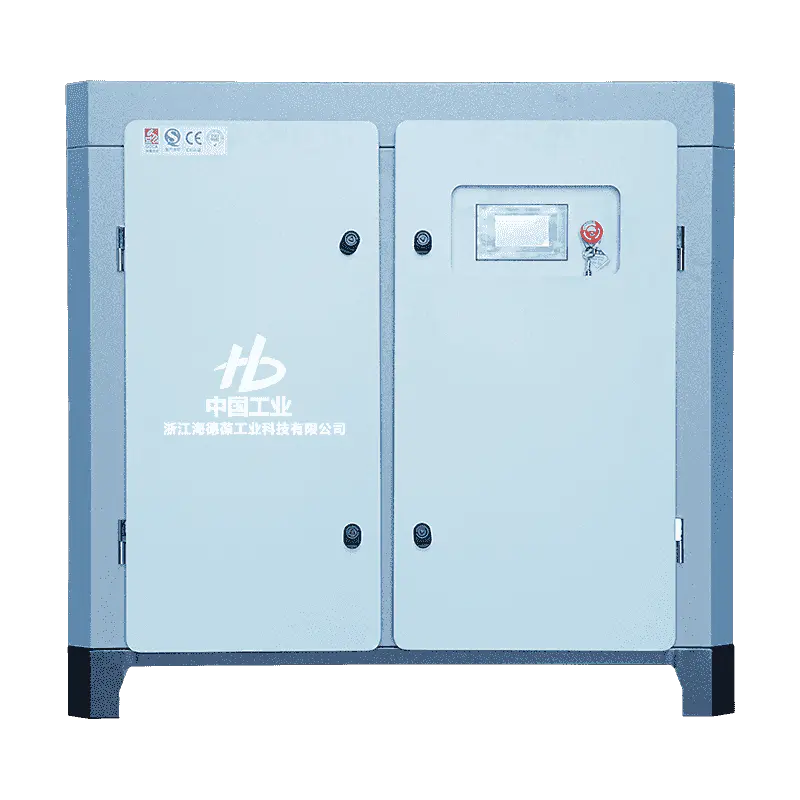
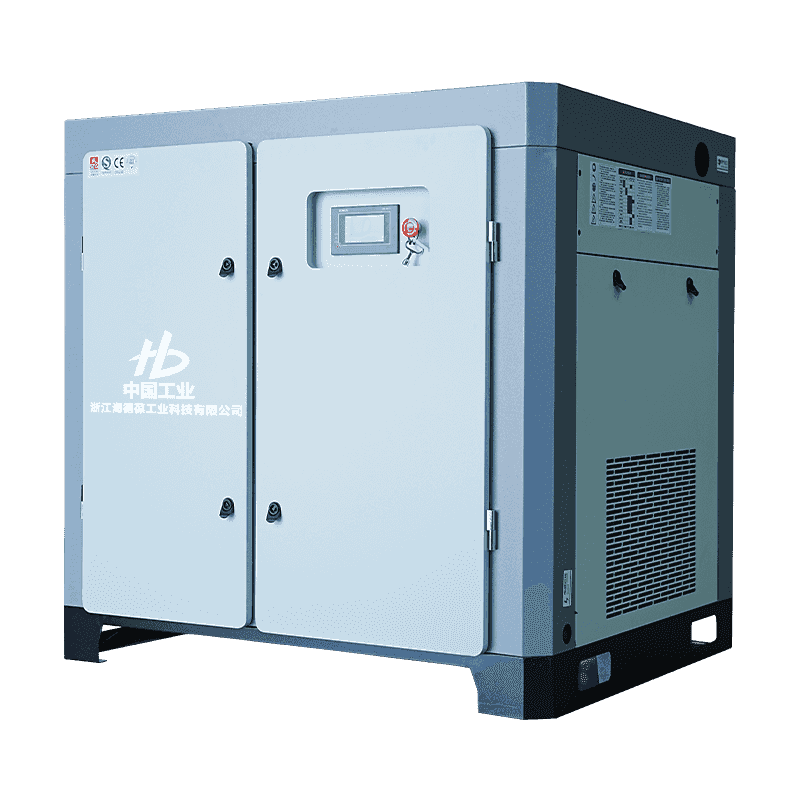
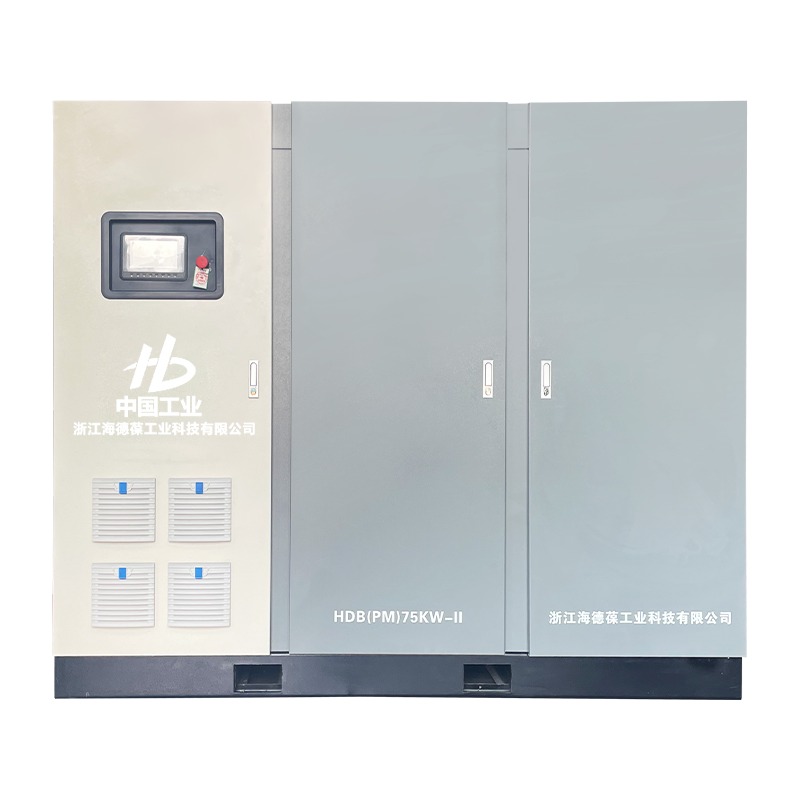
Oil-Free Screw Air Compressor with High-Efficiency PM MotorDesigned for processes requiring ISO 8573-1 Class 0 or Class 1 air purity, this oil-free unit uses a direct-drive permanent magnet motor exceeding 97% efficiency. It is the reliable choice for food, pharmaceutical, or electronics manufacturing.View Product →
The cost difference is significant. Oil-free machines carry a higher purchase price, consume more energy for the same FAD, and often need more frequent airend service. Do not over-specify: paying for oil-free capacity that your process does not need raises both capital and operating costs without adding value.
A 50 hp compressor suits plants with an average air demand of roughly 150-200 cfm after leakage is accounted for. Before ordering, measure the actual consumption of your production equipment rather than adding the nameplate ratings of every machine. Most plants run only a fraction of their tools at the same time.
Work through the sizing in a structured way:
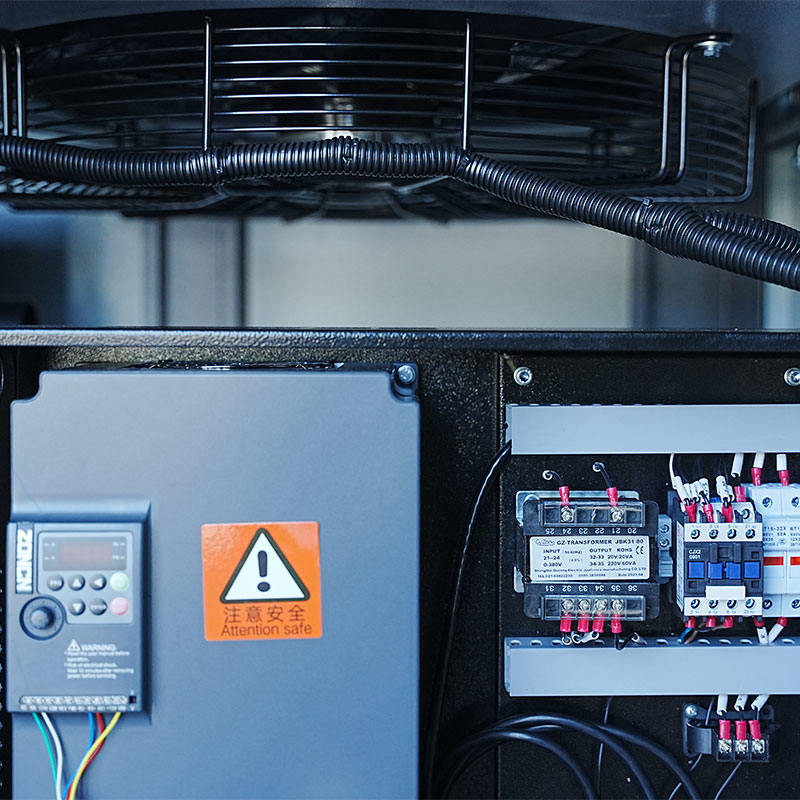
Electrically, a 50 hp motor draws about 37 kW at full load. On a 400 V three-phase supply, expect a full-load current of roughly 70 A; on a 460 V supply, roughly 65 A. The supply circuit needs a correctly sized breaker, cables rated for continuous full-load current, and a starting method that limits inrush current, such as a soft starter or a variable-speed drive.
Nearly all of the electrical input ends up as heat. A 50 hp compressor running at full load rejects roughly 30,000 to 35,000 kcal/h into the compressor room. Ventilation must keep the intake air below 40°C, because every degree above the standard inlet temperature reduces the FAD. In cold climates, the waste heat can be ducted into the building during winter. At altitudes above 1,000 metres, air density drops and the FAD falls accordingly, so account for site elevation when sizing a fixed-speed machine.
When the shortlist is down to two or three suppliers, check the same data on each quote. The most common purchasing mistake is to compare motor power and receiver size while ignoring the measured performance of the package.
Finally, look at the manufacturer itself. Review its certification records and, if the order volume justifies it, visit the factory where the machine is built. A 50 hp compressor delivered without tested performance data or traceable quality documentation is a risk that can be avoided on the front end.
A 50 hp air compressor is a long-term asset with a service life of ten years or more. The machine that serves you well is the one whose FAD, specific power, air cleanliness, and support agreement match the real production profile of your plant, not the one with the most impressive motor badge. Define the duty, verify the numbers, and treat the purchase as a system investment rather than a standalone machine.
Your email address will not be published. Required fields are marked *

A dedicated after-sales service department is established, consisting of a professional sales team and skilled technical engineers. They are committed to providing year-round support, traveling to customer locations to deliver prompt and high-quality service.

Tel:86-0570-7221666

E-mail:[email protected]

Add: No.2 Qiming Road, Zhejiang Longyou Economic Development Zone, Mohuan Township, Longyou County, Quzhou City, Zhejiang Province, China
Copyright © Zhejiang Haidebao Industrial Technology Co., Ltd.

Custom Industrial Screw Air Compressor Manufacturers