
 EN
EN  English
 Español
 عربى
عربى
Product Consultation
Your email address will not be published. Required fields are marked *

Your workshop has been running four banks of 10 hp piston compressors just to keep up with demand. Each one needs regular maintenance, and pressure still droops when tooling kicks in. Replacing them with a single 100 hp screw air compressor is an attractive option, and for good reason: a single 50-100 hp rotary screw unit can outperform eight to ten 10 hp piston units in terms of both output and energy efficiency. But choosing that 100 hp machine involves more than checking the motor rating. You need to verify free air delivery, compare specific power, decide between oil-injected and oil-free designs, and choose between single-stage and two-stage compression.
The "100 hp" on the nameplate describes the motor's nominal input power, not how much compressed air you will actually get. The same 100 hp compressor can deliver different volumes of air depending on the discharge pressure, the intake conditions, and the type of compressor. A well-designed 100 hp unit at 7.5 bar (100 psi) typically has a free air delivery (FAD) of around 350-400 cfm, but you should never guess this figure. Ask the manufacturer to show you FAD numbers measured per ISO 1217 or another recognized standard, and at the same pressure that your plant actually uses.
Specific power is even more important. It tells you how many kilowatts of energy are needed for every cubic meter of air delivered per minute. For a 100 hp class screw compressor, a lower specific power figure means the machine converts more electricity into useful compression work. This one number has a direct effect on your electricity bill.
Here are the parameters that deserve your attention when you compare 100 hp air compressor models:
| Parameter | What it means | Why it matters at 100 hp |
|---|---|---|
| Motor power (hp/kW) | Rated shaft power of the main motor | Affects electrical connection and installed cost |
| Free Air Delivery (FAD) | Volumetric flow available at the outlet | Defines how many tools or processes can be served |
| Specific power (kW/m3/min) | Energy consumed per unit of air produced | Directly affects annual energy costs |
| Discharge pressure range | Maximum/rated working pressure | Must match the highest continuous demand |
| Noise level dB(A) | Sound pressure at 1 meter | Determines whether an enclosure or remote location is needed |
All lubricated screw compressors use oil for sealing the rotor clearances, cooling the compressed air, and lubricating moving parts. In an oil-injected unit, the oil is injected directly into the compression chamber and then separated by a high-efficiency separator. The resulting compressed air still contains small traces of oil, typically in the range of 1 to 3 mg/m3. For general machining, tooling, and construction, this is perfectly acceptable.
An oil-free or oil-less design uses self-lubricating rotor coatings or separate water seals to avoid oil contamination entirely. Finished air meets or exceeds ISO 8573-1 Class 0. This makes oil-free units necessary for food and beverage plants, pharmaceutical production, electronics cleanrooms, and paint shops.
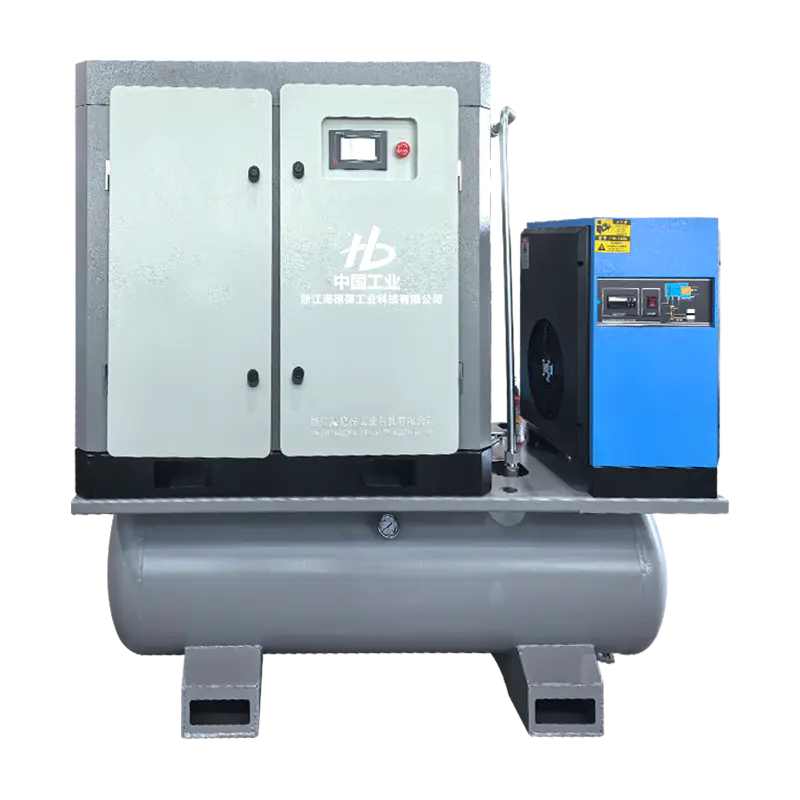
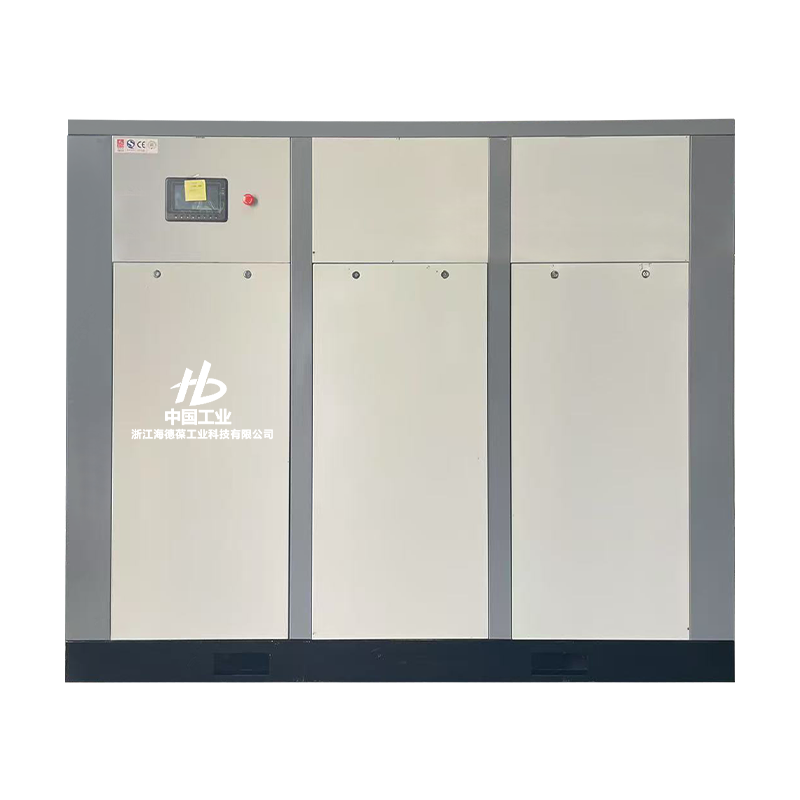
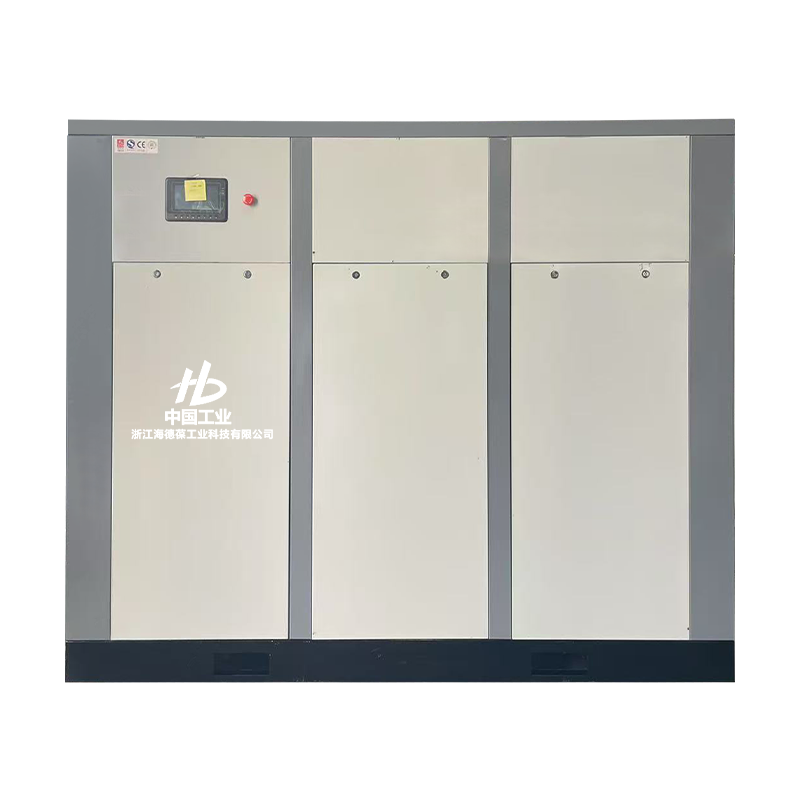
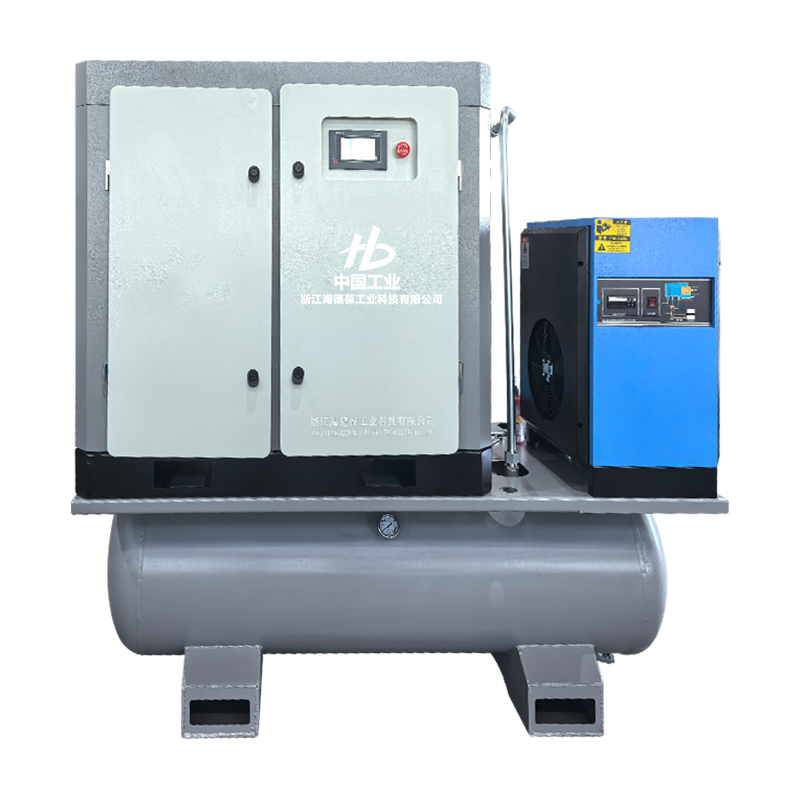
 Oil-Free Single Stage Screw Compressor from HaidebaoThis oil-free screw compressor integrates a permanent magnet synchronous motor and frequency conversion for energy efficiency, suitable for industries requiring Class 0 air purity.View Product →
The trade-off is cost. Oil-free compressors have a higher purchase price and, depending on the type, higher maintenance costs. If your process does not demand Class 0 air, an oil-injected unit gives you more output per dollar and a longer service interval. However, if you are evaluating a 100 hp oil-free compressor, check the purity certificate for the specific operating pressure and temperature. You cannot always rely on the "oil-free" label.
Within a given lubrication type, you still have to choose between single-stage and two-stage compression. In a single-stage screw air compressor, the rotors do all the work in one pair of intermeshing screws. The compression ratio can be high enough for 7.5-8.6 bar duty, but the internal air temperature rises. In a two-stage unit, the air is partially compressed in the first rotor pair, passes through an intercooler, and is compressed again in a second pair. This is why a two-stage design usually runs cooler and consumes less energy, especially when discharge pressure is 8.6 bar or above.
For a plant that needs a constant 10 bar working pressure, a two-stage 100 hp compressor can reduce specific power by 5-10% compared with a single-stage unit at the same pressure. Over 6,000 operating hours per year, that difference can be enough to pay back the higher purchase price within two years.
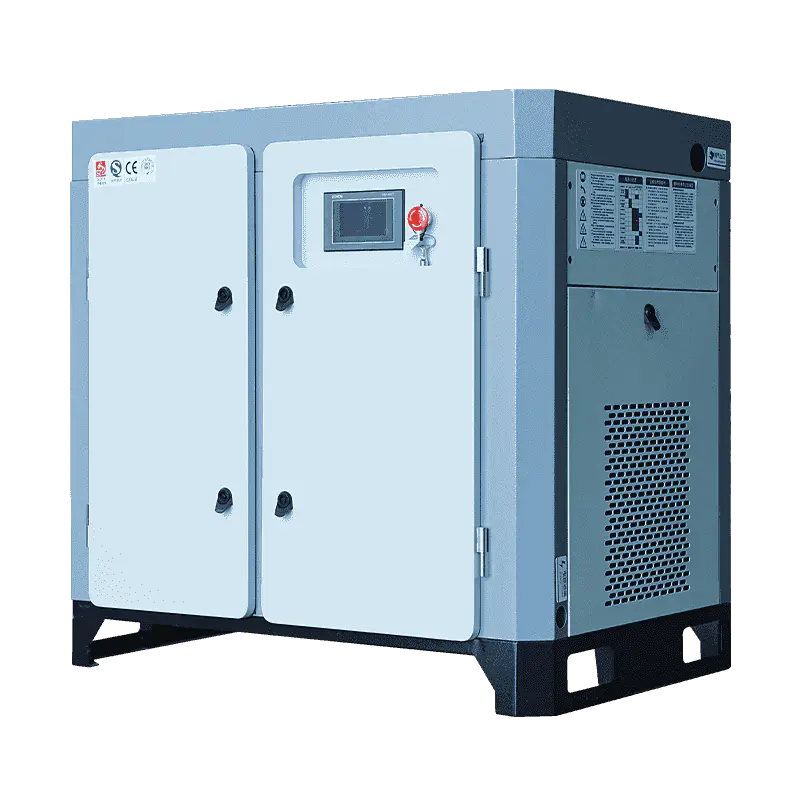
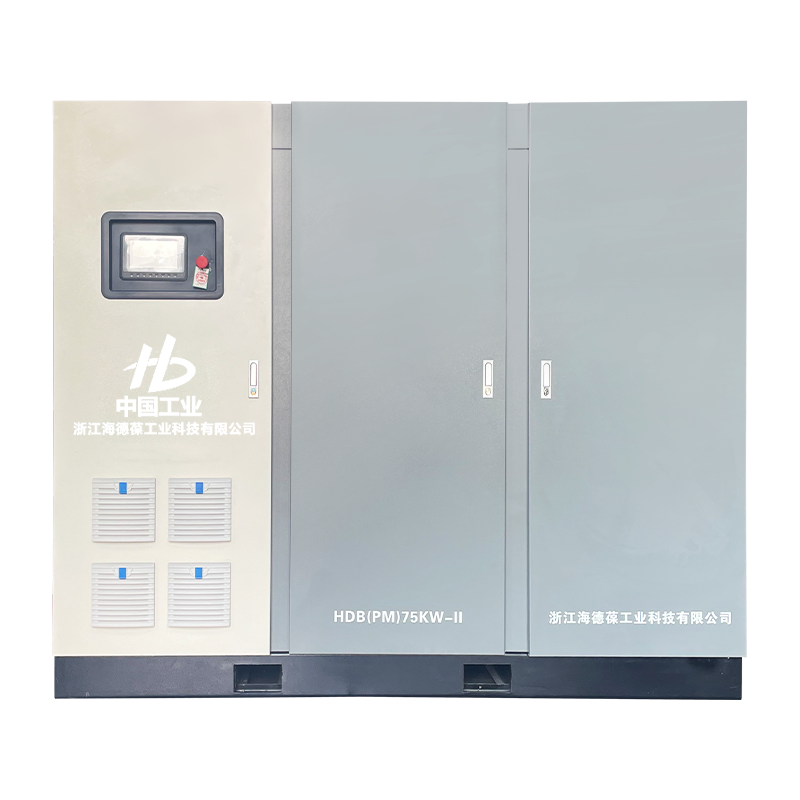
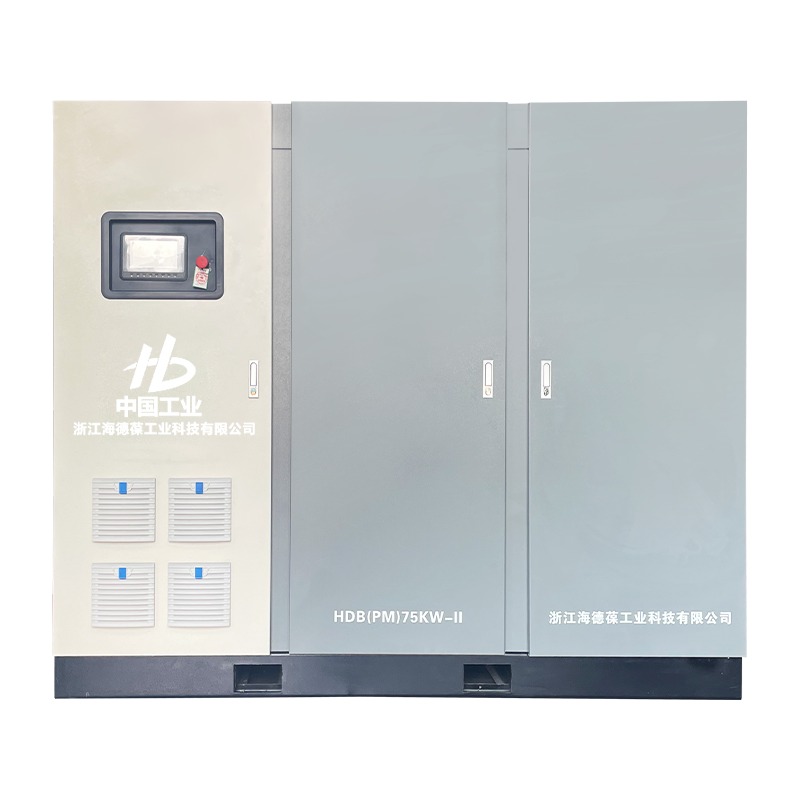
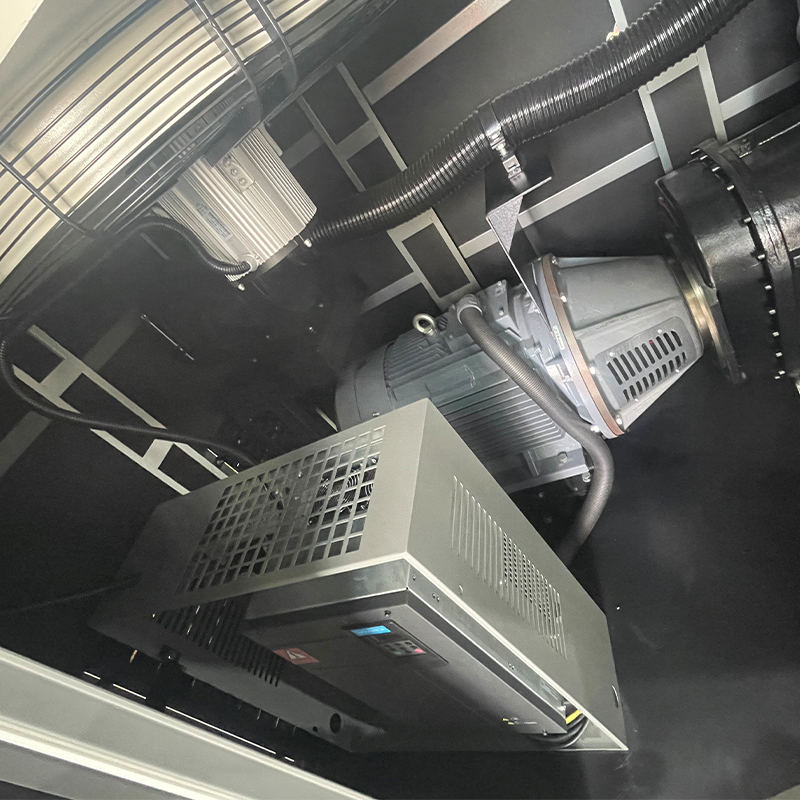 100HP Micro-Oil Two-Stage Screw CompressorThis 75 kW two-stage compressor offers lower specific power at 10 bar, with a patented rotor profile and direct drive for reliable continuous air supply.View Product →
To see the mechanical layout and the intercooler arrangement, you can refer to the manufacturer's product page for its 100 hp two-stage screw compressor.
A 100 hp screw compressor is a significant energy consumer. If you install it in a hot corner with poor ventilation, the intake air temperature climbs, and the FAD drops. As a rule of thumb, every 5°C rise in intake air temperature reduces the volume of air delivered by about 1%. Locate the intake away from dryer discharges, ovens, and direct sunlight.
The air receiver, dryer, and pipe network also need to be matched. An undersized receiver starves the compressor; an oversized pipe raises the pressure drop. Keep the pressure differential between the compressor discharge and the point of use below 0.3 bar. That means installing a properly sized main distribution line and using a bypass or valve to isolate the compressor outlet from the rest of the network when maintenance is being done.
Good manufacturers test compressors on a real-air test rig before delivery. At our factory, every unit is run-in and checked for vibration, temperature, and leak tightness before crating. This is the kind of step that reduces commissioning time and prevents small field failures. You can see the workshop and test equipment on our factory and equipment page.
Purchase price receives most of the attention when comparing quotes, but for a 100 hp unit, electricity represents roughly 75% of the total cost of ownership over five years. A difference in specific power of only 0.3 kW/m3/min can add up to $9,000 in electricity costs per year for a continuously running compressor. This single metric is more important for your budget than any discount on the initial price.
Use the table below to estimate the real five-year cost of three hypothetical 100 hp units with identical m3/min output but different specific power values:
| Model | Specific power (kW/m3/min) | Input power (kW) | Annual energy cost | 5-year energy cost | Purchase price | 5-year total |
|---|---|---|---|---|---|---|
| Model A | 5.8 | 58 | $34,800 | $174,000 | $30,000 | $204,000 |
| Model B | 5.5 | 55 | $33,000 | $165,000 | $35,000 | $200,000 |
| Model C | 5.2 | 52 | $31,200 | $156,000 | $40,000 | $196,000 |
The most efficient model has the highest purchase price but the lowest five-year cost. This is why energy efficiency, not upfront price, should be the deciding factor when you evaluate quotes.
For plants that expect their demand to grow, some manufacturers offer a 120 hp unit in the same enclosure. If you are choosing between a 100 hp and a 120 hp, compare the energy figure per delivered cubic meter rather than the motor power. The best model is the one that meets your pressure and flow requirements at the lowest specific power over the life of the machine.
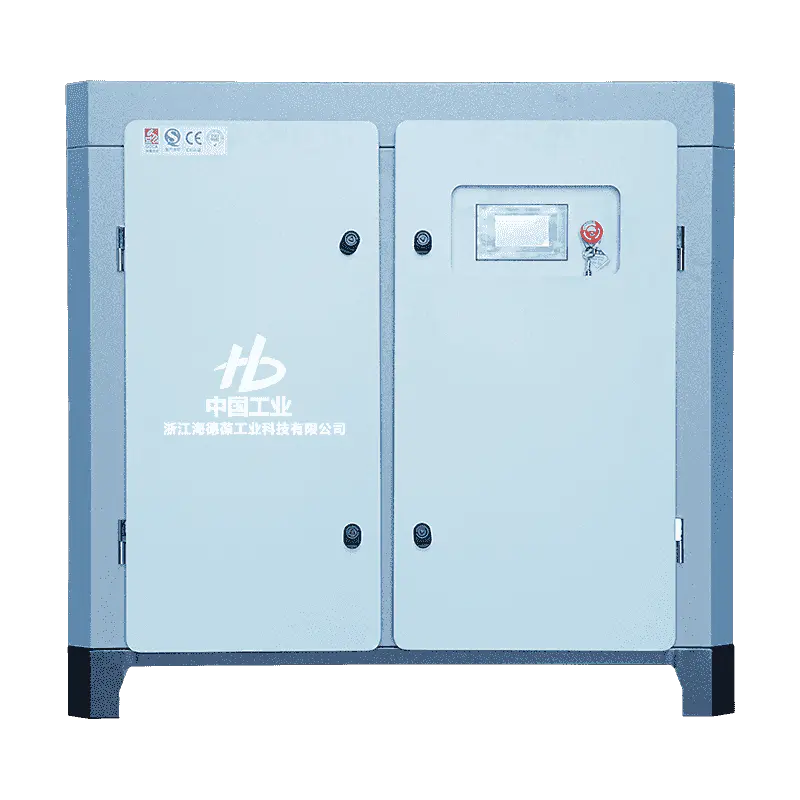
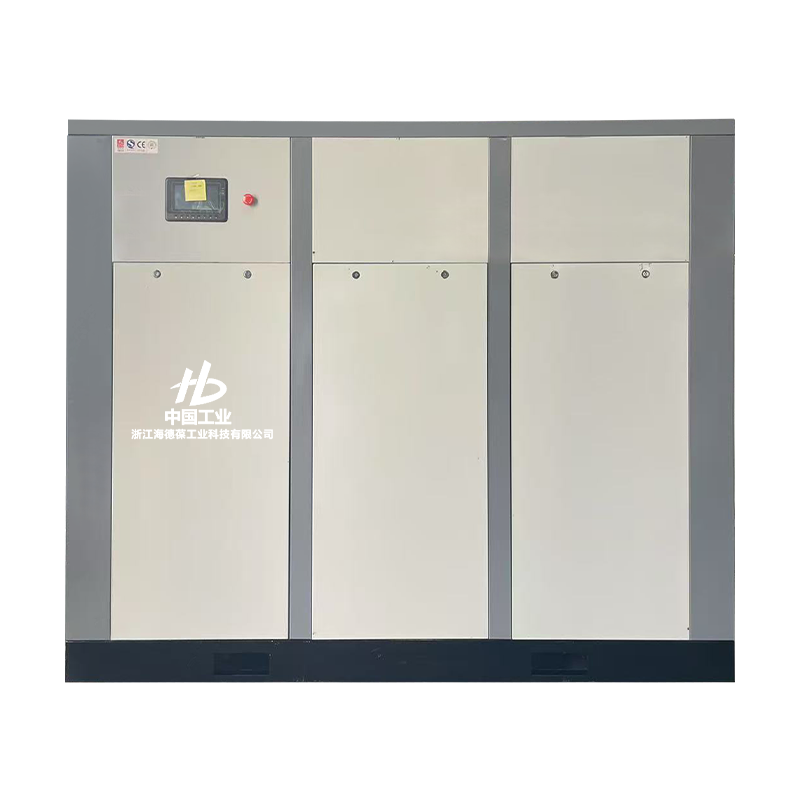 120HP Micro-Oil Two-Stage Screw CompressorThis 90 kW two-stage compressor delivers 20.2 m³/min at 8 bar, featuring a high-efficiency inverter and permanent magnet motor for stable performance.View Product →
A 100 hp screw compressor is designed to last 15 to 20 years, so the supplier you choose matters as much as the machine itself. Confirm that the manufacturer holds the certifications relevant to your market. ISO 9001 quality management and CE marking are the most common baseline requirements, but do not hesitate to ask which version of ISO 9001 is being used and to what scope. The honors and certifications page of a manufacturer will often give you the exact scope.
Service speed is especially important when a failure stops your line. The best arrangements include a dedicated after-sales team, an installed base of spare parts, and technicians who can visit your site for commissioning and repair. Maintenance schedules for a 100 hp class compressor usually include changing oil and separators every 2,000-4,000 hours, servicing the coolant circuit annually, and checking torque and vibration every six months.
Choosing a 100 hp air compressor is a decision about the next decade of your production. Confirm your pressure and flow demand, check FAD and specific power under the same standard, choose the right lubrication type and compression stage, and then look at the supplier's factory and service network. A machine that is slightly more expensive to buy but measurably more efficient to run will pay for itself again and again.
Twin Screw Compressor Explained: How It Works, Oil-Free vs Oil-Injected, and Buying Tips

No next article
Your email address will not be published. Required fields are marked *

A dedicated after-sales service department is established, consisting of a professional sales team and skilled technical engineers. They are committed to providing year-round support, traveling to customer locations to deliver prompt and high-quality service.

Tel:86-0570-7221666

E-mail:[email protected]

Add: No.2 Qiming Road, Zhejiang Longyou Economic Development Zone, Mohuan Township, Longyou County, Quzhou City, Zhejiang Province, China
Copyright © Zhejiang Haidebao Industrial Technology Co., Ltd.

Custom Industrial Screw Air Compressor Manufacturers