 EN
 English
 Español
 عربى


Product Consultation
Your email address will not be published. Required fields are marked *

An aluminium extrusion plant replaced a tired 55 kW piston unit with a 75 kW oil-injected screw compressor. Six weeks later the packing line was still tripping on low pressure. The compressor was fine; the specification was not. The unit had been quoted at 7 bar, the tools needed 6.8 bar, and 0.9 bar disappeared across a refrigerated dryer and two filters.
That pattern repeats across most industrial screw air compressor purchases. The decision gets made on price per kW and catalogue flow, while the failures come from pressure budget, duty cycle and air quality class. The checks below follow the order that prevents the expensive mistakes.
A screw compressor is a positive-displacement machine: two intermeshing rotors trap a volume of air and squeeze it against the discharge port. Capacity therefore falls as pressure rises, which is why two machines with identical nameplate power can deliver very different flow at your header. Always compare free air delivered (FAD) at the pressure you will actually run, not at the pressure printed in the brochure headline.
| Parameter | What it controls | What to check |
|---|---|---|
| FAD (m³/min) | Usable air at the outlet | Measured to ISO 1217; ask for figures at 7, 8 and 10 bar |
| Working pressure (bar g) | Tool performance and flow | Flow drops roughly 5-8% per extra bar of discharge pressure |
| Motor rating (kW) | Shaft power available | Service factor of 1.15 or better; confirm IE3 or IE4 class |
| Specific power kW/(m³/min) | Real efficiency | Compare only at equal pressure and equal ambient |
| Duty cycle | Load/unload hours per day | Continuous duty needs more headroom than two-shift operation |
| Ambient and altitude | Cooling and motor derating | A 45 °C summer site can lose 5-10% of rated flow |
| Air quality class (ISO 8573-1) | Oil-free versus filtered | Verify the class at the point of use, not at the receiver |
If a data sheet lists only motor power and "capacity", request the FAD and specific power at each pressure point before comparing prices.
Two-stage machines split compression across two rotor sets with an intercooler between them. Removing heat between stages pulls the process closer to isothermal compression, and the second stage starts from a smaller volume, so the same shaft power produces more air. On larger sizes the gain typically lands in the 10-15% range for specific power. The trade-off is a longer footprint, more components and a higher purchase price.
The rule of thumb that survives contact with real plants: below roughly 75 kW, a single-stage machine is usually the better commercial choice; above 100 kW, running continuously, two-stage earns back its price within a few years of energy savings. At part load the difference narrows quickly, so a plant running at 40% capacity should fix its sizing before paying for a second stage.
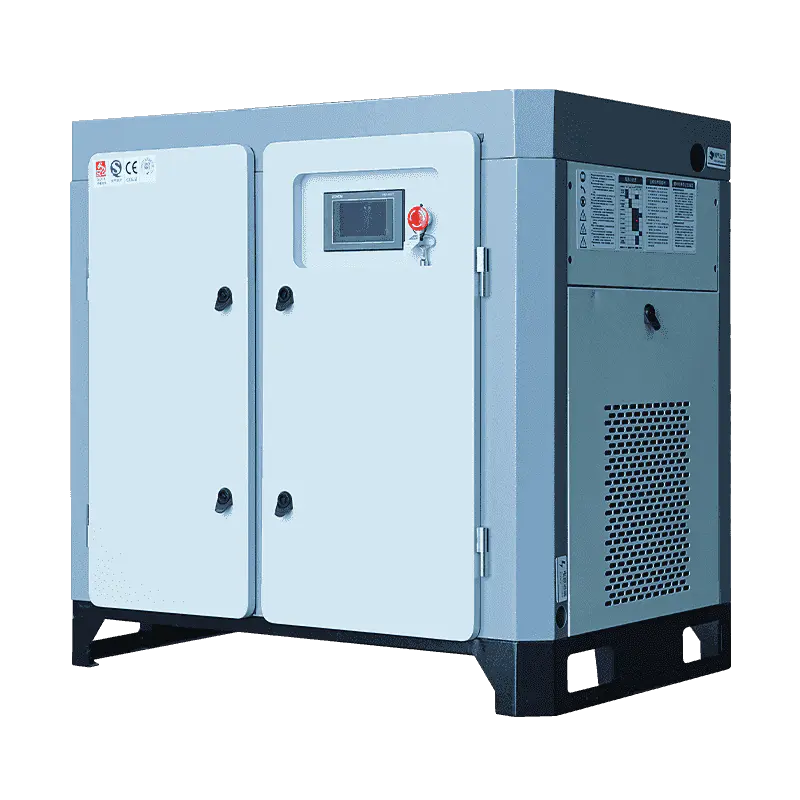
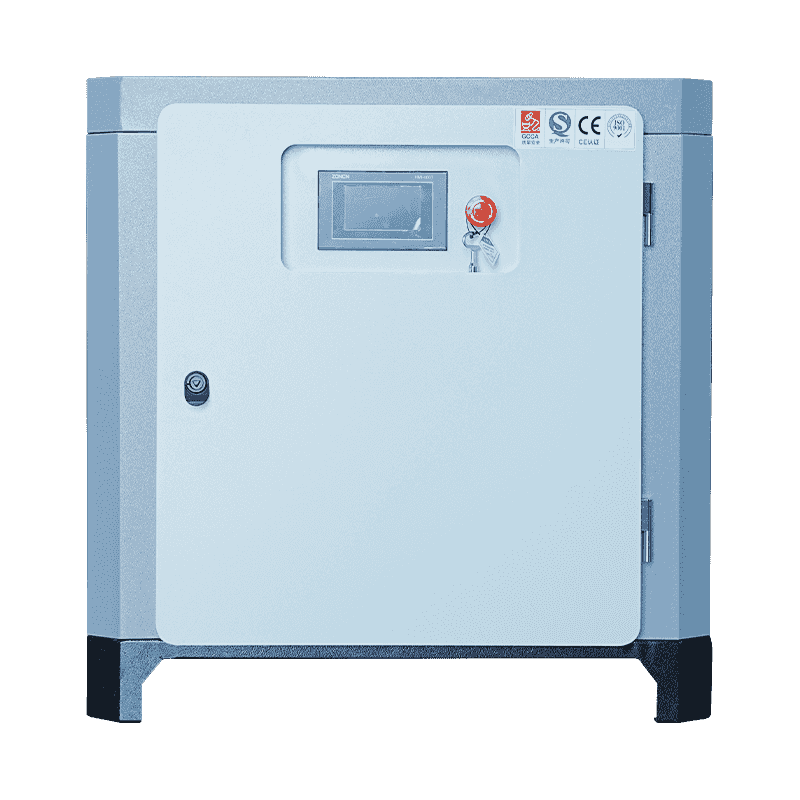
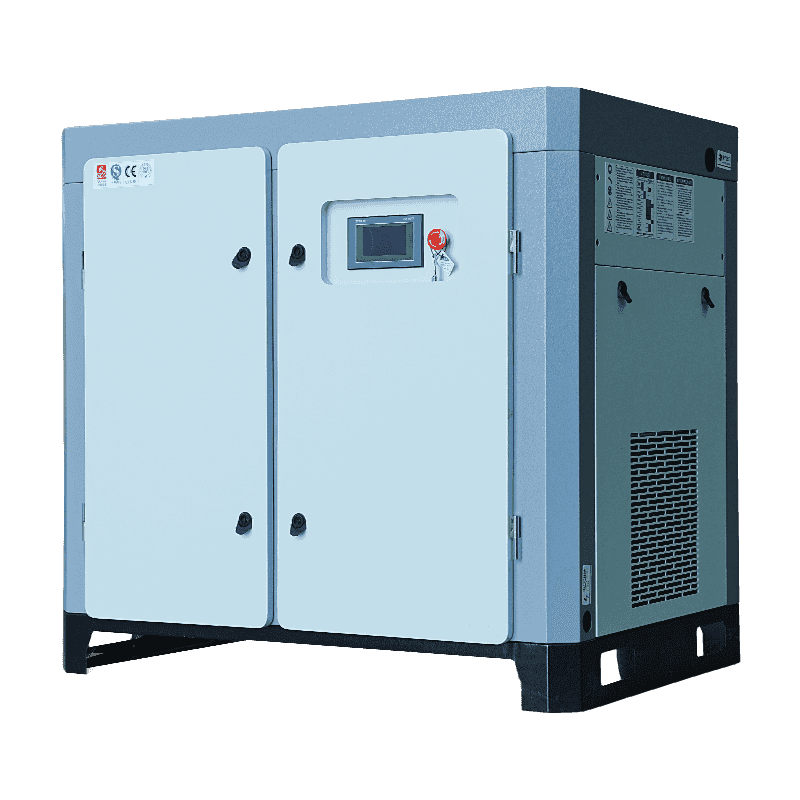
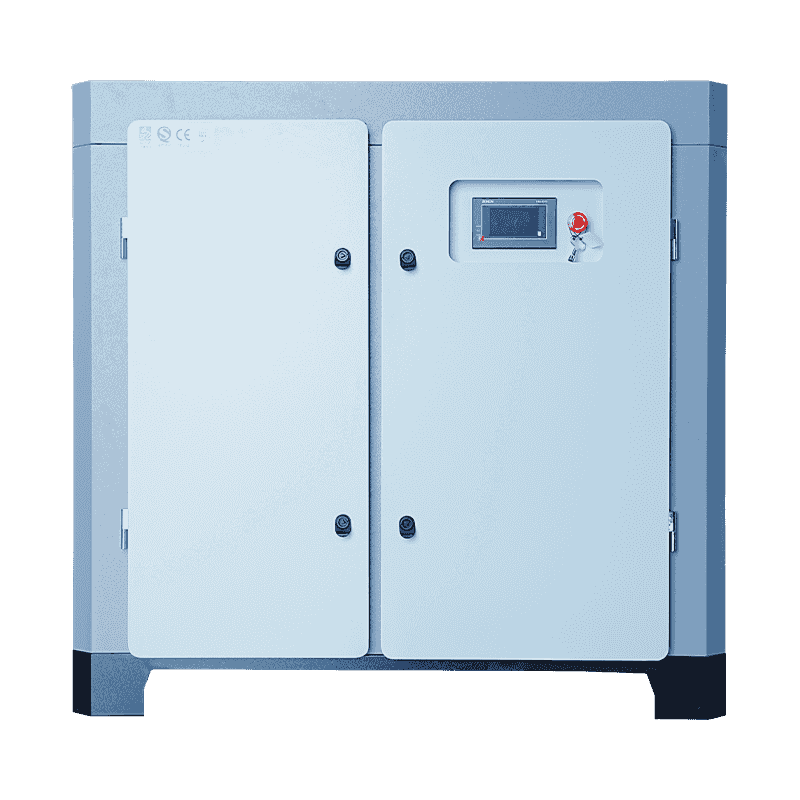
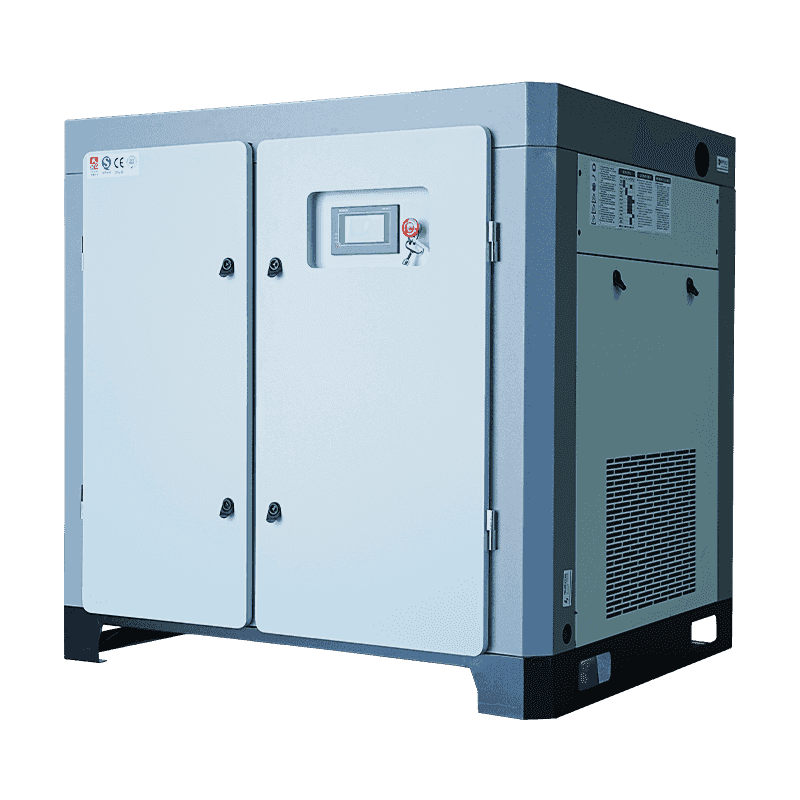
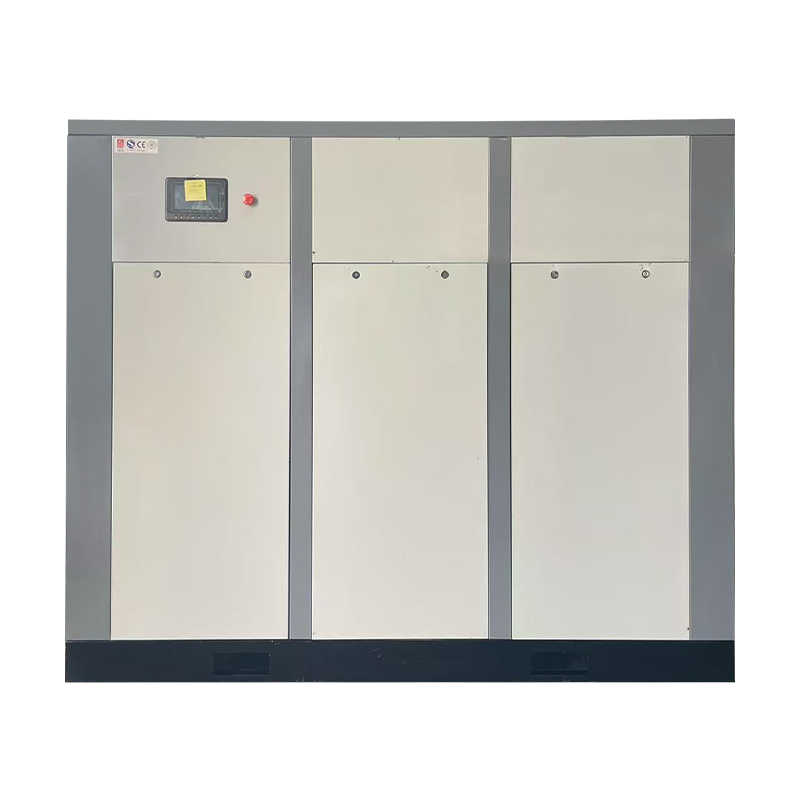 120HP Micro-Oil Two-Stage Screw CompressorA 90 kW permanent-magnet two-stage model rated 20.2 m³/min at 8 bar, suited to continuous industrial air supply where pressure stability matters.View Product →
Compressed air purity is graded by ISO 8573-1, which scores particles, water and oil separately. An oil-injected screw compressor paired with a coalescing filter normally reaches class 1 for oil, but that class has to be confirmed downstream of the dryer and filters, where the air actually enters the process.
Where air touches the product, the decision is straightforward: food, pharmaceutical, electronics and breathing-air applications call for oil-free. Where air drives cylinders, sandblasting nozzles, textile jets or workshop tools, an oil-injected machine with correct filtration and condensate treatment is the economical answer. The common error is buying oil-free for general plant air and paying a 20-30% capital premium for a cleanliness level no process uses.
Condensate handling belongs in the same conversation. Oil-injected units produce oily condensate that needs an oil-water separator before drain discharge; oil-free units produce condensate that is far easier to manage under local environmental rules.
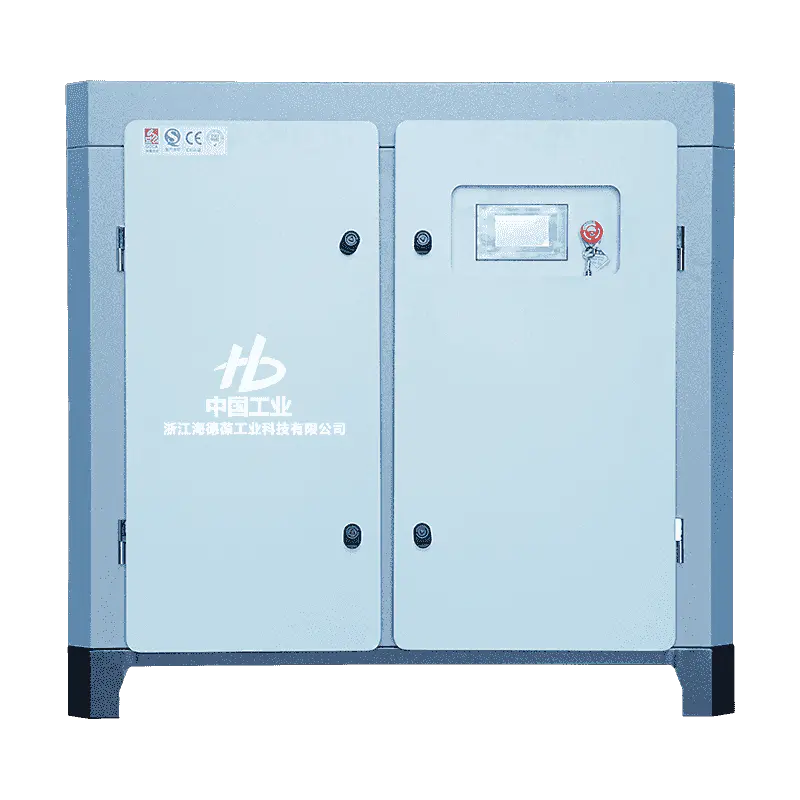
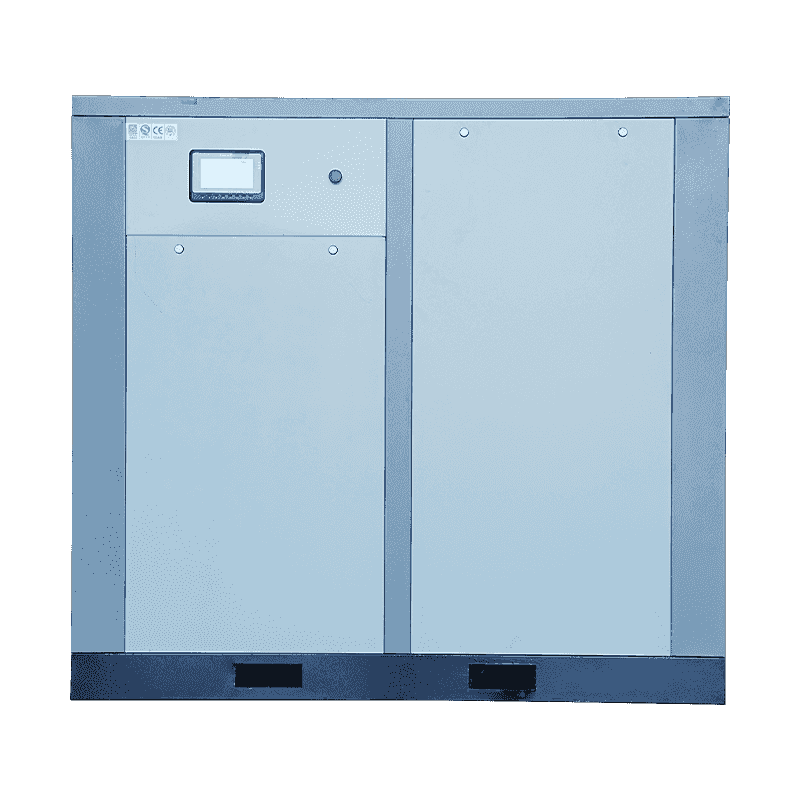
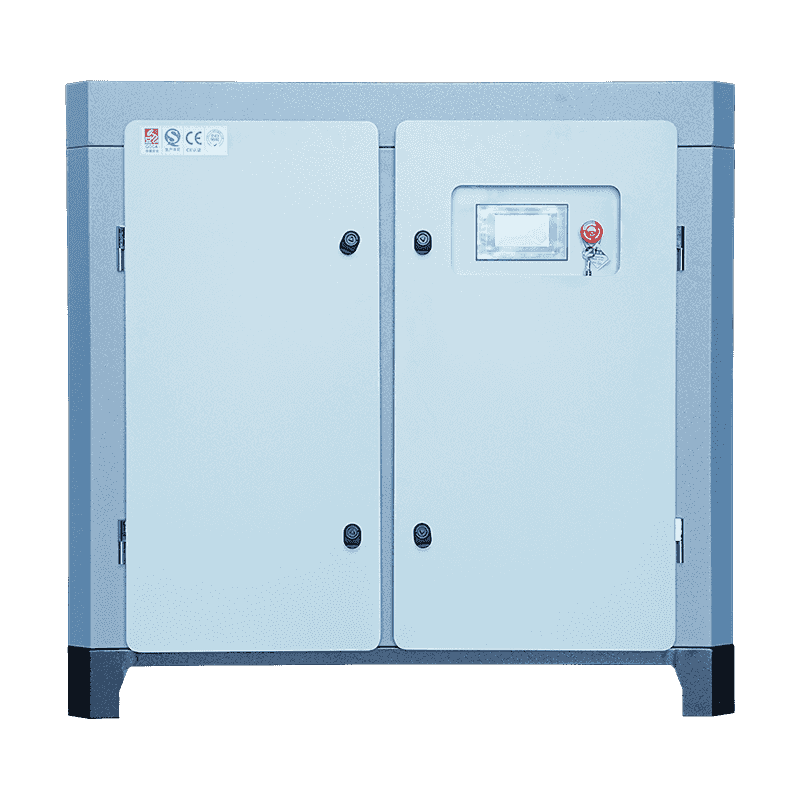 Oil-Free Screw Air Compressors for OEM/ODMBrowse single- and two-stage oil-free screw compressors with permanent-magnet drive and frequency conversion, suited to clean-air processes where oily condensate is a concern.View Product →
Sizing is arithmetic, not intuition, and the arithmetic has a fixed sequence. Oversizing is not free: a unit running at 30% load wastes energy and cycles heavily, while an undersized unit runs at full load, hot and noisy, with no reserve for a second shift.
Two quotations for the same 75 kW class can differ by 30% and still be honest. The gap usually sits in the components nobody asks about until year three.
| Line item | What to verify | Typical risk |
|---|---|---|
| Airend | Origin and rotor profile, service life | Mixed sourcing hidden under one brand plate |
| Motor | Efficiency class, service factor, insulation | Nameplate power quoted instead of shaft power |
| Cooler and fan | Ambient rating, usually 45 °C | Summer derating and high discharge temperature trips |
| Controller | Load/unload versus VSD, remote access | VSD sold into a plant with a flat, stable load |
| Spares and warranty | Response time, filter and separator stock | Weeks of downtime waiting on an airend |
| Documentation | Test report, P&ID, wiring diagram | No performance baseline at handover |
Purchase price is roughly a tenth of what the machine costs over a decade. For a 75 kW unit at 7 bar running 4,000 hours a year, electricity overwhelms capital, maintenance and installation combined, which is why a 5% specific power advantage is worth more than a 10% discount at the till.
Ten-year cost split, 75 kW oil-injected screw compressor at 7 bar, 4,000 running hours per year (indicative)
Two further levers cost nothing to plan. Heat recovery on an oil-injected unit can capture 70-90% of shaft power as hot water for washrooms or process preheating. And a pressure reduction of just 0.5 bar, once the network is verified leak-free, trims energy use by around 3-4% across the whole system.
Our own range follows the same logic the checks above describe. The micro-oil series runs from 10 hp to 75 hp in single-stage configuration and 100 hp to 120 hp in two-stage, while the oil-free series covers single- and two-stage builds for clean-air processes. Every unit is assembled, tested and inspected in-house against our ISO 9001 quality system, and the range carries CE marking for European compliance.
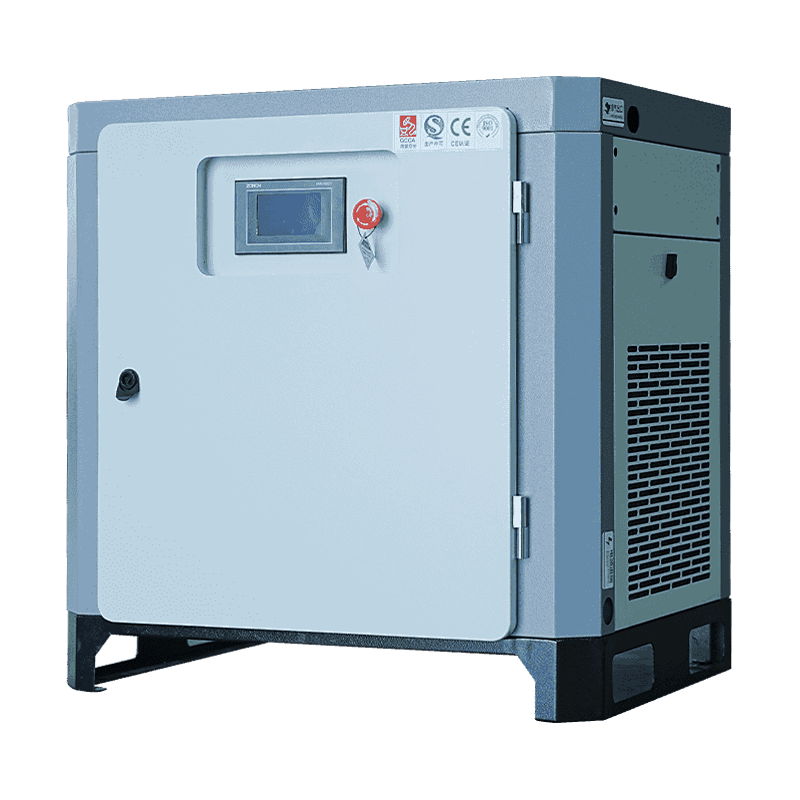
 30HP Micro-Oil Single-Stage Screw CompressorA 30 hp micro-oil single-stage unit with permanent-magnet drive, frequency conversion and oil separation below 3 PPM for demanding industrial air supply.View Product →
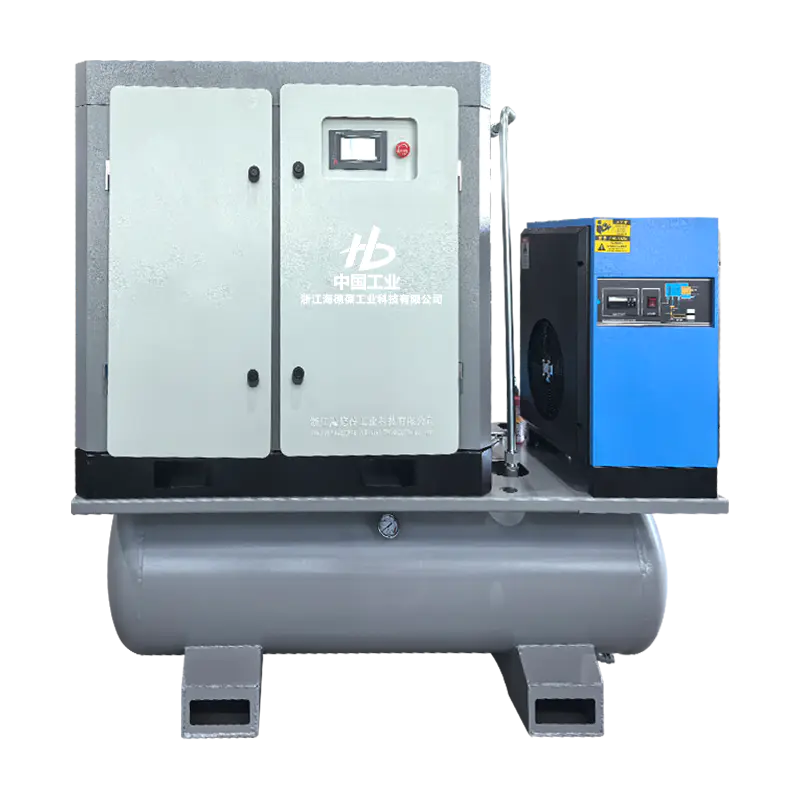
If you want to see how the machines are built before you specify, walk through our manufacturing and testing facility and check the inspection stages each unit passes. When the pressure budget, duty cycle and air quality class are already on paper, sizing takes a single conversation — send us the figures and we will match the model, the dryer package and the spares kit to your line.
Your email address will not be published. Required fields are marked *
A dedicated after-sales service department is established, consisting of a professional sales team and skilled technical engineers. They are committed to providing year-round support, traveling to customer locations to deliver prompt and high-quality service.

Tel:86-0570-7221666

E-mail:[email protected]

Add: No.2 Qiming Road, Zhejiang Longyou Economic Development Zone, Mohuan Township, Longyou County, Quzhou City, Zhejiang Province, China
Copyright © Zhejiang Haidebao Industrial Technology Co., Ltd.

Custom Industrial Screw Air Compressor Manufacturers