 EN
 English
 Español
 عربى


Product Consultation
Your email address will not be published. Required fields are marked *

A 50 horsepower compressor is often quoted as if horsepower were the whole specification. In practice, two 50 hp units can differ by 30% or more in delivered airflow at the same pressure, and the gap widens when duty cycle, air quality, and cooling are included. The practical answer: size from required cfm at your working pressure, then confirm the motor, controls, and service plan can support the way the plant actually runs.
That order matters because a 50 hp motor is roughly 37 kW, but the compressor package, not the nameplate, determines what reaches your tools, process, or production line. A machine that is “50 hp” may suit a busy fabrication shop and still be a poor fit for a 24/7 packaging line if the receiver, dryer, and piping are undersized.
Horsepower describes shaft power at the motor, not free air delivery. A 50 hp compressor at 100–125 psi commonly lands in the 140–200 cfm range, depending on whether it is single-stage or two-stage, oil-injected or oil-free, and how conservatively it is rated. Those are planning ranges, not a substitute for a test sheet.
Ask for delivered cfm at the same pressure you will use, and check the test standard behind the number. ISO 1217 is the usual reference for displacement and flow on positive-displacement compressors. A useful quote shows cfm, pressure, motor kW, specific power, ambient limit, cooling method, and sound level together; a single horsepower figure is not enough.
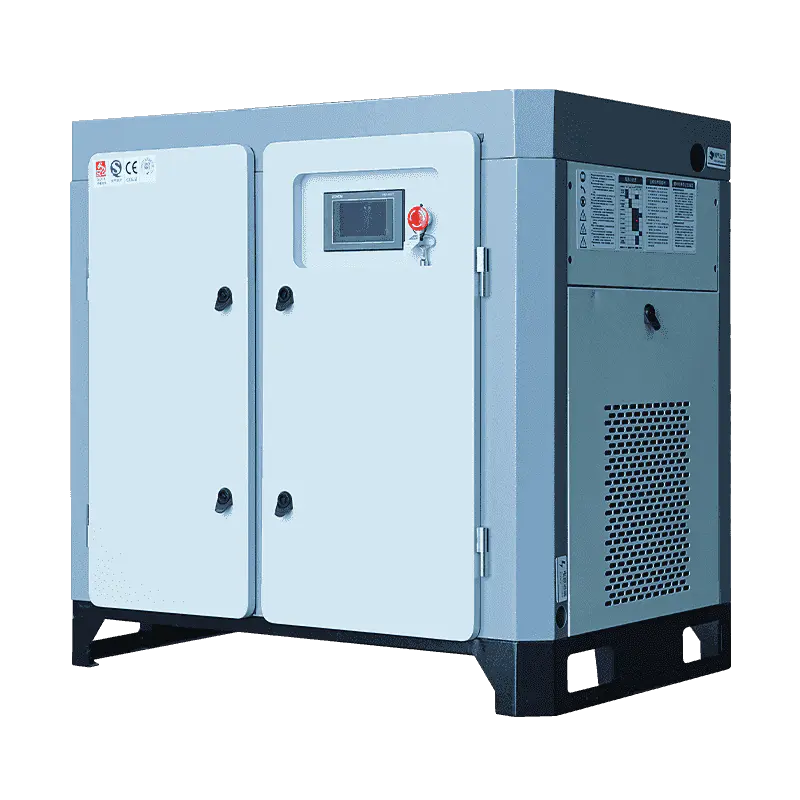
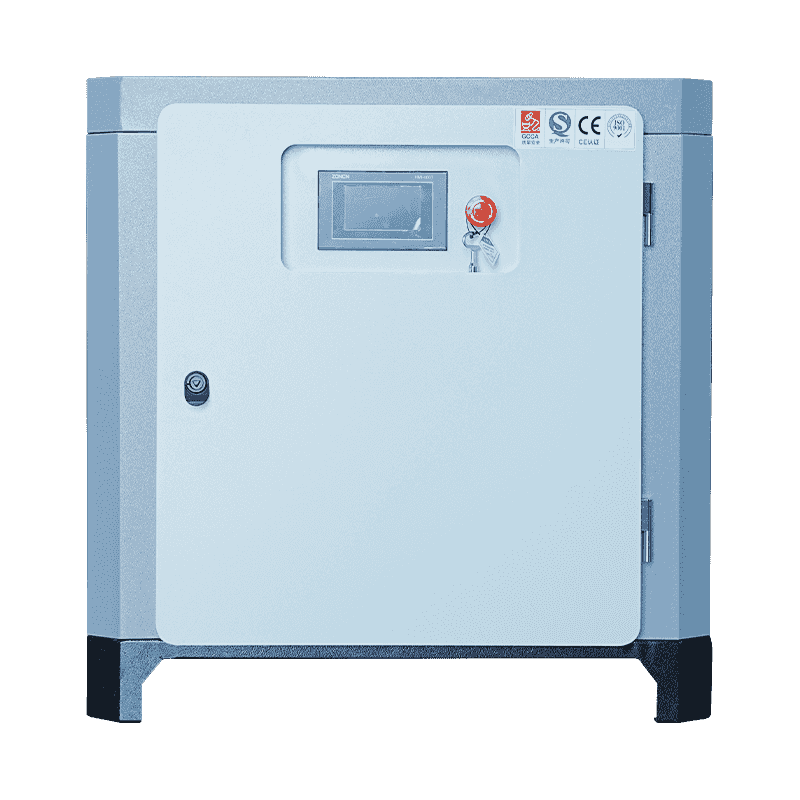
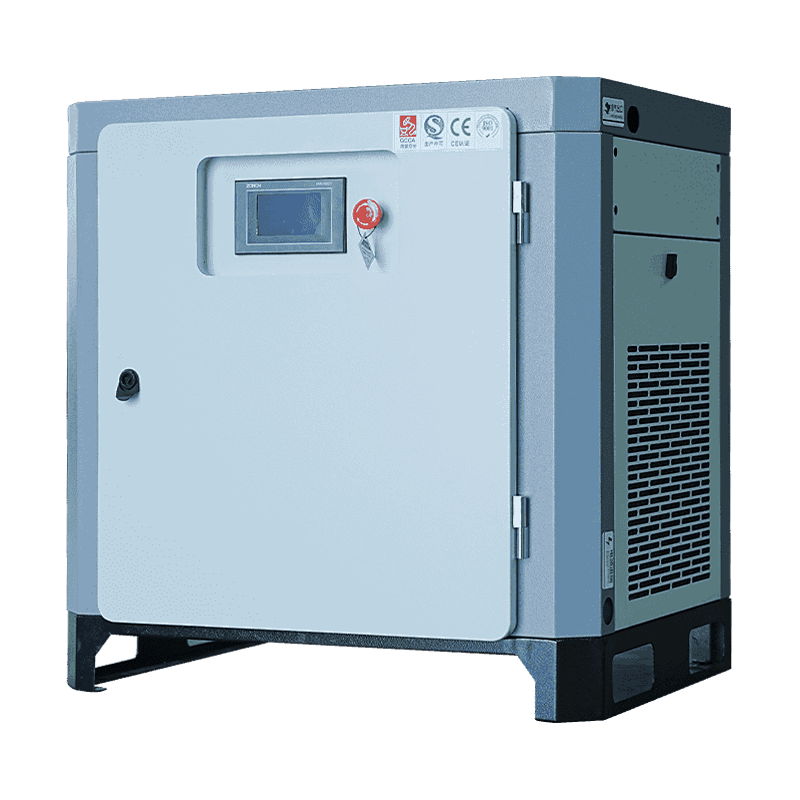
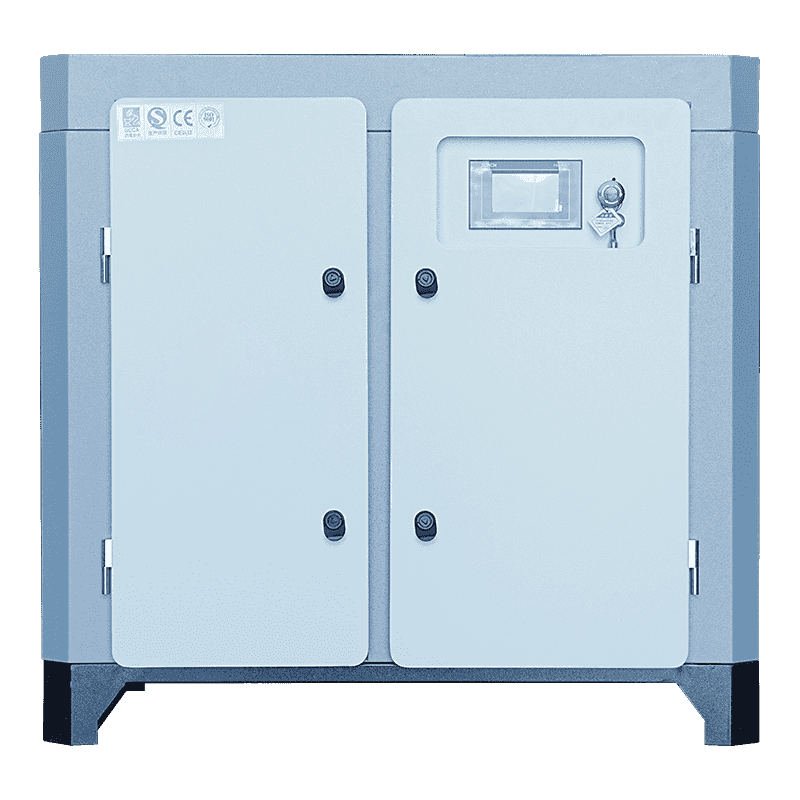
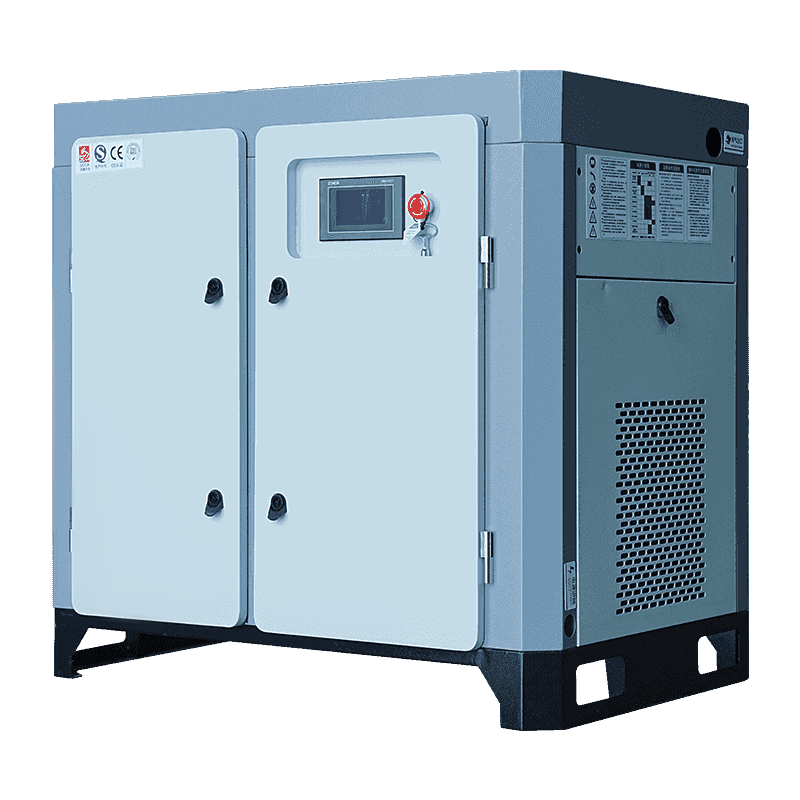
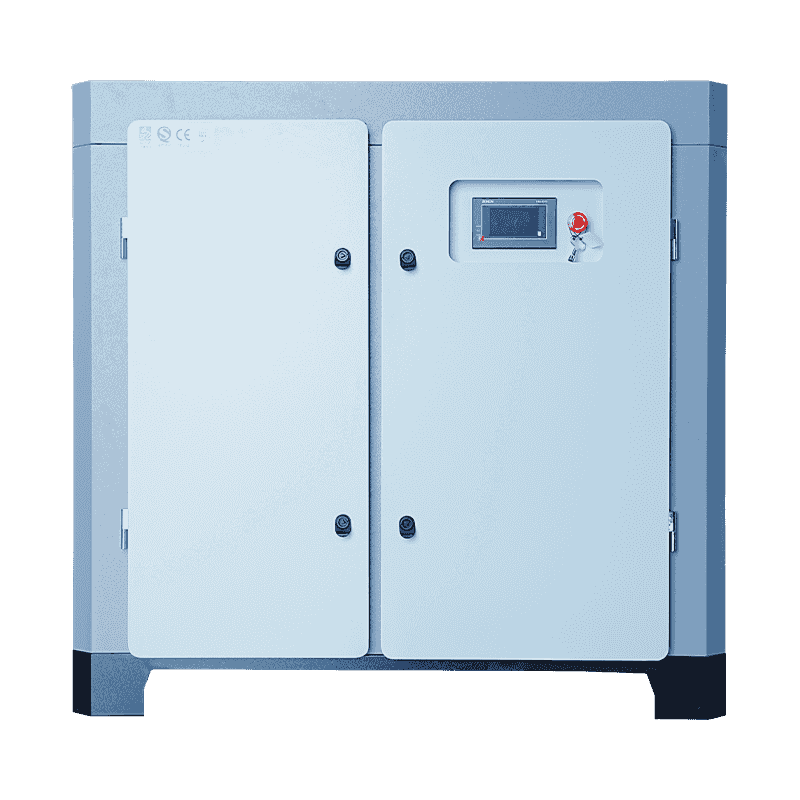
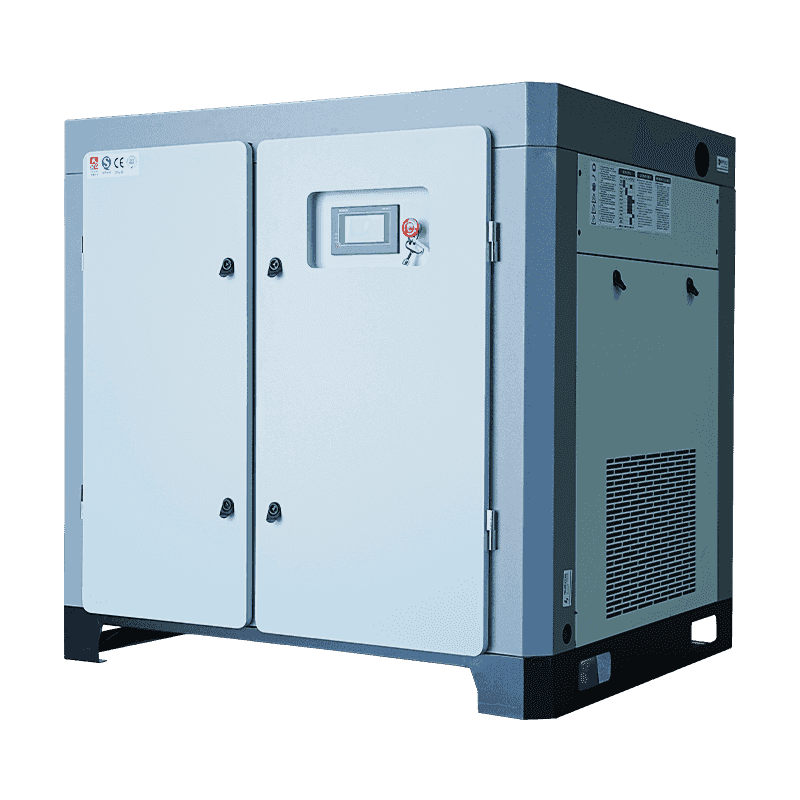
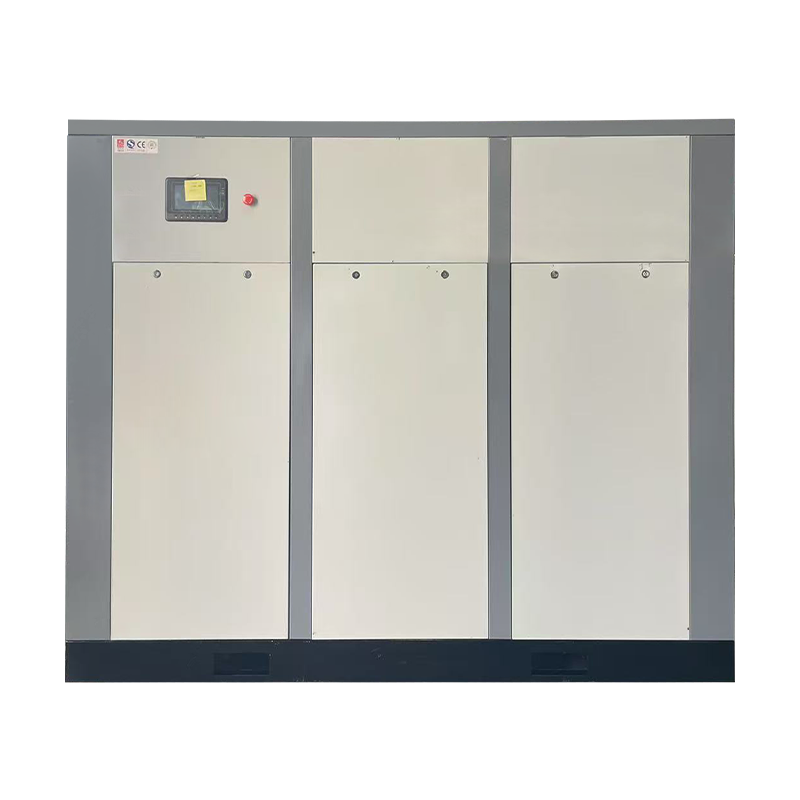
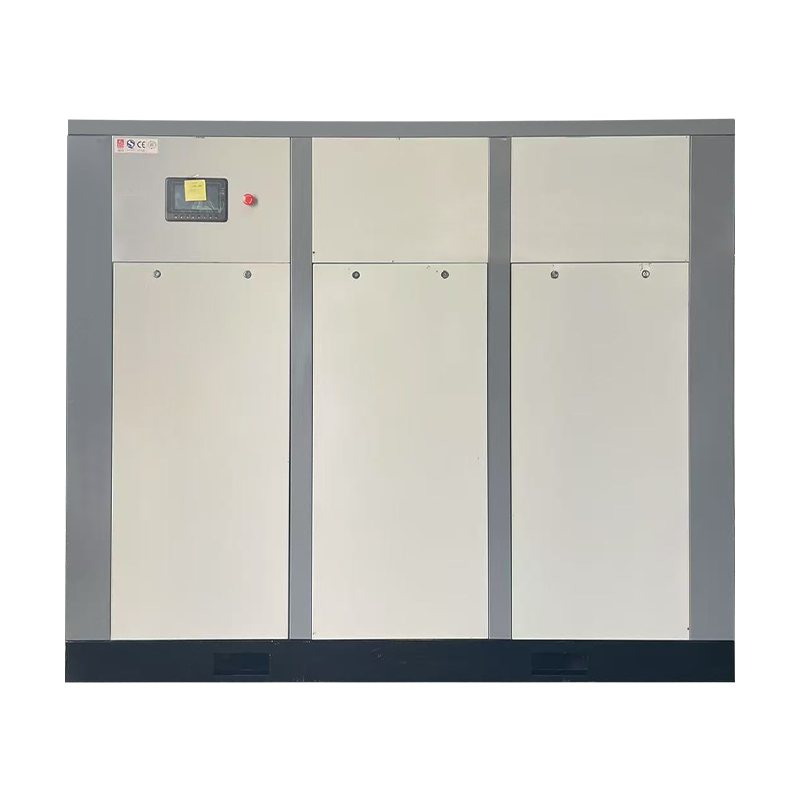
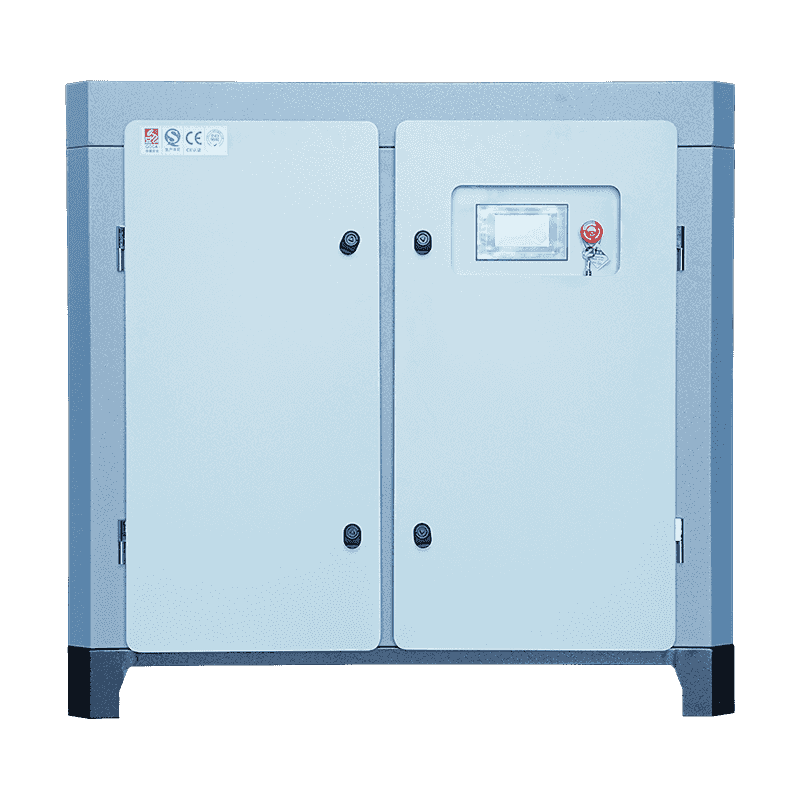
If the load is steady and the air is used for general industrial duty, a micro-oil single-stage 50 hp package is often the simplest commercial choice. Haidebao’s range includes a 50 hp micro-oil single-stage model for that kind of duty.
 50HP Micro-Oil Single-Stage Twin-Screw Air CompressorFor steady general industrial duty, this 50HP micro-oil single-stage package offers a simple commercial option with twin-screw compression and permanent magnet drive.View Product →
Build the demand picture before comparing packages. Sum the tools and processes that run at the same time, then add a margin after leak repair. A common planning margin is 15–25% for growth and control stability, but the right number depends on how peaky the plant is.
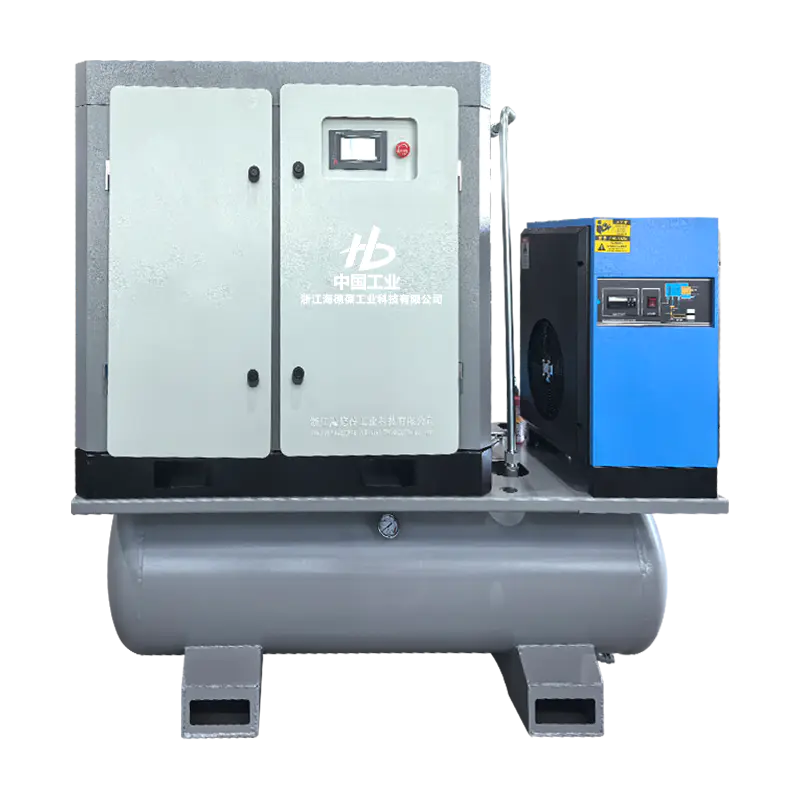
For a broader review of compressor types and buying criteria, the site’s air compressor types and buying guide is a useful cross-check. Use this sequence: required cfm at pressure, storage and piping, compressor type, then electrical and service access. If a vendor starts with horsepower, ask what cfm the package delivers at the plant’s real pressure.
Most 50 hp buying decisions come down to four package types. The table below is a procurement view, not a claim that every type is available at every horsepower.
| Configuration | Typical best fit | Strengths | Trade-offs | Buyer check |
|---|---|---|---|---|
| Micro-oil single-stage | General industrial air, one or two shifts | Lower first cost and straightforward maintenance | Oil carryover needs filtration | Confirm cfm at 100–125 psi and service intervals |
| Micro-oil two-stage | Higher run hours with an efficiency focus | Better specific power at suitable pressures | Higher first cost and more complex service | Compare input kW at the same pressure |
| Oil-free single-stage | Food, pharmaceutical, electronics, clean process | Reduces oil contamination risk in the air stream | Higher cost and tighter filtration demands | Define ISO 8573-1 purity class and dryer dew point |
| Oil-free two-stage | Clean air with high duty | Combines clean-air operation with efficiency potential | Highest cost and larger footprint | Check ambient limit, cooling, and service access |
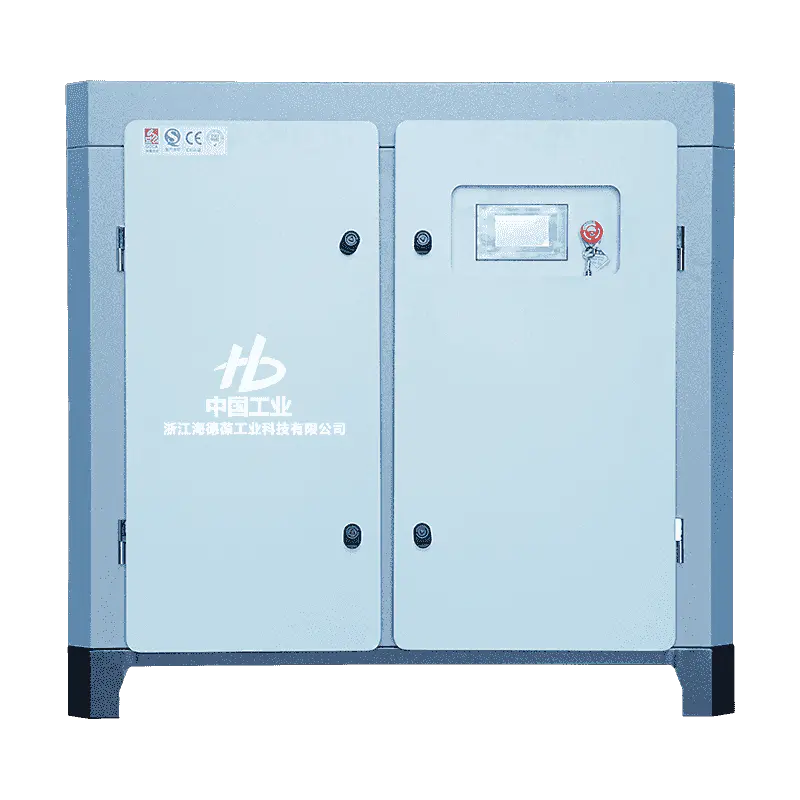
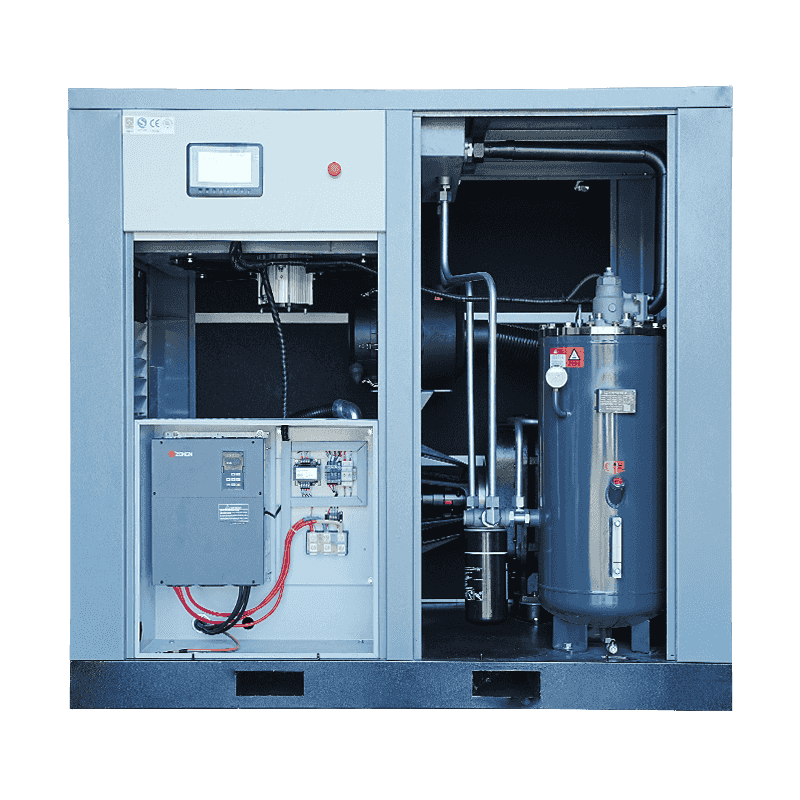
If the plant needs clean air for food, pharmaceutical, electronics, or sensitive coating work, oil-free may be necessary; if not, micro-oil usually offers a lower first cost and simpler service. Haidebao’s oil-free single-stage range is the starting point for clean-air duties.
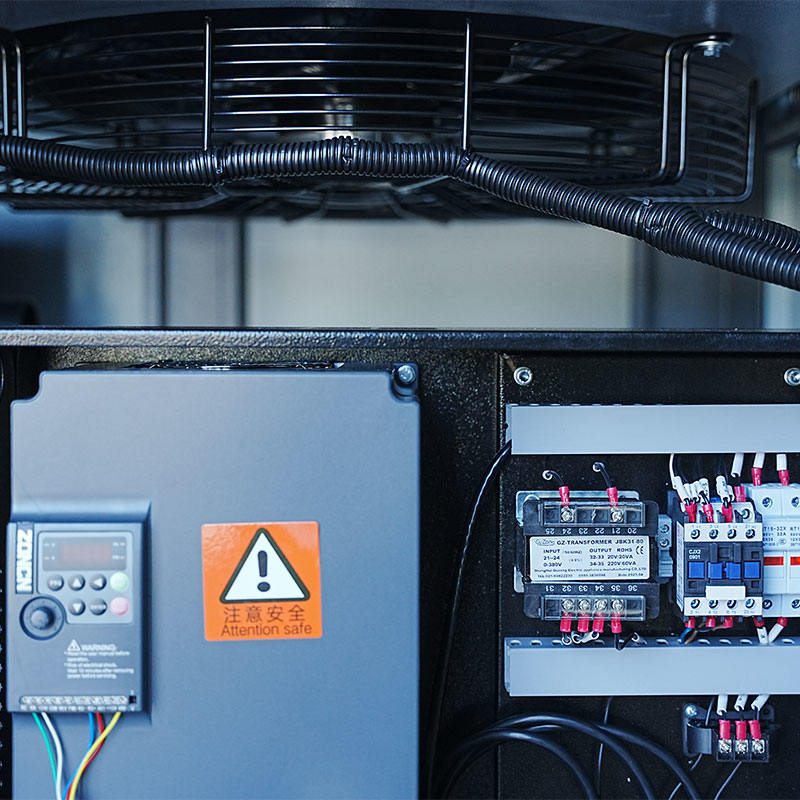
 Custom Oil-Free Single-Stage Screw Air CompressorFor clean-air duties, this customizable oil-free single-stage compressor uses integrated head-and-motor design, permanent magnet motor and variable-frequency control to adjust output to load.View Product →
The most expensive problems are rarely on the datasheet. They appear as nuisance trips, pressure drops at the far end of the line, or a compressor room that cannot shed heat in summer.
Haidebao’s factory and equipment page shows the production side of this support model; buyers should still request the specific test sheet, CE certificate scope, and quality-system certificate for the quoted model.
A 50 hp compressor is a long-run energy purchase. A 37 kW motor at 75% average load, 8,000 hours per year, and $0.10/kWh uses about 22,200 kWh per year, or roughly $22,200 in electricity. A 5% specific-power difference between two otherwise suitable packages is about $1,110 per year at that duty. Over a decade, that gap matters more than a small price difference at order.
Use the quoted package input kW, not motor nameplate alone. Multiply by average load fraction and annual hours, then by your tariff. If the quote gives only cfm and horsepower, request the specific power in kW per 100 cfm or the input kW at the stated pressure. Compare at the same pressure and same air quality; otherwise the comparison is not like-for-like.
Leaks, artificial demand, and inappropriate pressure setpoints often cost more than the difference between two compressor models. A leak survey and a pressure profile can reduce required cfm before you decide between 50 hp and 75 hp.
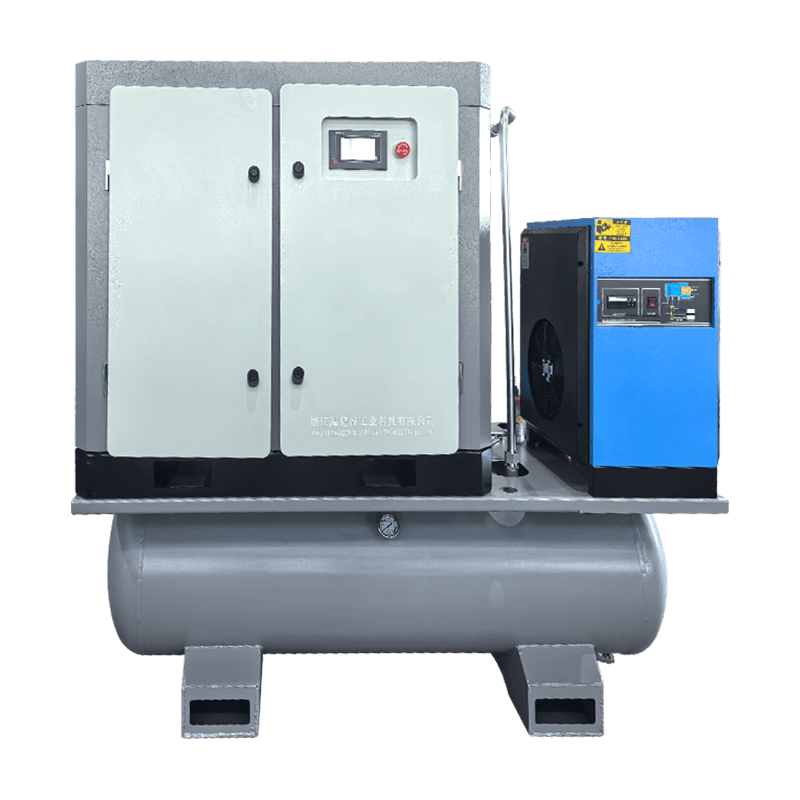
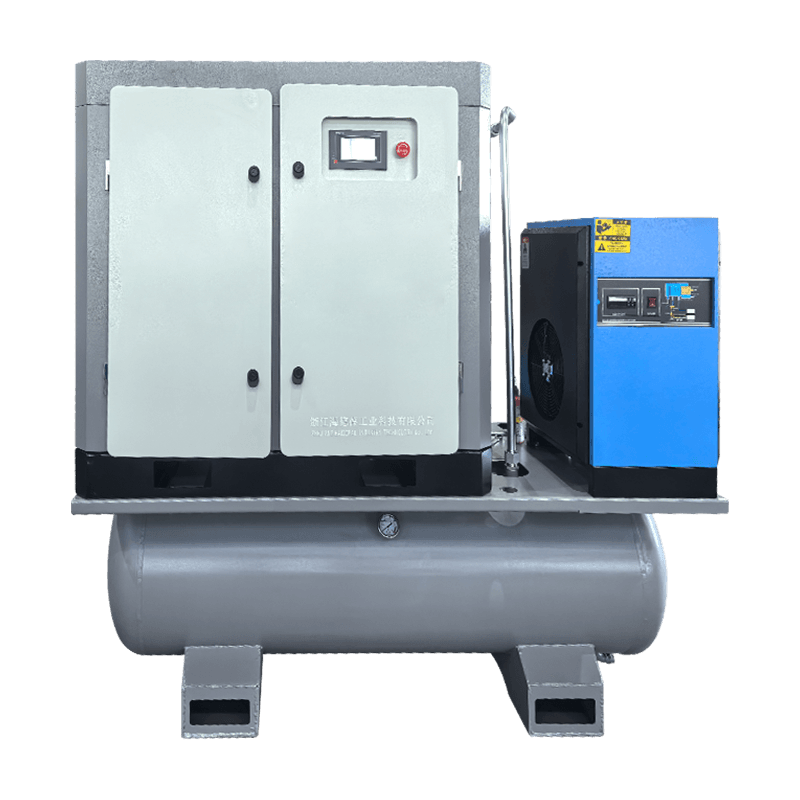
A 50 hp compressor is a sensible fit when measured demand sits comfortably inside its delivered cfm at the required pressure, the duty is one or two shifts, and the plant has room for a receiver, dryer, and service access. It also matches general fabrication, woodworking, packaging, textile, and maintenance-shop loads where micro-oil air is acceptable.
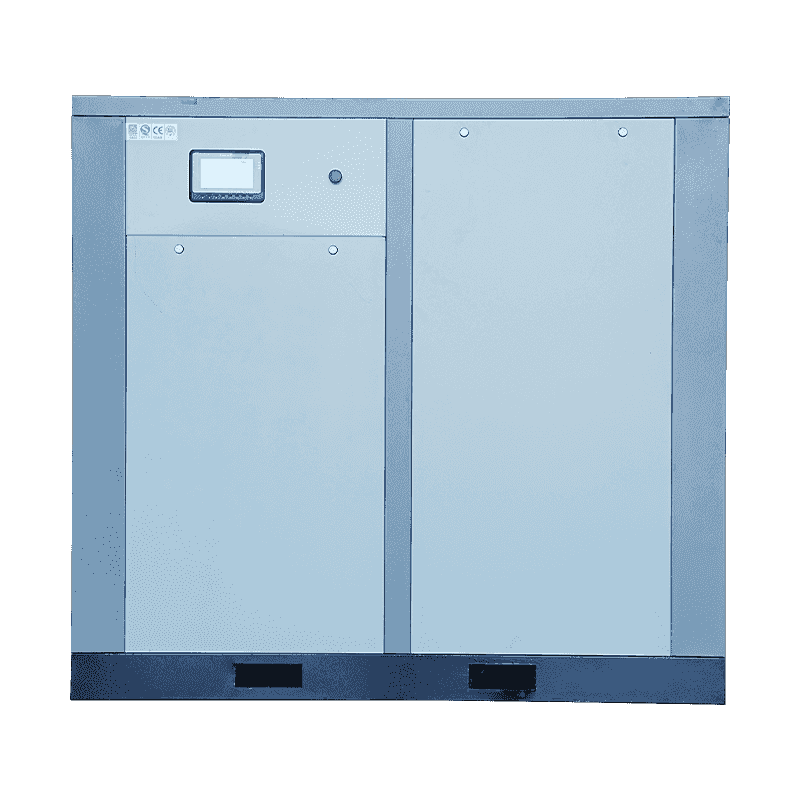
Step up when the unit would run near full load for most of the shift, when peak demand is driven by several simultaneous users, or when a 24/7 process cannot tolerate short cycling. In those cases, a 75 hp single-stage package may be the lower-risk next step before considering a larger two-stage machine.
 75HP Micro-Oil Single-Stage Twin-Screw Air CompressorA lower-risk step for near-full-load duty, this 75HP micro-oil single-stage unit uses twin-screw compression and CAE-supported design for high-load, high-pressure operation.View Product →
Two-stage compression becomes more attractive as horsepower and run hours rise, because the efficiency gain has more time to pay back. If the load profile points to 100 hp or above, compare two-stage options with an annual energy model rather than list price alone.
Write down the required cfm at pressure, air quality class, duty hours, ambient conditions, electrical supply, and available floor space. Then ask for a package quote with test data, dimensions, service intervals, and commissioning scope. A 50 horsepower compressor is a good specification only when those details line up; otherwise it is just a motor size.
If the plant is still uncertain, run a short demand log during the busiest week. That record will do more for the decision than a brochure claim. It also gives the service team a baseline for leak repair, pressure settings, and future capacity planning.
Your email address will not be published. Required fields are marked *
A dedicated after-sales service department is established, consisting of a professional sales team and skilled technical engineers. They are committed to providing year-round support, traveling to customer locations to deliver prompt and high-quality service.

Tel:86-0570-7221666

E-mail:[email protected]

Add: No.2 Qiming Road, Zhejiang Longyou Economic Development Zone, Mohuan Township, Longyou County, Quzhou City, Zhejiang Province, China
Copyright © Zhejiang Haidebao Industrial Technology Co., Ltd.

Custom Industrial Screw Air Compressor Manufacturers