 EN
 English
 Español
 عربى


Product Consultation
Your email address will not be published. Required fields are marked *

If your production line runs pneumatic tools, air cylinders, or spray equipment for most of a shift, you already know the pain of a compressor that cycles on and off, throws belts, and floods the room with heat. That is why continuous industrial users turn to a screw air compressor. Unlike a piston unit, a screw compressor compresses air continuously with two meshing rotors, which gives stable pressure, lower noise, and longer service intervals. The two decisions that define your machine are the oil system and the compression stage.
A screw air compressor is a positive-displacement machine that uses two helical rotors—a male rotor and a female rotor—to trap air and reduce its volume as it moves along the rotor chamber. Because the rotors rotate instead of reciprocating, the machine can deliver large volumes of compressed air with minimal vibration. In industrial settings, screw compressors normally run continuously and cover power ranges from a few kilowatts to well over a hundred kilowatts.
Air enters through the inlet valve and fills the space between the rotor threads as they unmesh. As the rotors turn, the air pocket shifts axially and shrinks, raising the pressure. At the discharge end, the compressed air exits through the outlet port. In an oil-injected machine, oil is sprayed into the compression chamber to seal the clearances, remove heat, and lubricate the rotors. The oil is then separated from the air downstream in an oil separator. In an oil-free machine, the rotors run at higher speeds and are coated with a special layer to avoid metal contact, but the working principle of volume reduction remains the same.
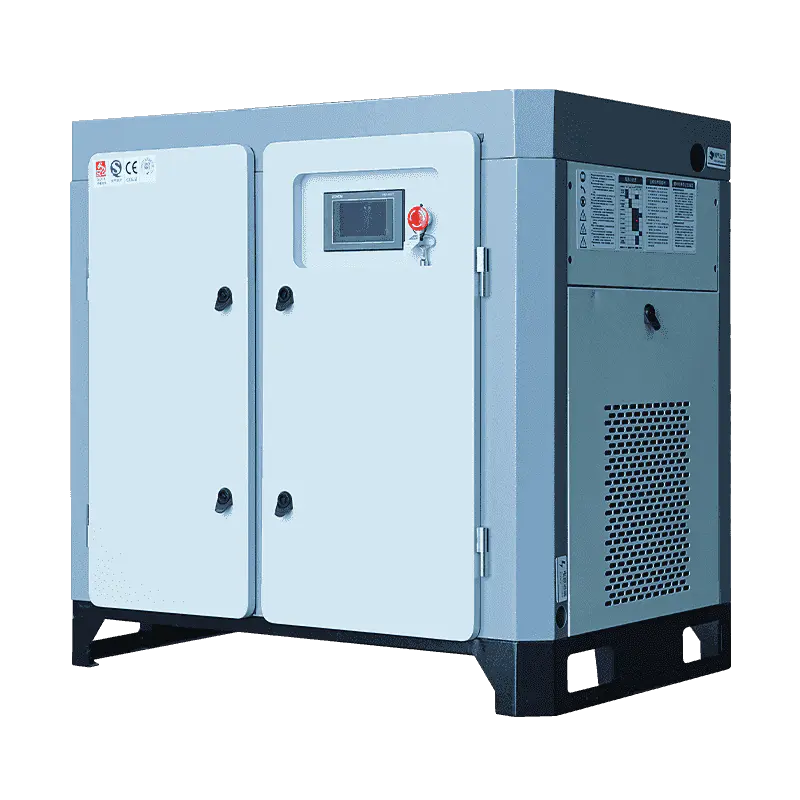
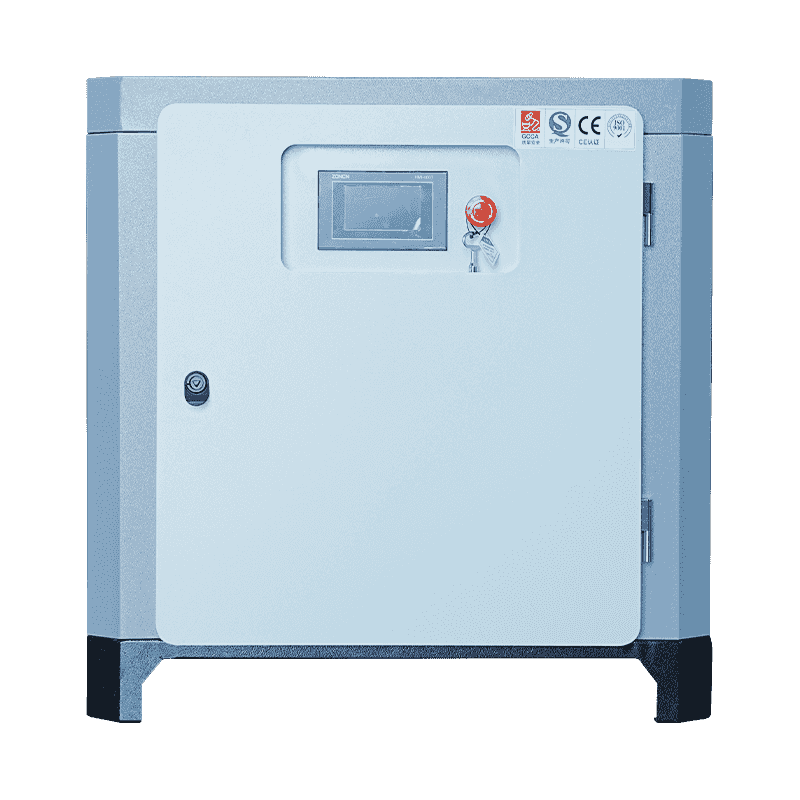
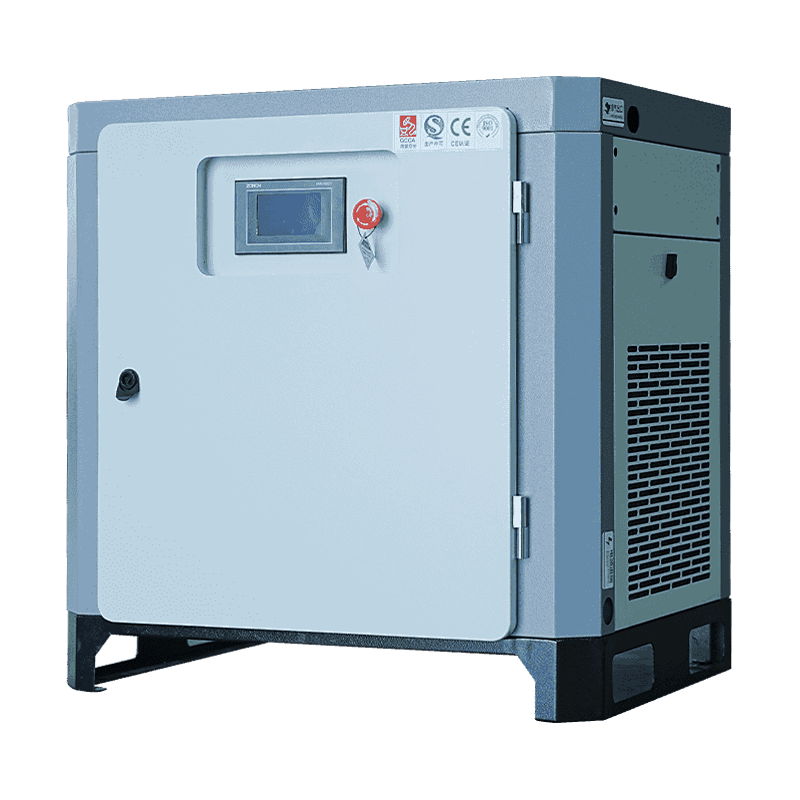
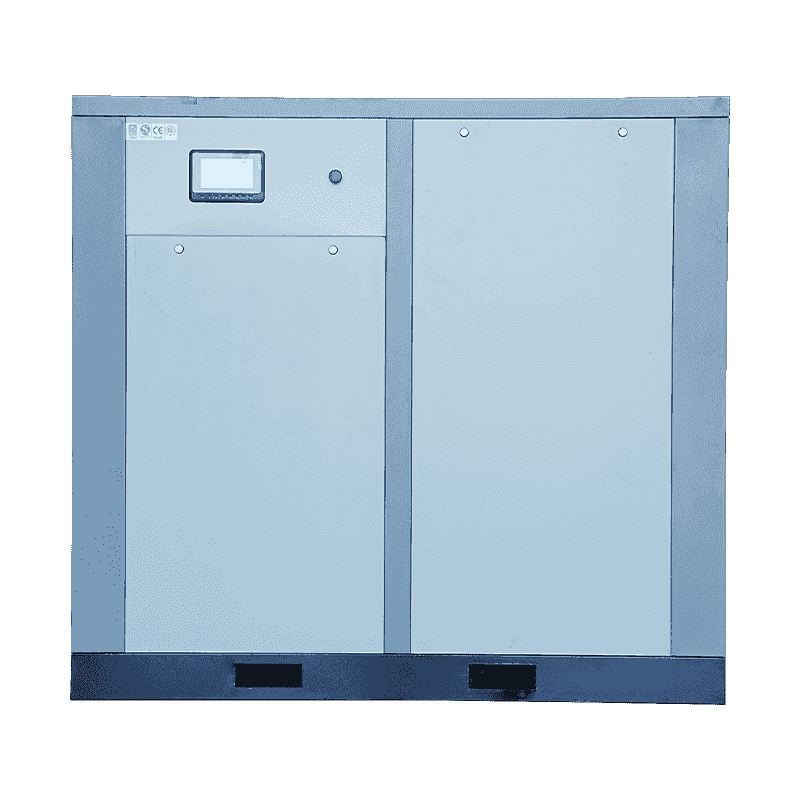
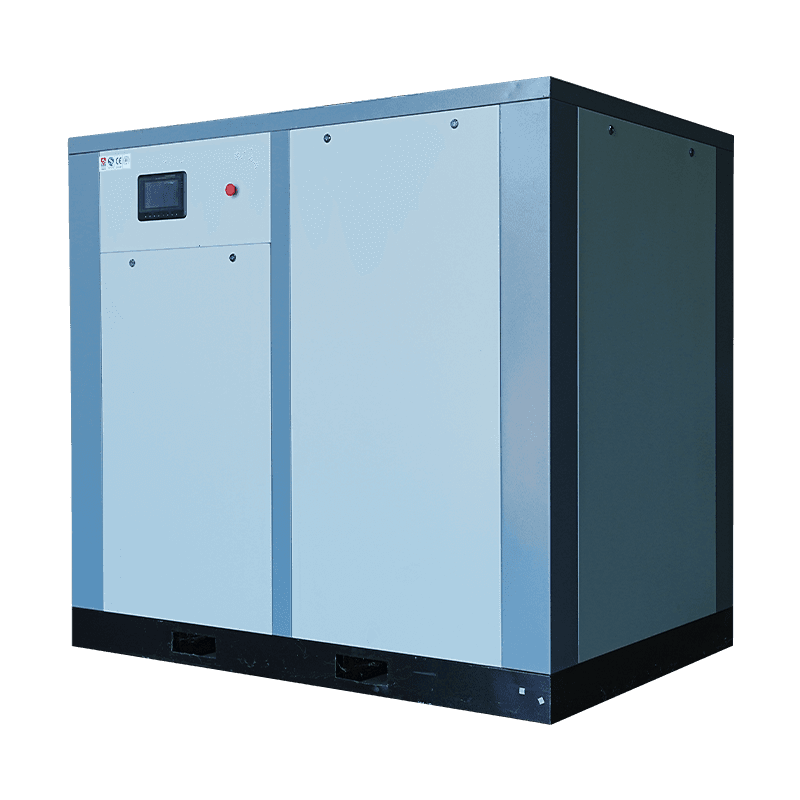
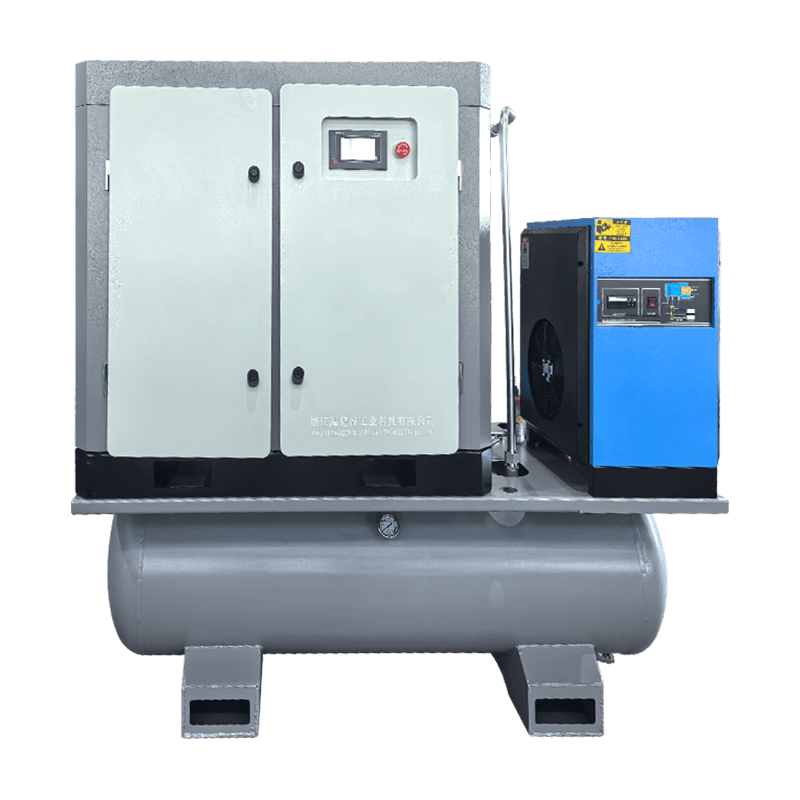
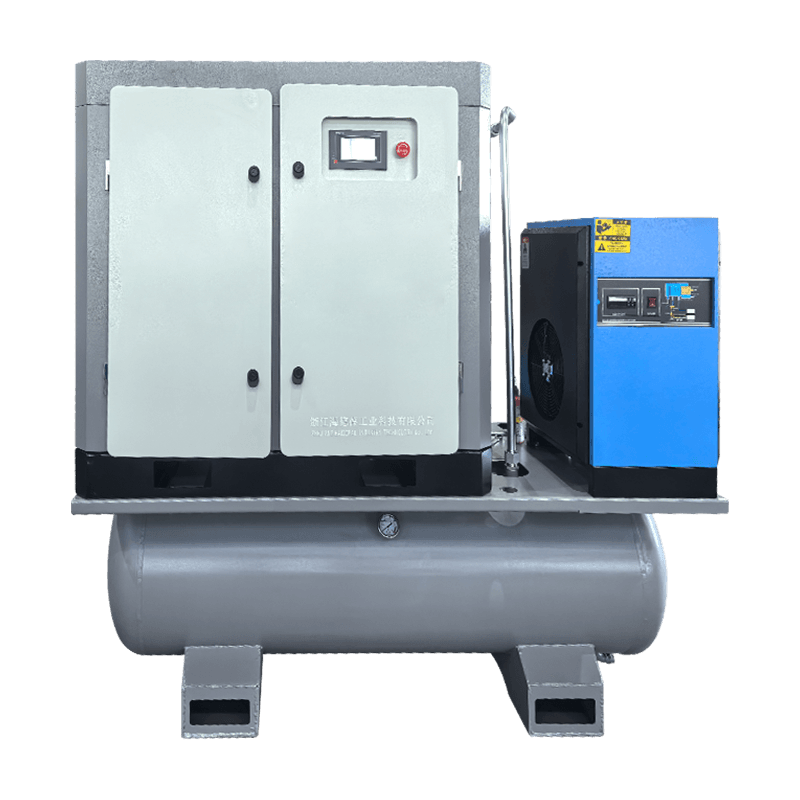
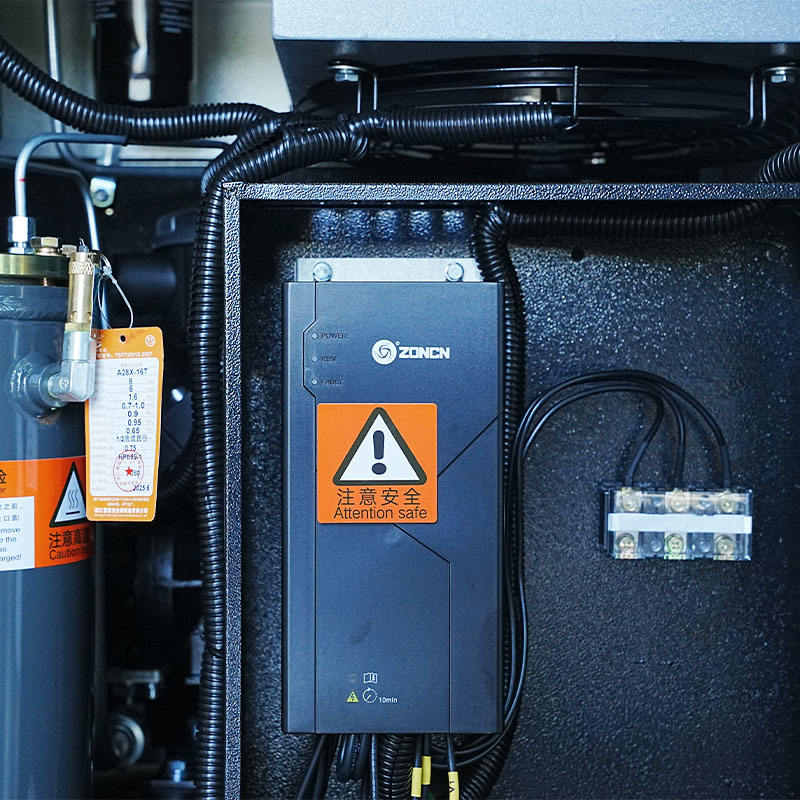 10HP Micro-oil Twin Screw Single-Stage CompressorThis 10HP micro-oil twin-screw single-stage compressor suits clean applications like pharmaceuticals and food processing, with oil carryover below 3 PPM and reliable cooling up to 46°C.View Product →
Oil-injected screw compressors account for the majority of units in metalworking, woodworking, textiles, and general assembly. The injected oil provides excellent sealing and cooling, so these machines are more forgiving of high ambient temperatures and have a lower initial cost. The compressed air does contain a trace amount of oil, typically below 5 ppm after the separator, which is acceptable for general pneumatic tools and most process air.
Oil-free screw compressors omit the oil in the compression chamber. They use water or special coatings to lubricate the rotors, or run them without any contact. These models are essential for food and beverage, pharmaceutical, electronics, and paint plants where oil carryover can ruin a product or contaminate a process. Oil-free units usually cost more and require stricter maintenance, but they eliminate the need for additional carbon filters and many compliance risks.
| Factor | Oil-injected | Oil-free |
|---|---|---|
| Air purity | Residual oil up to a few ppm | Zero oil in compression chamber |
| Initial cost | Lower | Higher |
| Efficiency | Good over wide load range | Good at full load, sensitive to speed |
| Typical clients | Machinery, textile, construction | Food, pharma, electronics |
| Maintenance | Oil and filter changes at set intervals | Special seals, on-time service is critical |
Single-stage screw compressors compress air in one rotor set. They are simple, compact, and well suited for standard 7–10 bar systems. Two-stage screw compressors compress the air twice, usually with an intercooler between stages. This reduces energy consumption for higher pressure ranges (above 10 bar) and gives a lower discharge temperature, so the machine can run heavily for years without thermal stress.
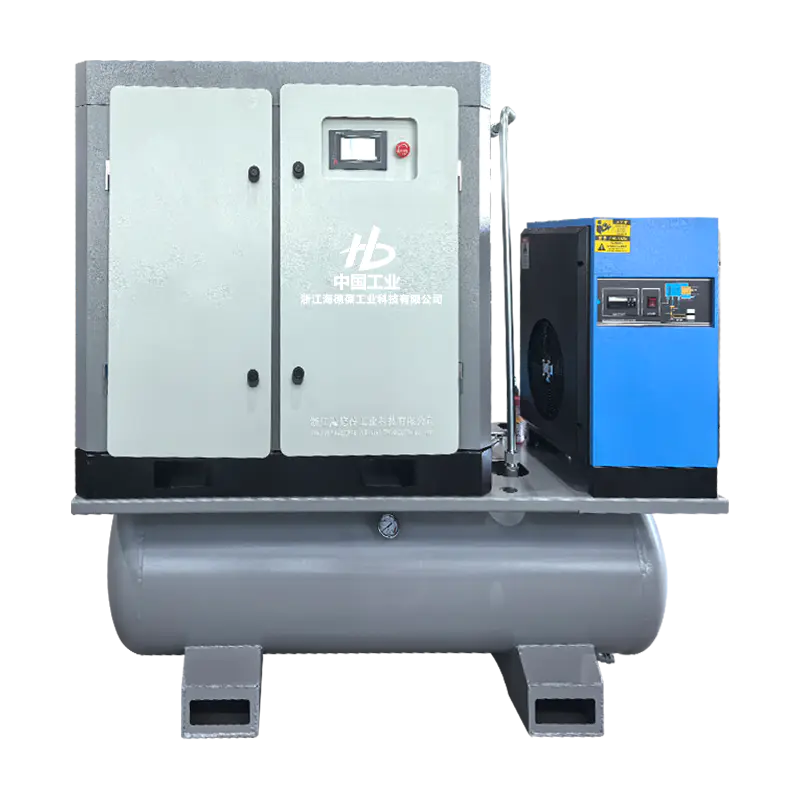
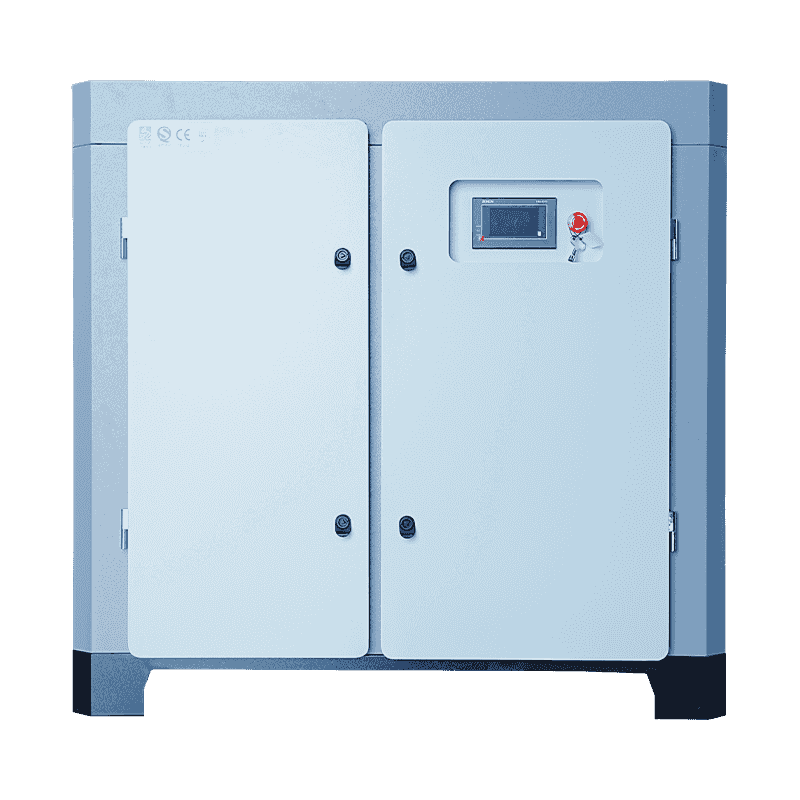
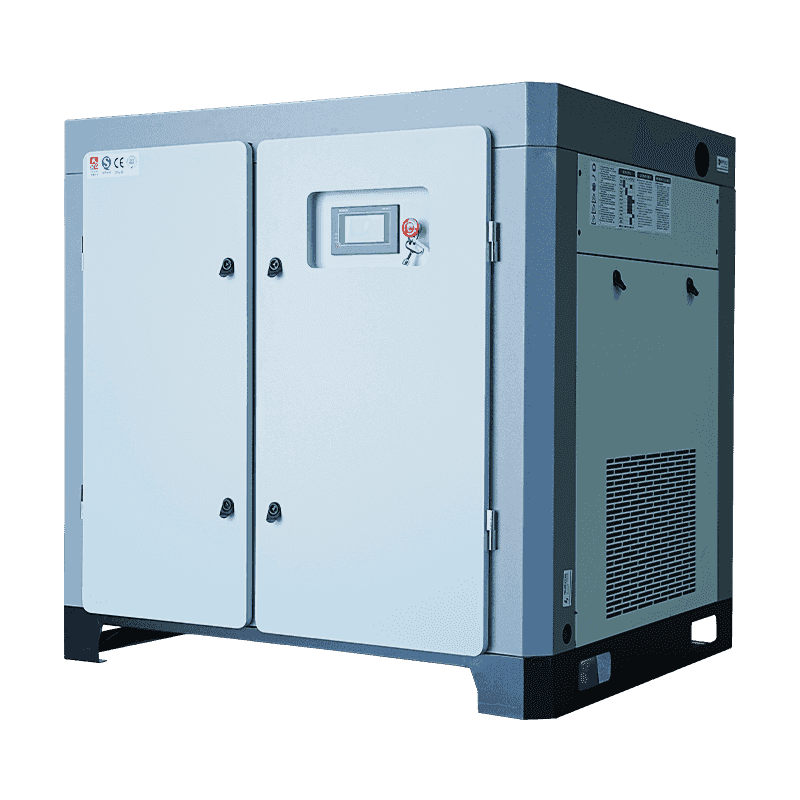
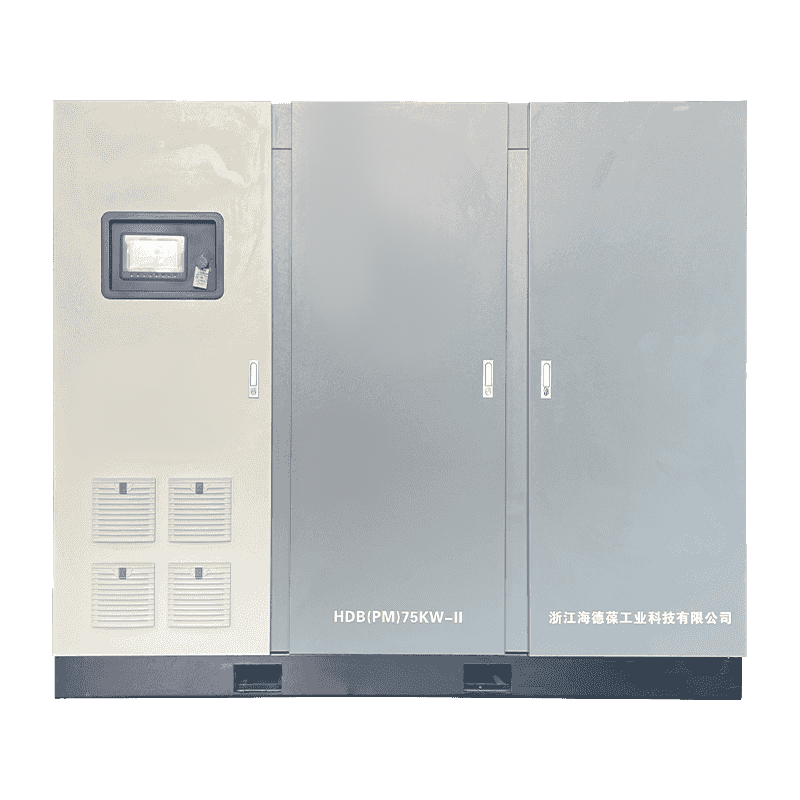
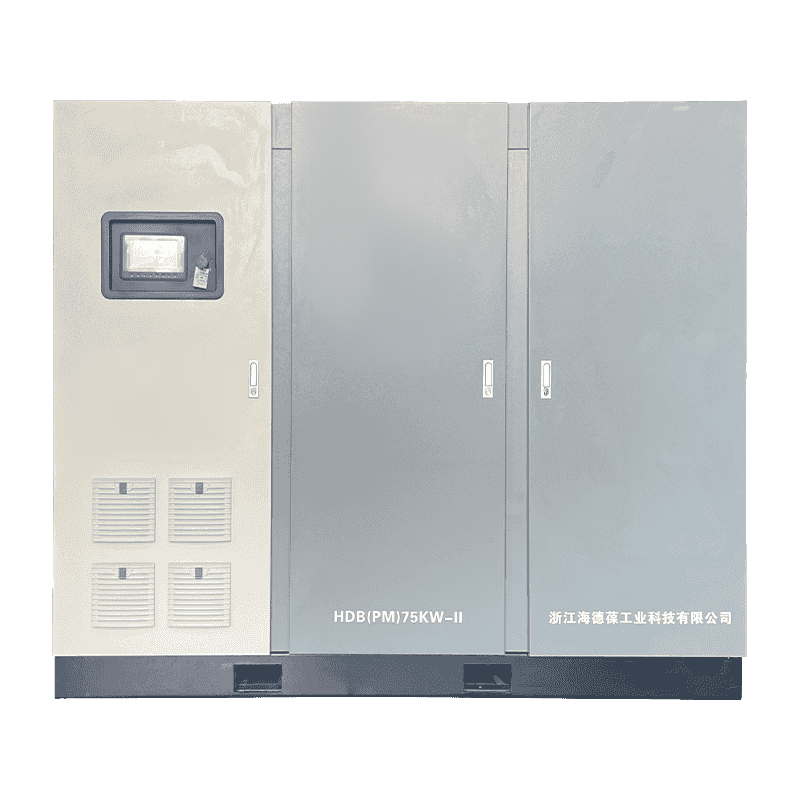
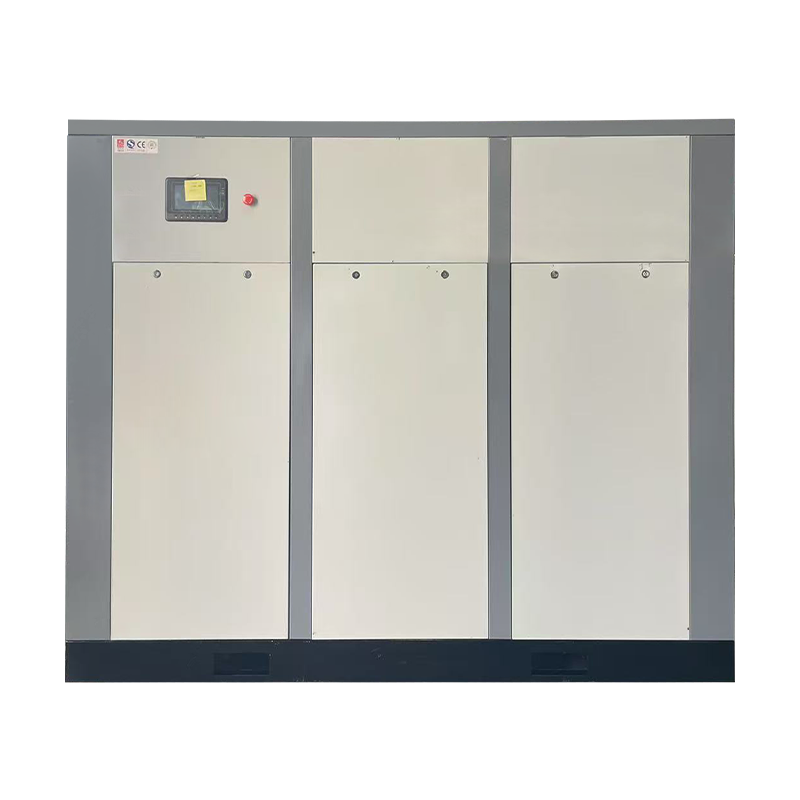
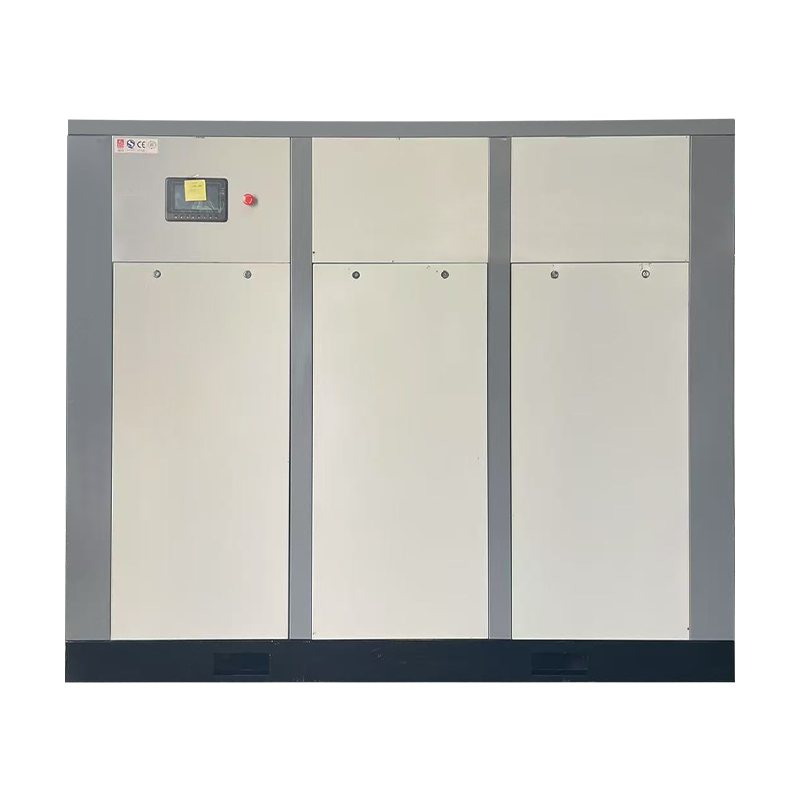
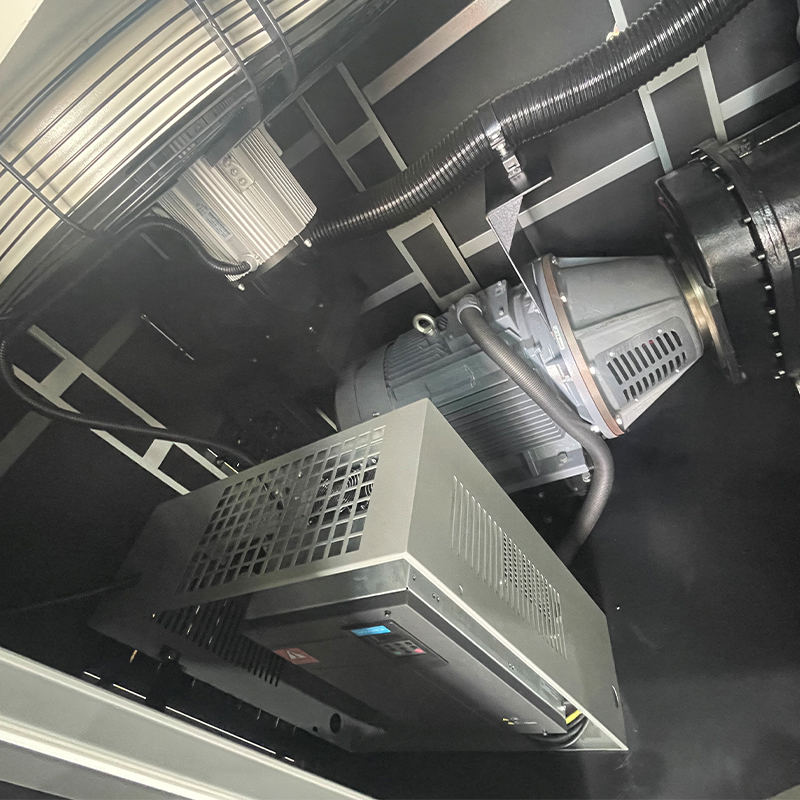 100HP Micro-oil Two-Stage Screw CompressorThis two-stage 75 kW unit delivers continuous air with patented rotors and direct drive, saving 10–15% energy for high-pressure duty, ideal for chemical and food plants.View Product →
In practice, a two-stage unit can save 10–15 percent in electricity for the same duty cycle, which usually pays back within two to three years. If your plant already operates at 10–13 bar or uses a lot of air for demanding processes, the extra complexity of a two-stage machine is often worth it. Single-stage remains a reliable choice for smaller workshops and moderate duty cycles.
Whether you buy from a global brand or a regional factory, the performance of a screw air compressor is determined by a few core parts.
The air end is the heart of the compressor. Quality rotor coating, tight clearances, and precision bearings determine how long the unit stays efficient. Lower-grade coatings can break down if the unit is driven hard in a hot environment.
Belt-driven machines are cheaper to repair but can cause energy losses and alignment issues. Direct-driven units are generally more efficient and quiet, especially in higher horsepower ranges.
Air-cooled compressors use a fan and radiator; water-cooled versions use a heat exchanger. For tropical climates or high ambient temperature plants, a properly sized cooler is essential to avoid overheating shutdowns.
Modern units are equipped with a PLC controller that monitors pressure, temperature, hours, and filter service life. Look for a controller that provides overload protection, start/stop or load/unload logic, and communication options for remote monitoring.
Before you compare prices, define the following requirements.
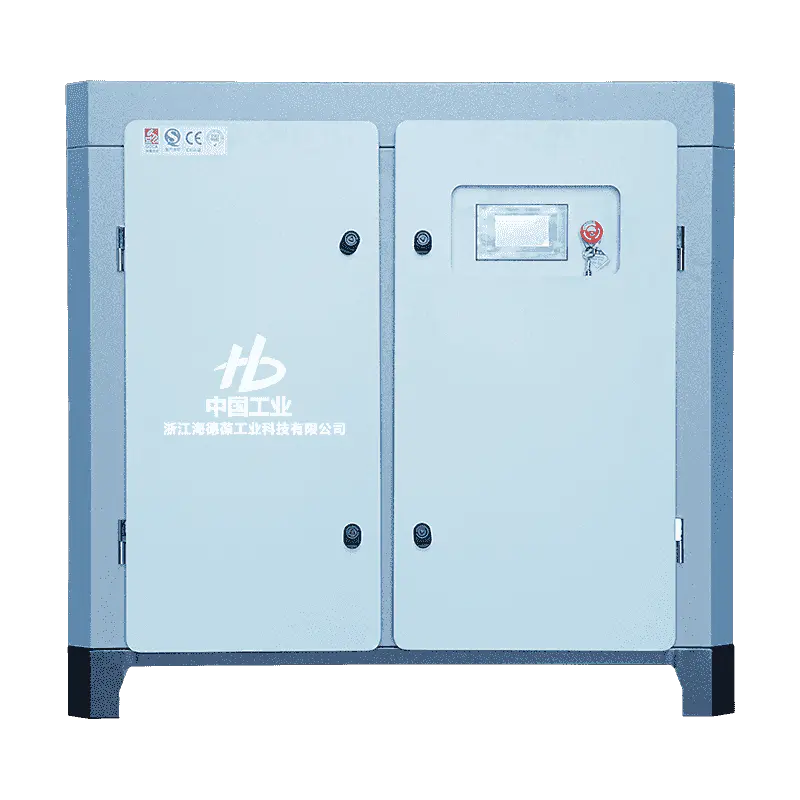
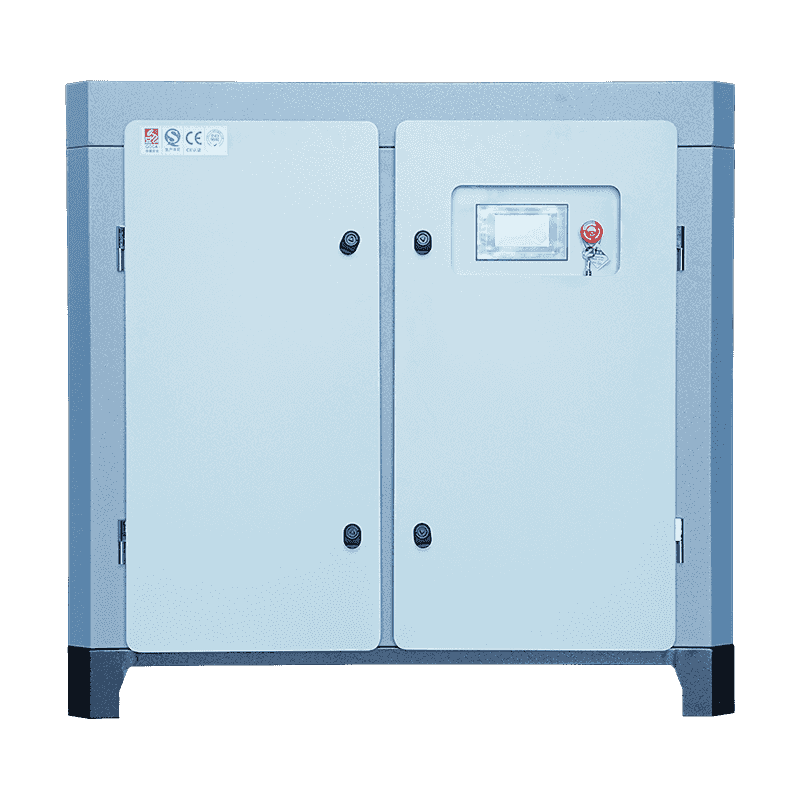 Oil-Free Single Stage Screw CompressorThis oil-free single-stage screw compressor features a permanent magnet motor with frequency conversion, achieving super first-class energy efficiency for industries needing clean, oil-free air.View Product →
For most plants, the selection factors carry different weights. The chart below is an illustration based on common plant engineering priorities, not a substitute for a compressor audit.
When you evaluate proposals, ask for specific motor power, free air delivery (FAD), specific power (kW per cfm), and sound level. These numbers allow you to compare efficiency across brands. Also check whether the stated values refer to inlet conditions or actual free air delivery, because a compressor that looks cheap on paper can be expensive after derating for altitude or high temperature.
A screw air compressor is designed for thousands of hours, but it does not run forever without care. Oil-injected units require oil and separator element changes according to the manufacturer's schedule. Typical intervals are 2,000–4,000 hours for oil, 4,000–8,000 hours for the air filter, and 4,000–8,000 hours for the oil separator depending on operating conditions. Oil-free units have more stringent service requirements, often with compulsory rotor coating inspections at defined intervals.
Energy consumption dominates the total cost of ownership. Over ten years, electricity accounts for roughly 70–80 percent of the owning cost, so buying a slightly more expensive unit with better specific power can save thousands of dollars. Pressure drop across filters, intake restrictions, and high ambient temperature all force the compressor to work harder, so keep the cooling fins clean and the air inlet unobstructed.
A compressor is only as reliable as the quality system behind it. Our factory in Quzhou, Zhejiang applies ISO 9001 manufacturing procedures and CE certification. Every screw air compressor goes through a standardized run-in test, a leak test, and an electrical check before shipping. The advantage of working directly with the manufacturer is that you can request customized voltage, control voltage, and cooling configuration without waiting for a distributor to relay the request.
If you are evaluating suppliers, ask for evidence of their testing process and references. A supplier that can show you the test report for your specific unit will give you more confidence than one that only provides a brochure. You can see the production setup on our factory page.
Start with a demand measurement, then match the compressor type and stage to the pressure and air quality your process needs. If your application is general manufacturing with 7 bar pressure, an oil-injected single-stage screw compressor is likely the most economical. For clean-air processes or high-pressure duty, choose an oil-free or two-stage model. Talk to our sales engineers before you finalize your specification; they can help you verify the FAD and power figures against the site conditions.
Contact our team for a quote or technical drawing.
Your email address will not be published. Required fields are marked *
A dedicated after-sales service department is established, consisting of a professional sales team and skilled technical engineers. They are committed to providing year-round support, traveling to customer locations to deliver prompt and high-quality service.

Tel:86-0570-7221666

E-mail:[email protected]

Add: No.2 Qiming Road, Zhejiang Longyou Economic Development Zone, Mohuan Township, Longyou County, Quzhou City, Zhejiang Province, China
Copyright © Zhejiang Haidebao Industrial Technology Co., Ltd.

Custom Industrial Screw Air Compressor Manufacturers