
 EN
EN  English
 Español
 عربى
عربى

Product Consultation
Your email address will not be published. Required fields are marked *

A small fabrication shop is running three pneumatic grinders and a cleaning lance at the same time. The old piston compressor stays on almost continuously, the pressure gauge falls below 90 psi during peak demand, and the motor housing is too hot to touch. If this sounds like your plant, the decision between a single-stage and a two-stage air compressor is not theoretical. For most manufacturing settings where the highest tool pressure stays between 90 and 150 psi, a single-stage air compressor is the most economical and practical choice. It can be the right choice only when the unit delivers enough free air flow and is rated for the duty cycle you actually use.
A single-stage air compressor compresses air exactly once before sending it to the storage tank. In a piston design, one or more cylinders draw in atmospheric air, compress it in a single stroke, and then discharge it when the cylinder pressure reaches the setpoint. In a rotary screw design, one pair of rotors performs the same single compression step. The output pressure is commonly limited to about 90-150 psi, with many industrial units set at 100-125 psi.
The term "single-stage" describes the number of compression events, not the pump technology or the power rating. That is why you can find single-stage compressors from 2 hp to 75 hp and in both piston and screw configurations. What ties them together is their mechanical simplicity: one compression event means fewer moving parts, lower manufacturing cost, and easier routine maintenance.
A two-stage compressor adds a second compression step with an intercooler between stages. The first stage raises the air to an intermediate pressure, the intercooler removes heat, and the second stage compresses the air to the final discharge pressure. Cooler air at the inlet of the second stage means less energy is wasted pushing against heat, which is why two-stage units are more efficient when the final pressure is above roughly 150 psi.
| Factor | Single-Stage | Two-Stage |
|---|---|---|
| Discharge pressure | Usually 90-150 psi | Often 150-250 psi |
| Compression events | One | Two with intercooling |
| Suitability for continuous duty | Piston: 50-70% duty; screw: 100% | Heavy-duty piston and screw units can run continuously |
| Initial cost | Lower | Higher |
| Maintenance | Simpler, fewer parts | Additional intercooler and valves |
| Efficiency at high pressure | Acceptable below 120 psi | Better above 150 psi |
| Typical applications | Repair shops, woodworking, light manufacturing, intermittent tools | Continuous production, sandblasting, plasma cutting, high-pressure distribution |
The table shows the classic difference, but the boundary becomes blurry when you compare a single-stage screw compressor with a two-stage piston unit. A screw element has no reciprocating valves and can operate on a 100% duty cycle, so it often outperforms a piston machine of the same horsepower in continuous service, even though it is still a single-stage design.
Oil-lubricated compressor pumps are durable and have better temperature control because the oil carries heat away from the compression chamber. In piston units, the oil also lubricates the cylinder walls and rings. The trade-off is that airborne oil must be removed with filters, and the oil needs regular changes. Oil-free pumps use dry-running parts such as coated cylinders or closed bearings, which keep the air cleaner and reduce maintenance. They can, however, run hotter and may have a higher noise level or a shorter service life. The same logic extends to screw compressors: micro-oil models use oil for sealing, cooling, and lubrication, while oil-free models are reserved for food, pharmaceutical, electronics, and other clean-air applications.
Most fixed industrial compressors run on electric motors. Electric drive is quiet, produces no exhaust, and gives you consistent output with a simple starter. Gasoline or diesel engines only make sense for remote construction sites where grid power is unavailable. For a workshop or production building, an electric single-stage unit is almost always the correct specification.
The two numbers that matter most are pressure (psi) and free air delivery (CFM at the required pressure). Every pneumatic tool has a rated consumption in CFM. To size the compressor, list the tools that can run at the same time, add their CFM demand, and multiply by a safety factor of 1.25 to account for leaks, worn hoses, and future additions. For example, if simultaneous demand is 50 CFM at 100 psi, you need a compressor that can deliver at least 62.5 CFM at 100 psi. A single-stage unit can meet that number, but only if the pump is designed for your operating point rather than pushed to its upper limit. For a shop that needs 50 to 60 CFM at 100 psi, a 10 hp micro-oil screw compressor offers a compact single-stage option without the duty-cycle pause of a piston pump.
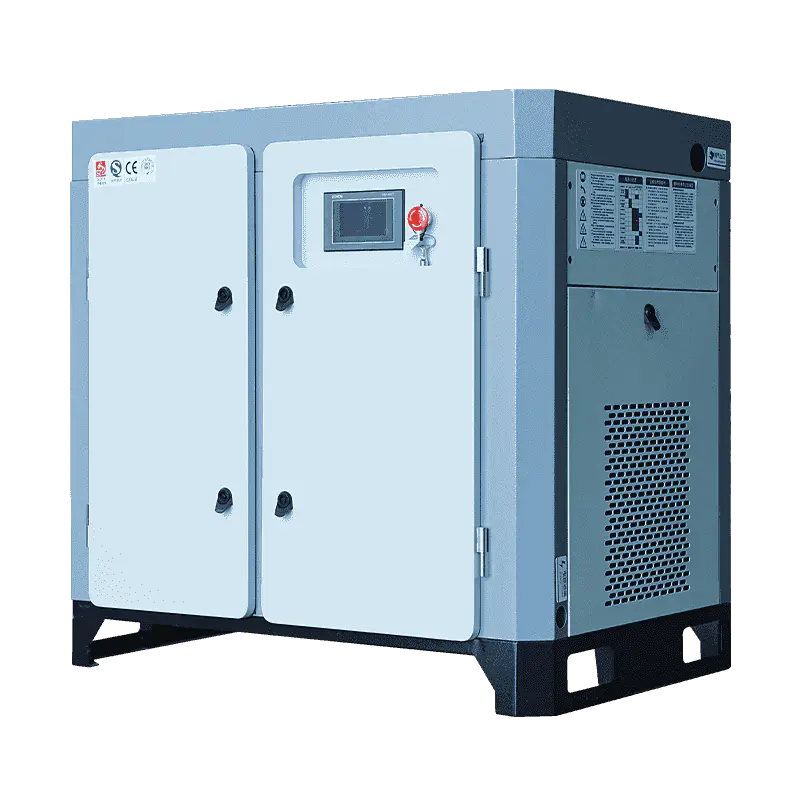
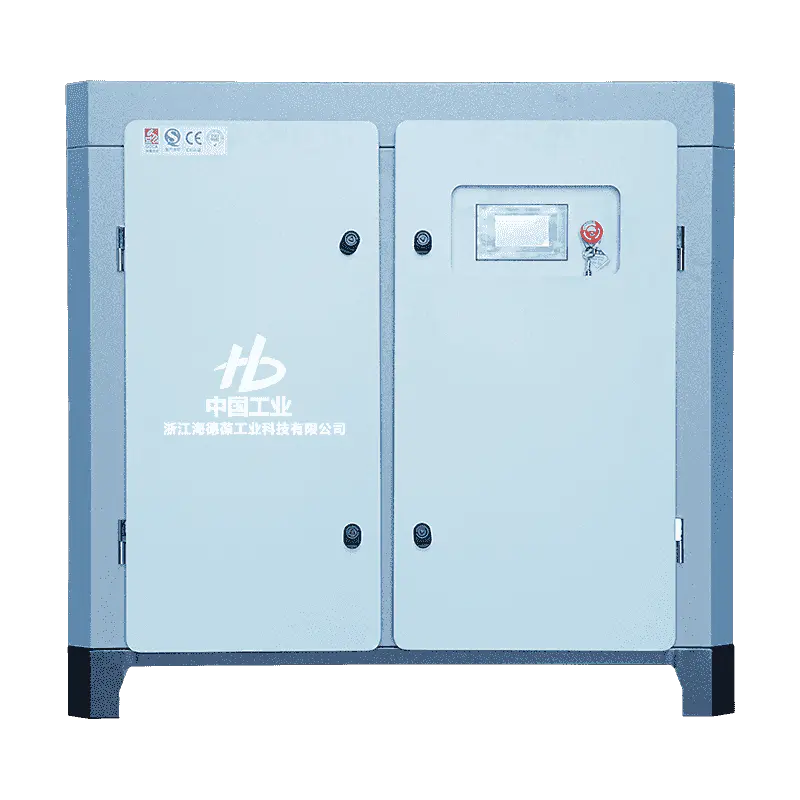
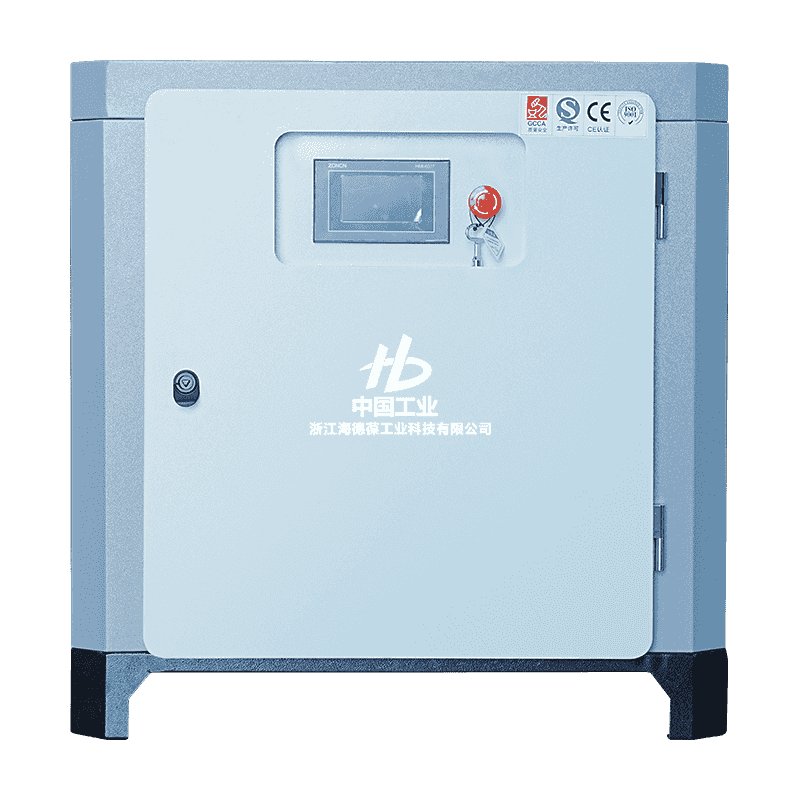
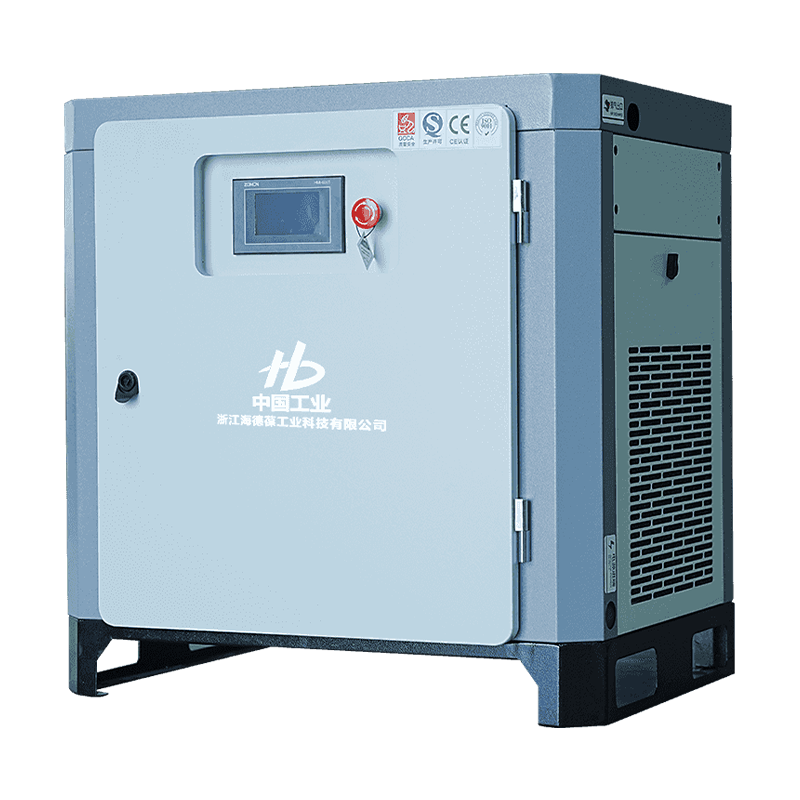
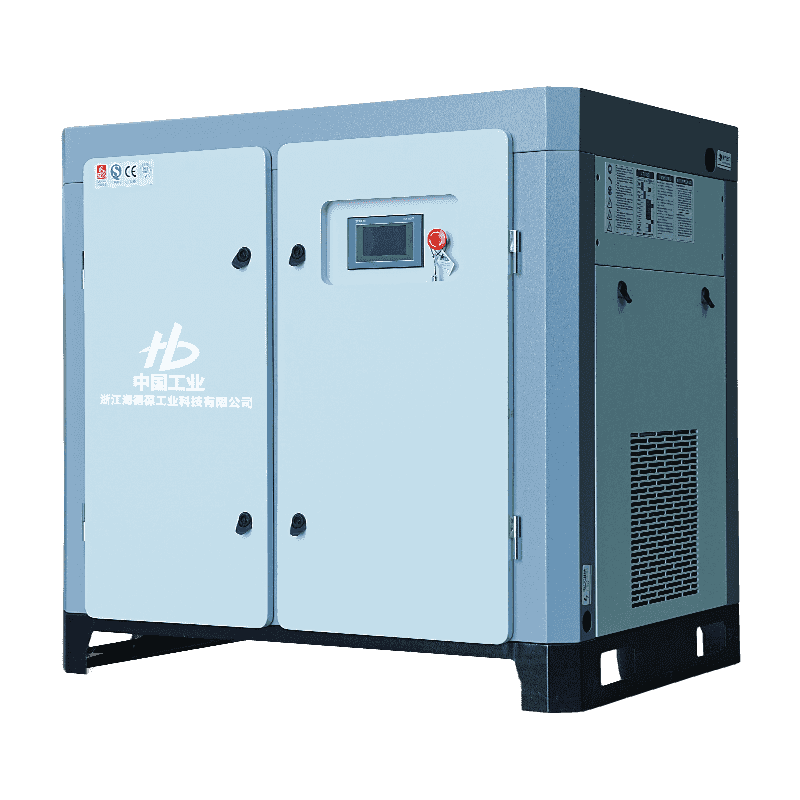
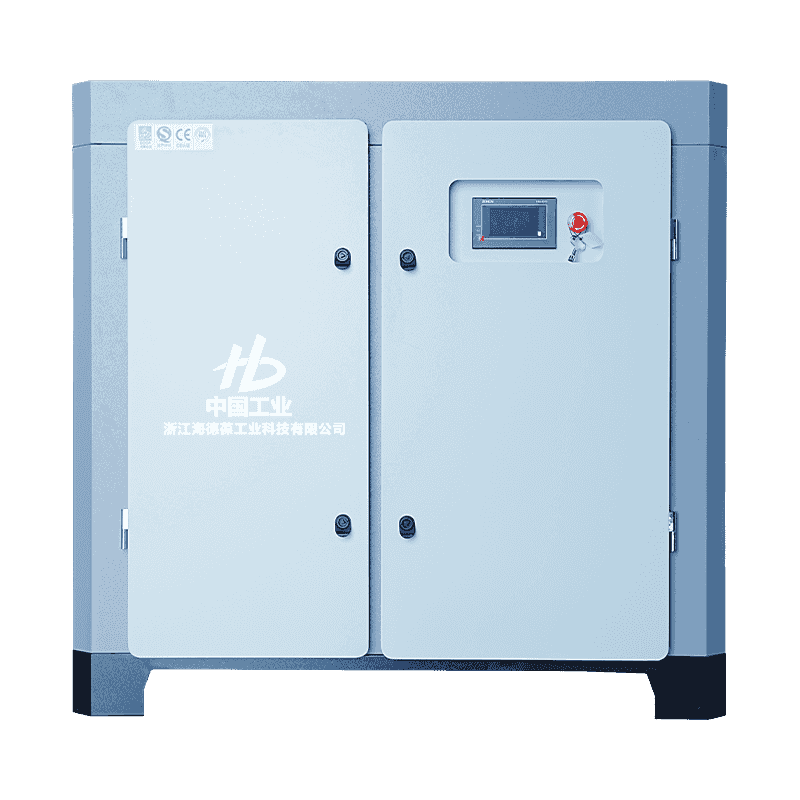
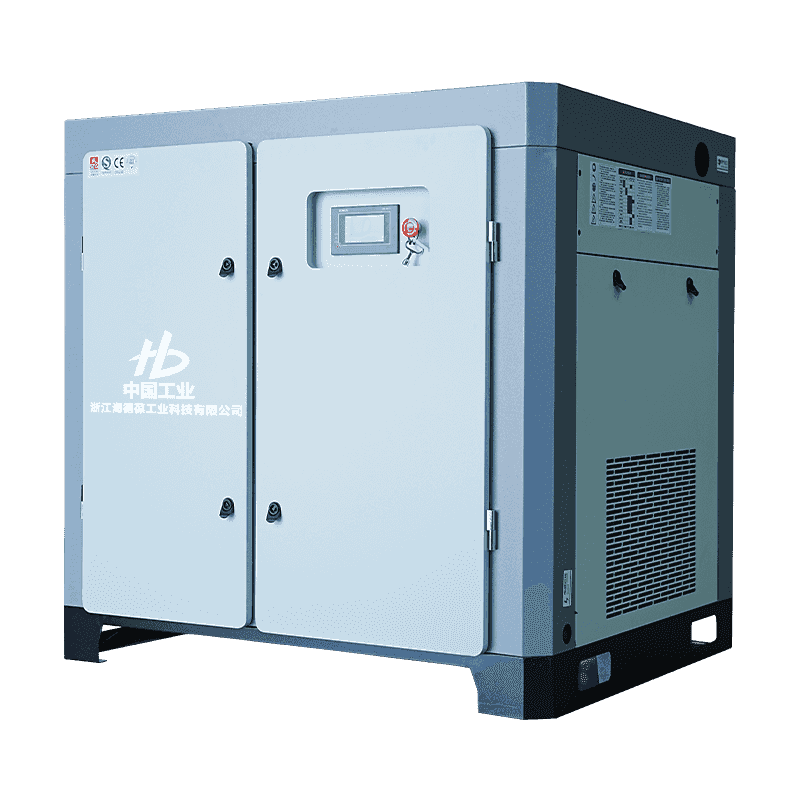
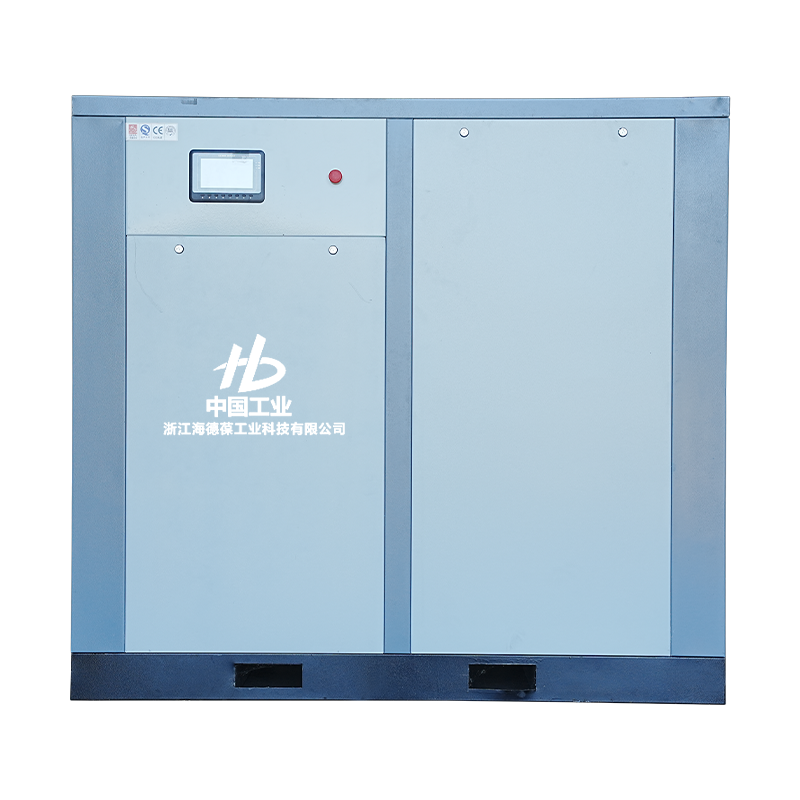
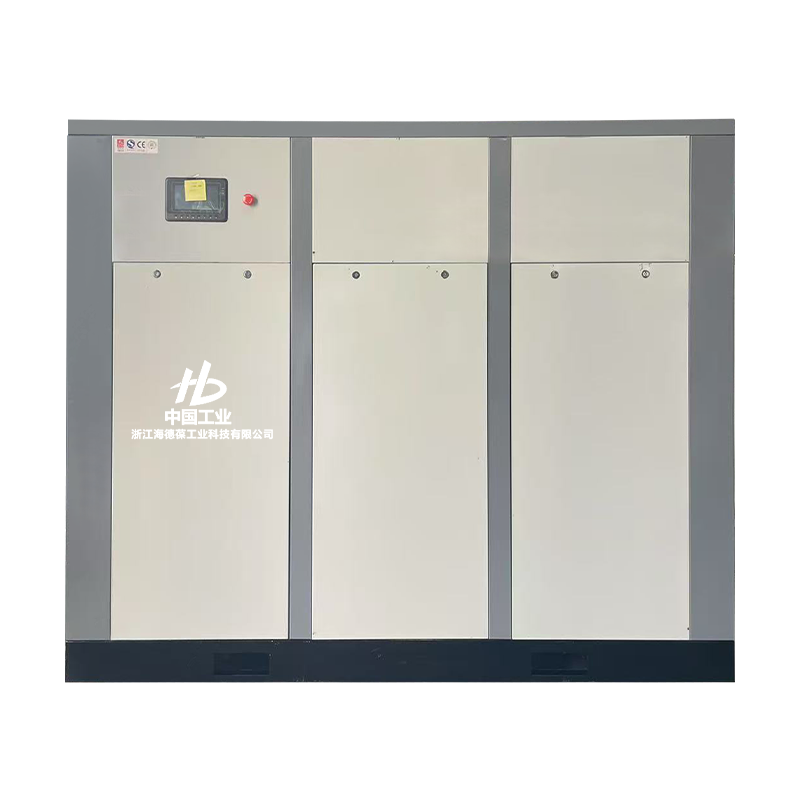
 Wholesale 10HP Micro-oil twin screw single stage compressor Factory, Suppliers -Zhejiang Haidebao Industrial Technology Co., Ltd is China wholesale 10HP Micro-oil twin screw single stage compressor suppliers and facto...View Product →
Duty cycle defines how long the compressor may run during a ten-minute period. A typical piston pump is rated at 50-70%, which means it needs rest periods to cool down. If you have a spray booth, a bead blaster, or an assembly line that runs continuously, that rest period is a bottleneck. A single-stage screw compressor has a much higher tolerance for continuous operation, and in many industrial models the duty cycle is effectively 100%. The tank size matters more for intermittent, high-burst applications; with continuous duty the compressor itself is more important than the receiver. If your continuous load is higher, a 20 hp single-stage screw unit can run through a full shift without the thermal shutdown that interrupts a comparably powered piston machine.
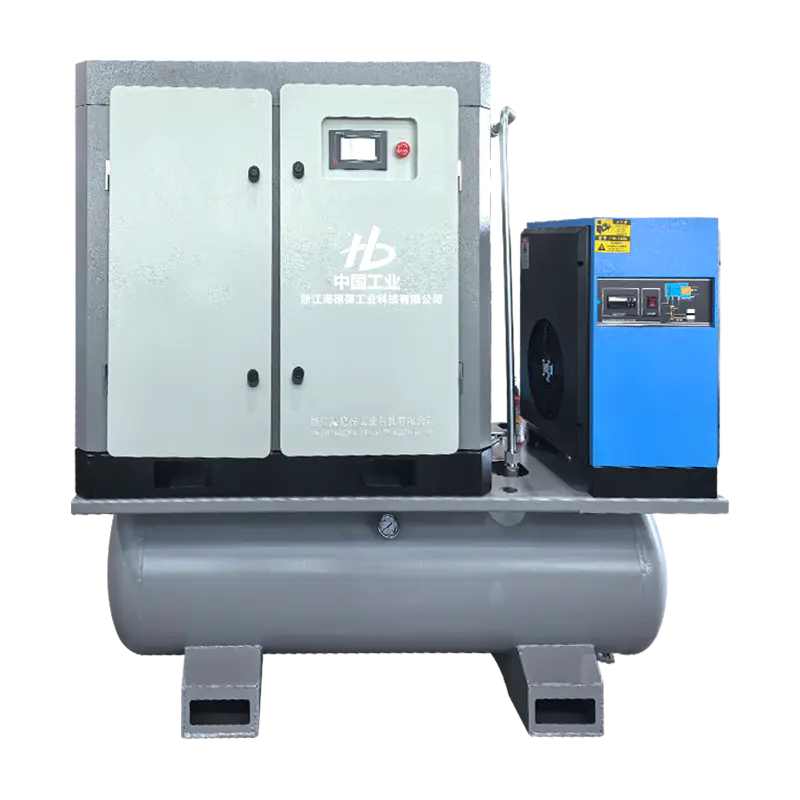
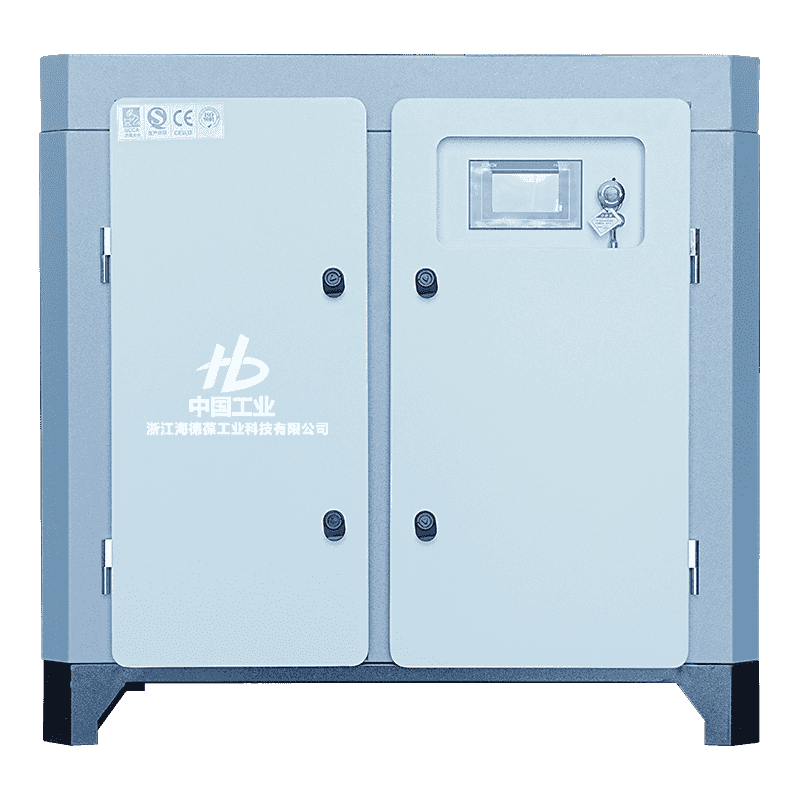
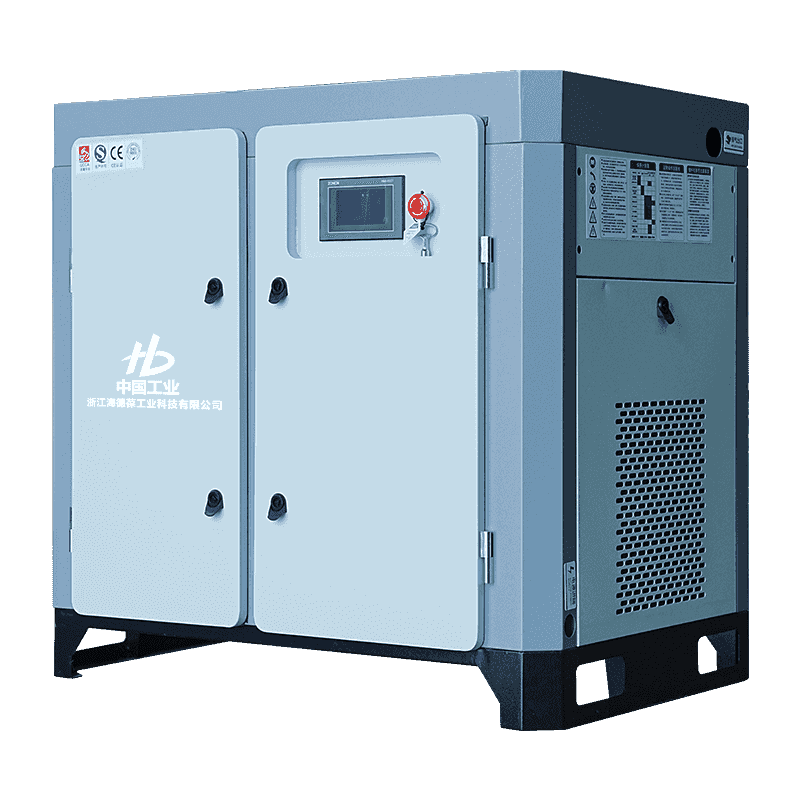
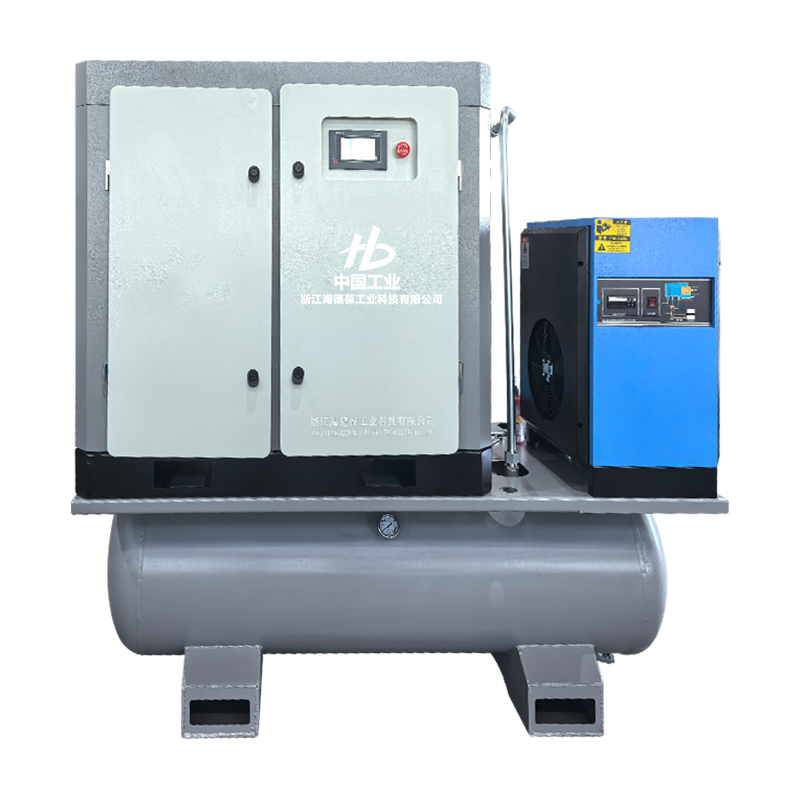
 Wholesale 20HP Micro-oil twin screw single stage compressor Factory, Suppliers -Zhejiang Haidebao Industrial Technology Co., Ltd is China wholesale 20HP Micro-oil twin screw single stage compressor suppliers and facto...View Product →
Compressed air is never silent. Single-stage piston compressors in a typical workshop can run at 80-90 dB(A), while enclosed screw compressors are often quieter, in the 70-80 dB(A) range. If noise is a working condition, ask about acoustic enclosures and install the unit away from workstations. Consider service points too: oil changes, filters, belts, check valves, and safety relief valves. Fewer moving parts on a single-stage machine means fewer components that can wear out, which is one reason small and mid-size plants continue to choose them.
When the pressure requirement is below 125 psi and the usage pattern is intermittent, a single-stage unit is often the right balance of cost and performance. Typical applications include:
If your process needs 150 psi or more, or the compressor must run through three shifts without stopping, a two-stage or high-pressure screw unit is the safer investment. The practical rule is to choose pressure first, airflow second, and then decide whether continuous operation is a real requirement. Many buyers choose a two-stage machine because they fear the word "single-stage", but the right measure is duty cycle, not the brand label.
Most people know the familiar piston compressor in the corner of a garage. But industrial single-stage air compressors also exist in rotary screw form, and that changes the buying decision. A micro-oil screw compressor is a positive displacement machine that compresses air in one stage but uses oil to seal the gap between rotors. The result is cooler running, lower noise, and the ability to run continuously without the classic duty-cycle pause. This is an important distinction because many small shops really need 100% duty, not just a stronger piston pump. On a production line that needs air all day, a 50 hp single-stage screw compressor provides steady compressed air at a lower noise level than most piston units of similar horsepower.
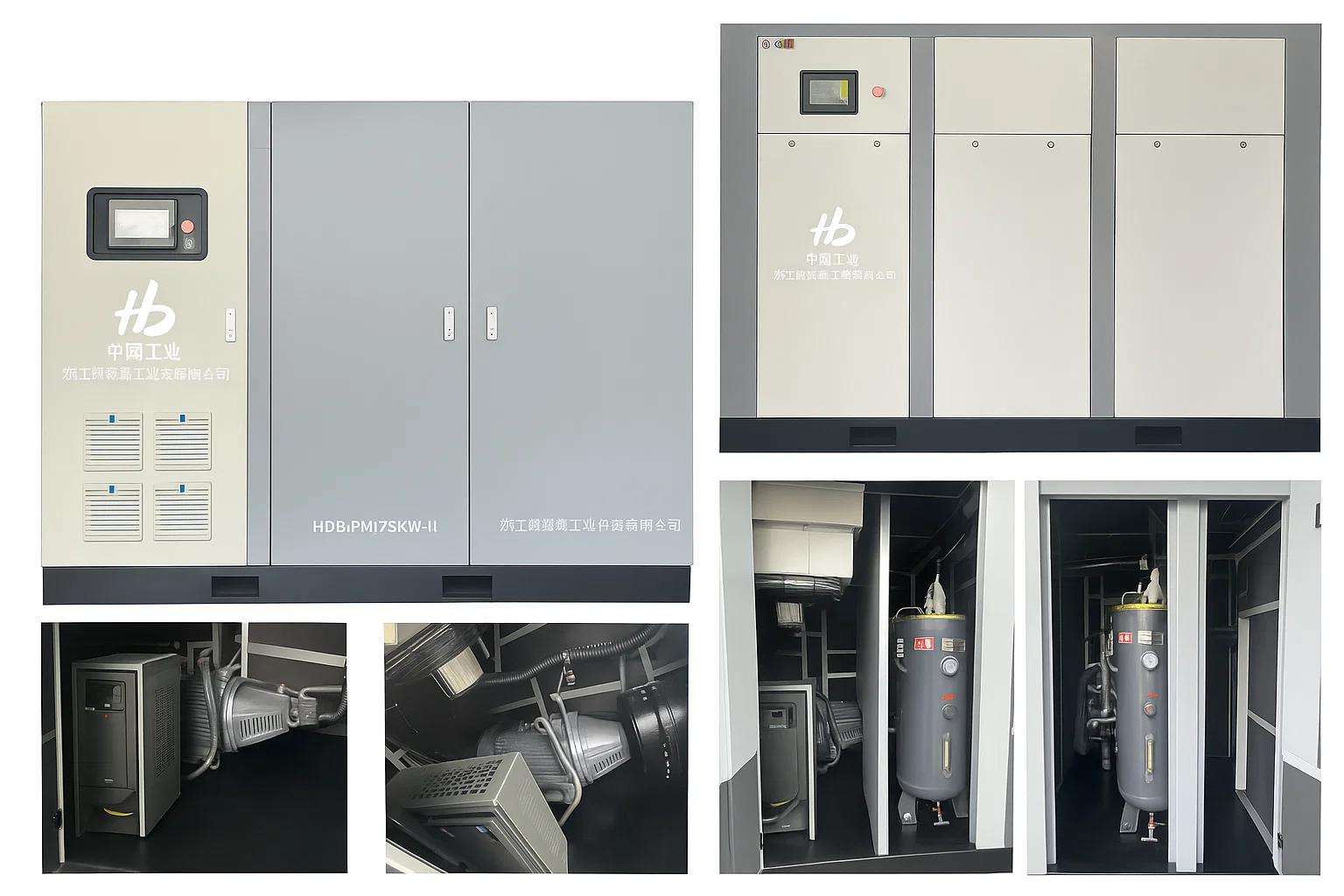
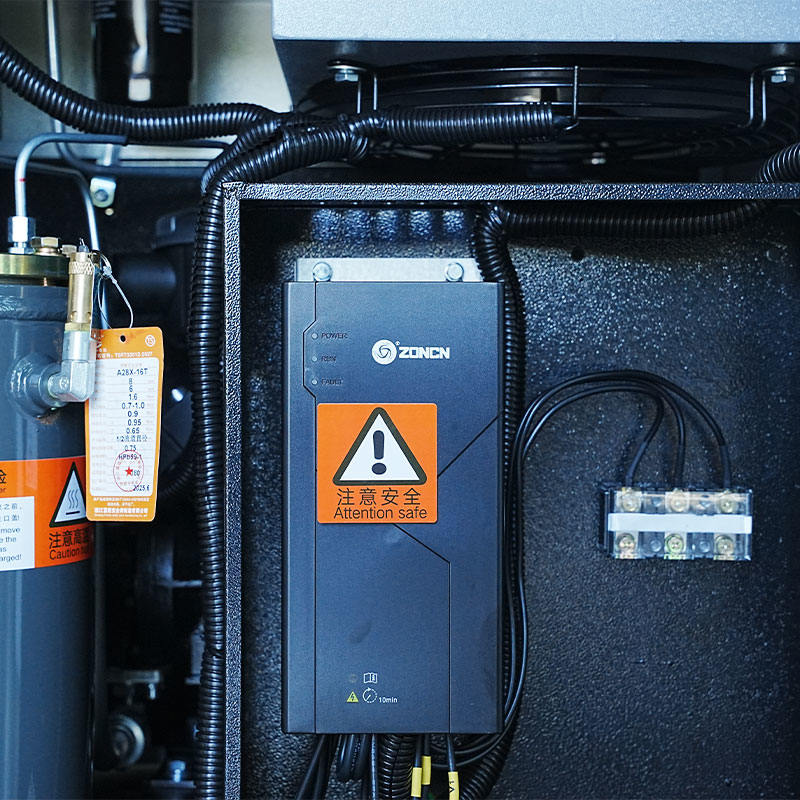
 Wholesale 50HP Micro-oil twin screw single stage compressor Factory, Suppliers -Zhejiang Haidebao Industrial Technology Co., Ltd is China wholesale 50HP Micro-oil twin screw single stage compressor suppliers and facto...View Product →
Use these steps whenever you compare single-stage air compressors:
To put these points in a broader context, read our guide to air compressor types, uses, and buying decisions. If you want to see how our own machines are built and tested, take a look at our factory and equipment. Both will help you compare specifications with real-world service expectations.
Single-stage air compressors still answer a large share of industrial air demand. The distinction that matters is not piston versus screw or single-stage versus two-stage; it is the match between the compressor's pressure, flow, duty rating, and the actual load. When those four numbers line up, a single-stage unit will run dependably for years. When they do not, even the cheapest machine becomes expensive. Take the time to measure your demand, check the duty cycle, and choose a compressor that is made for the way your shop really works.
Your email address will not be published. Required fields are marked *

A dedicated after-sales service department is established, consisting of a professional sales team and skilled technical engineers. They are committed to providing year-round support, traveling to customer locations to deliver prompt and high-quality service.

Tel:86-0570-7221666

E-mail:[email protected]

Add: No.2 Qiming Road, Zhejiang Longyou Economic Development Zone, Mohuan Township, Longyou County, Quzhou City, Zhejiang Province, China
Copyright © Zhejiang Haidebao Industrial Technology Co., Ltd.

Custom Industrial Screw Air Compressor Manufacturers