
 EN
EN  English
 Español
 عربى
عربى

Product Consultation
Your email address will not be published. Required fields are marked *

An industrial maintenance supervisor recently asked whether a 30 hp single-stage rotary screw compressor could replace an aging 40 hp piston unit without losing production airflow. It could, and the reasoning behind that answer is the right starting point for any single-stage air compressor purchase: what matters is matching the compression principle to the actual pressure, flow, and running hours of your plant. For most facilities that operate between 80 and 125 psig and run fewer than 6,000 hours per year, a single-stage rotary screw air compressor delivers the best combination of first cost, service simplicity, and energy cost. This article explains how single-stage compression works, where it beats two-stage designs, and how to size and evaluate the machine so that the air you pay for is the air you actually get.
In a single-stage air compressor, air enters the intake, is trapped inside a compression chamber, and is reduced in volume once before reaching the discharge port. The air leaves at its final working pressure without any intermediate cooling or second pressure step. This definition applies to both piston and rotary screw designs, but the two behave very differently in service.
A single-stage piston compressor uses one set of cylinders and is normally limited to about 125–150 psig, with the duty rating of a typical reciprocating unit restricted to intermittent operation. A single-stage rotary screw compressor uses two meshing rotors that continuously shrink the trapped air volume, and a well-designed industrial screw package is rated for continuous 100% duty up to roughly 145 psig. The compression ratio in an 8 bar (116 psig) single-stage screw machine is about 9 to 1 relative to atmospheric intake.
A two-stage compressor, by contrast, splits the pressure rise. The first stage compresses the air to an intermediate level, the air passes through an intercooler, and the second stage raises it to the final discharge pressure. Removing heat between stages reduces the volume of air entering the second stage, which lowers the energy required to reach the final pressure. That intercooling step is the entire thermodynamic justification for staging.
| Design | Compression steps | Typical max pressure | Typical duty | Relative first cost |
|---|---|---|---|---|
| Single-stage piston | One | 125–150 psig | Intermittent | Lowest |
| Single-stage rotary screw | One | 100–145 psig | Continuous | Moderate |
| Two-stage rotary screw | Two, with intercooling | 150–217 psig | Continuous | Highest |
Thermodynamically, the two-stage screw always looks better on paper. Intercooling reduces the work of compression, which typically shows up as 8–15% lower specific power (kW per m³/min of free air delivered) in the 116–145 psig range. At 100–116 psig, the gap narrows because the pressure ratio is lower, and both designs become closer in efficiency. This is the first practical lesson: the payback of a two-stage machine depends on the pressure you actually run, not the maximum the machine can reach.
Discharge temperature is the second difference. A single-stage screw commonly discharges at 70–95°C (158–203°F), depending on ambient temperature and cooling condition. A two-stage machine with a properly sized intercooler can hold the final discharge lower, which improves oil life and forces more water vapor out of the air before it reaches the distribution piping. That same intercooler, however, is an extra maintenance point: it is another heat exchanger to clean, another set of seals, and another piping connection to leak.
| Criterion | Single-stage screw | Two-stage screw |
|---|---|---|
| Maximum working pressure | ~145 psig (10 bar) | Up to 217 psig (15 bar) |
| Specific power at 116 psig | Baseline | 8–15% lower |
| Discharge temperature | Higher; cooling is critical | Lower with intercooler |
| Service points | Fewer | Intercooler and extra seals |
| Purchase price | Lower | Higher by roughly 15–30% in the same power class |
The decision rule is simple. If your network is designed for 100–125 psig and your average load is 75% or less, a single-stage screw compressor gives you lower first cost, fewer service points, and only a modest energy penalty. If you operate two or more shifts at 145 psig with continuous loading, the two-stage premium usually pays for itself within two to three years through energy savings alone.
Horsepower is the most quoted and least reliable number on a compressor data sheet. A 30 hp single-stage screw from one manufacturer may deliver 115 cfm at 116 psig, while another delivers 95 cfm, depending on air end efficiency, internal clearances, and the test method. The number that matters is free air delivery (FAD) at your specific working pressure, measured in m³/min or cfm according to ISO 1217. Ask for the test certificate before you compare models.
The practical sizing procedure has four steps:
A workshop with grinders, impact wrenches, and blow guns that total 190 cfm of connected load, with a utilization factor of 0.7, leaks of 25%, and 10% future margin, needs about 183 cfm at 100–116 psig. The appropriate machine in a standard product range is a 50 hp single-stage screw rated near 200 cfm at 116 psig, not a 30 hp unit rated at its best-case pressure.
Duty cycle is the other half of sizing. A rotary screw package is intended for continuous operation, but it should not spend its entire life cycling every thirty seconds. With a receiver in the 500–1,000 liter range for this power class and a load/unload band of about 0.6 bar, aim for an average load of 70–85%. An oversized receiver hides an undersized compressor, while a constantly short-cycling compressor shortens separator and valve life.
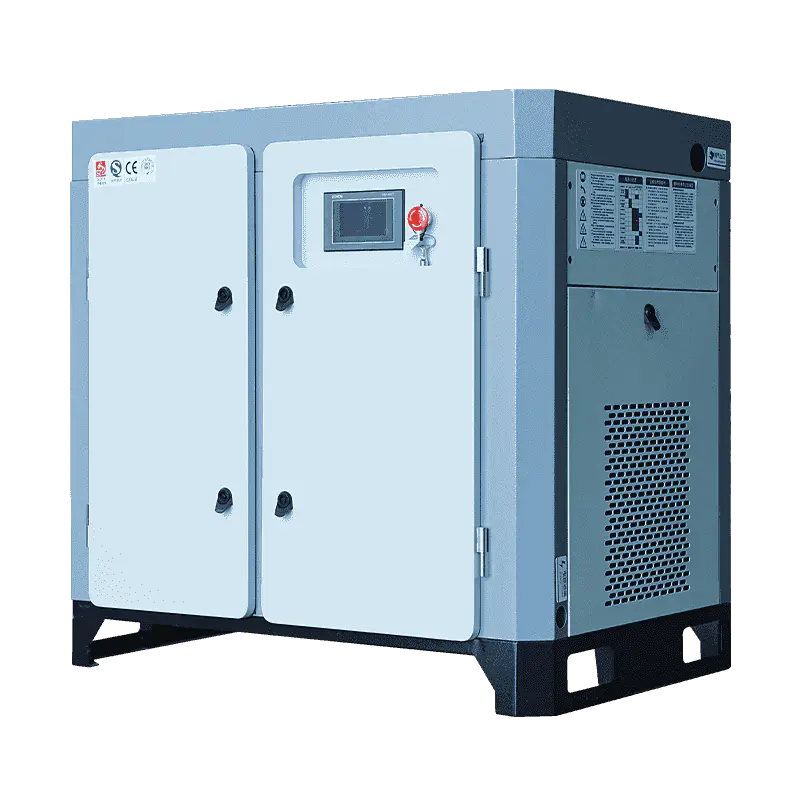
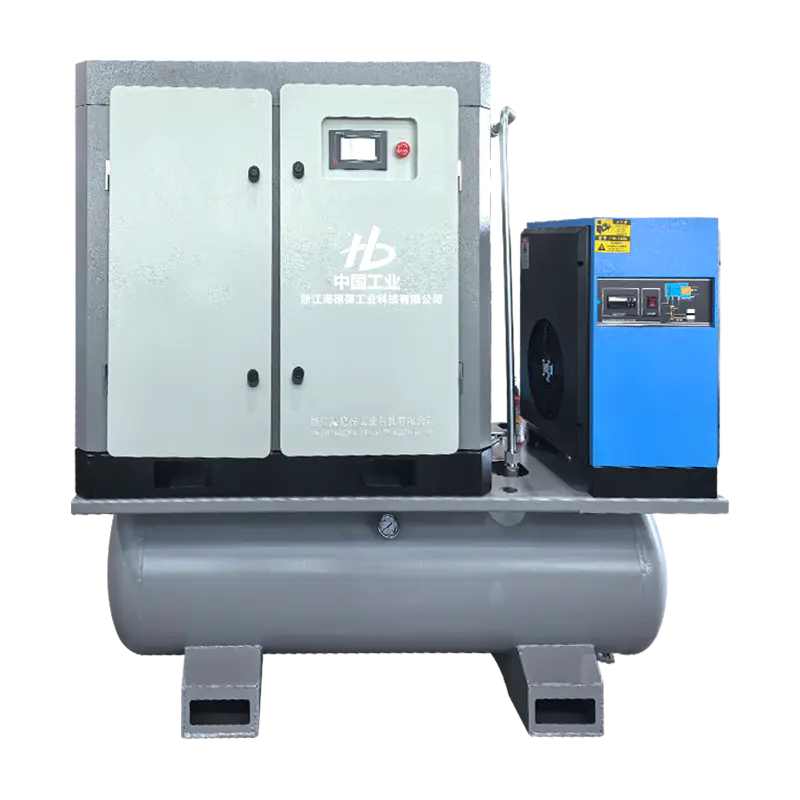
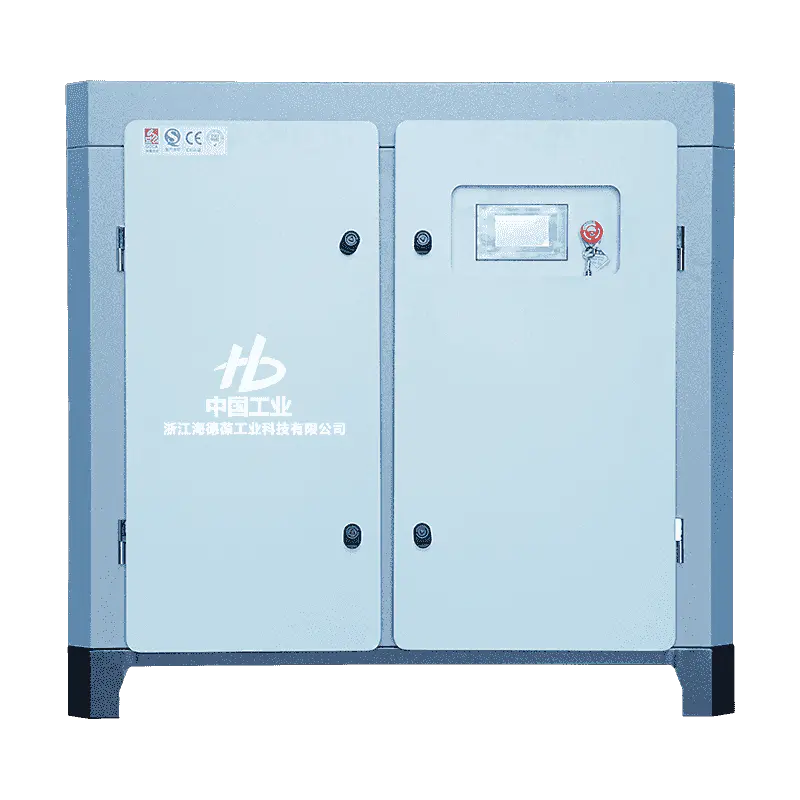
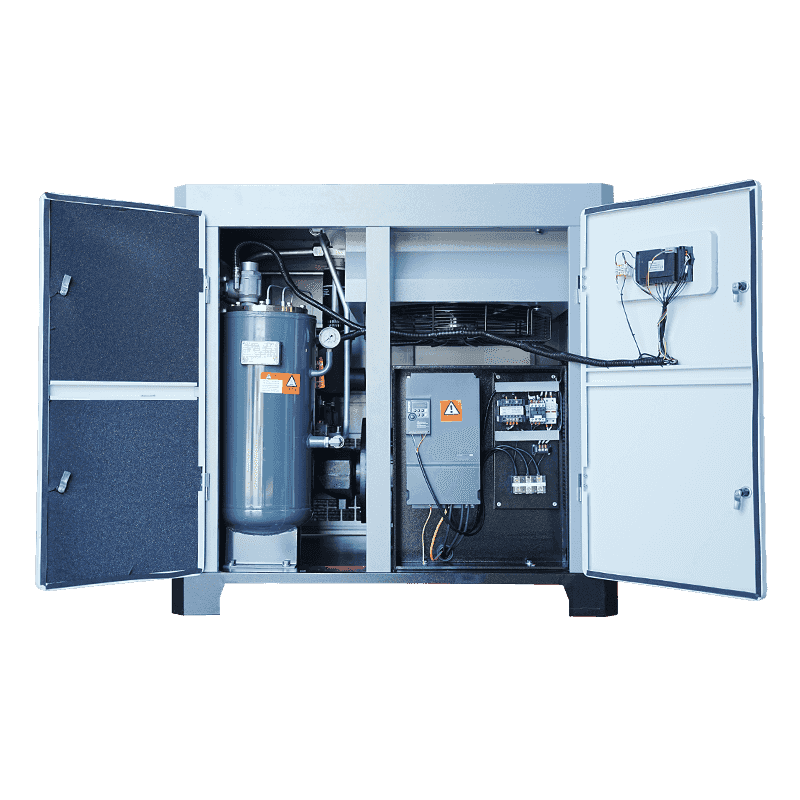
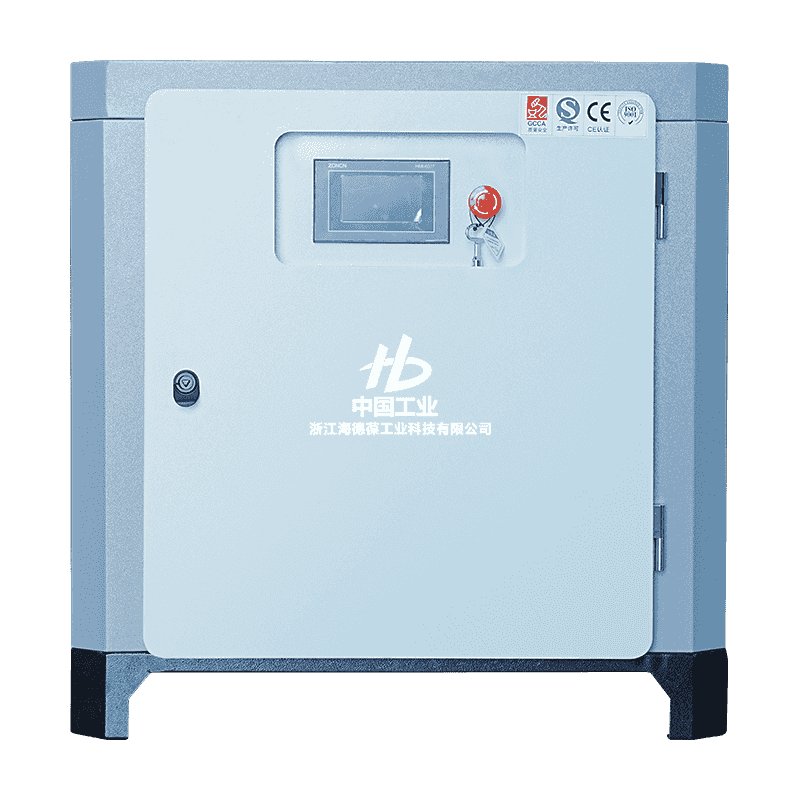
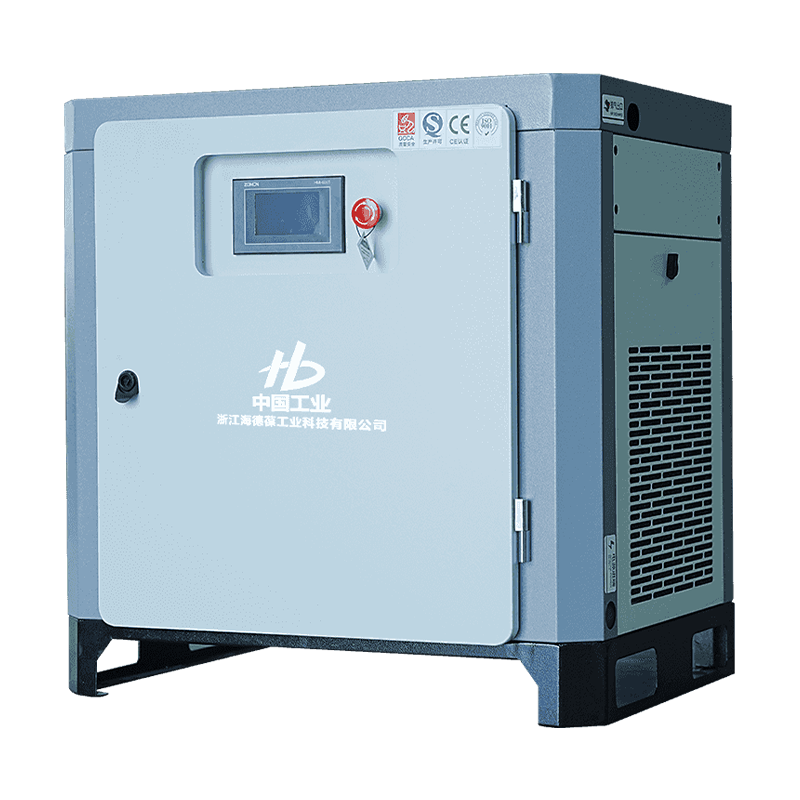
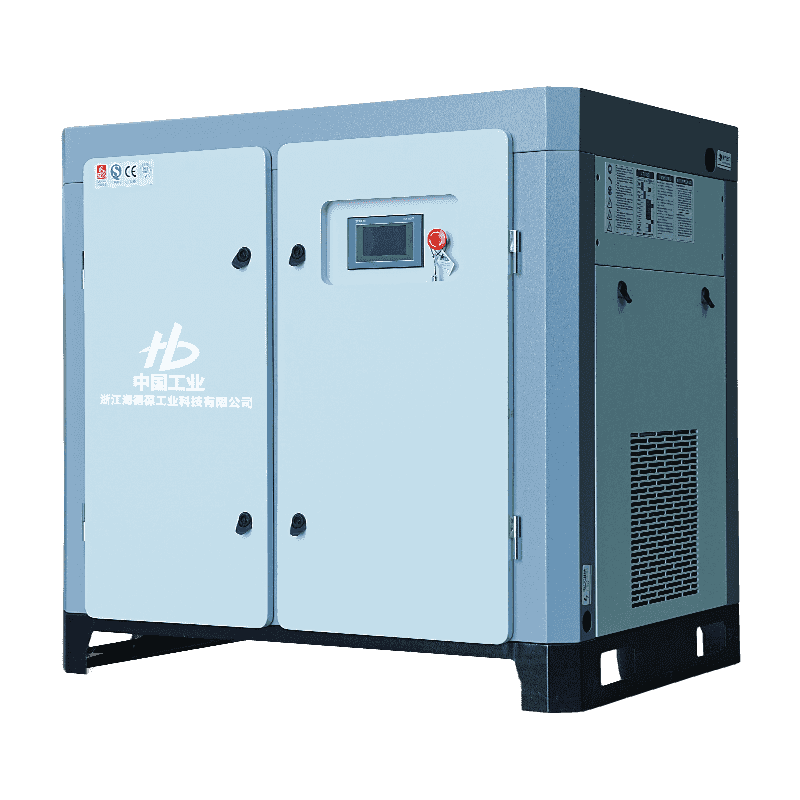
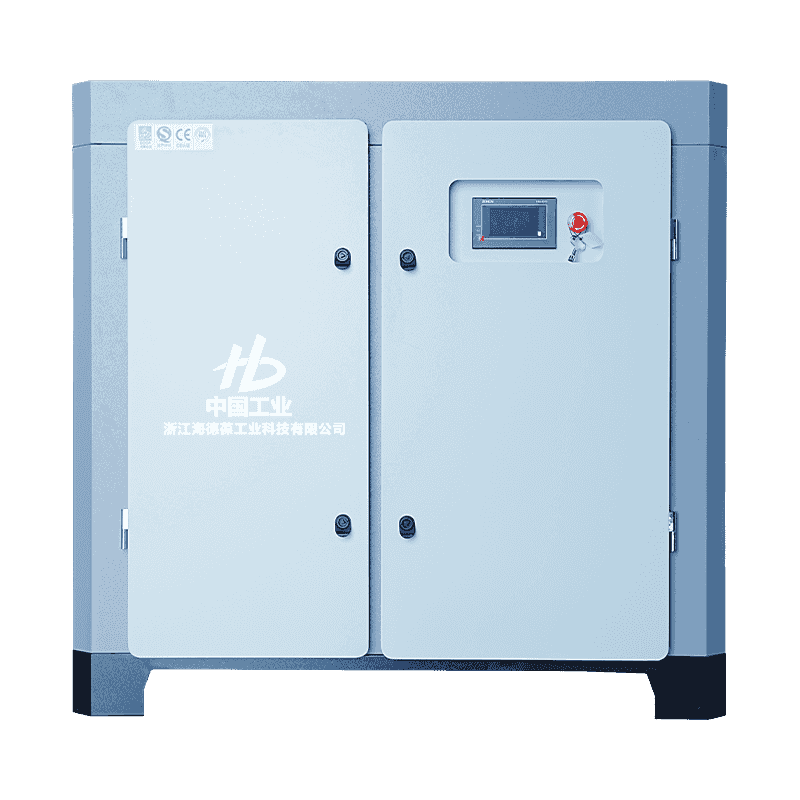
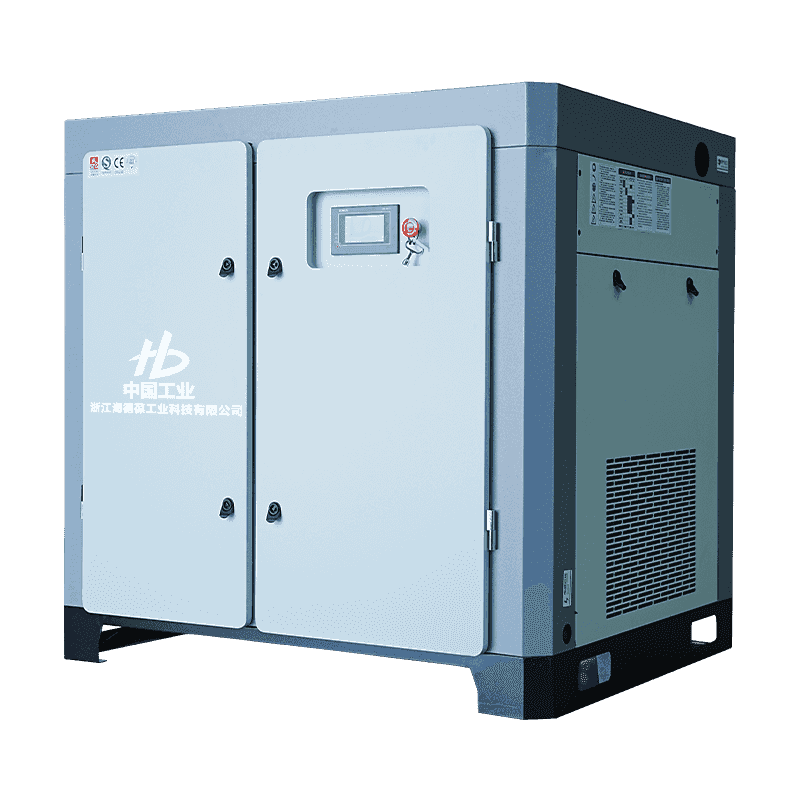
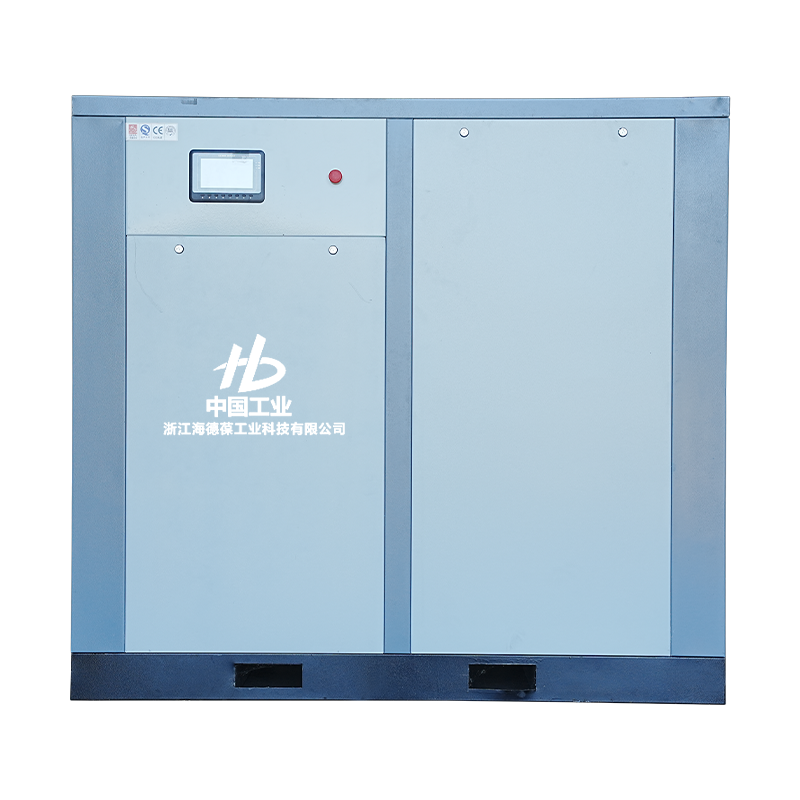
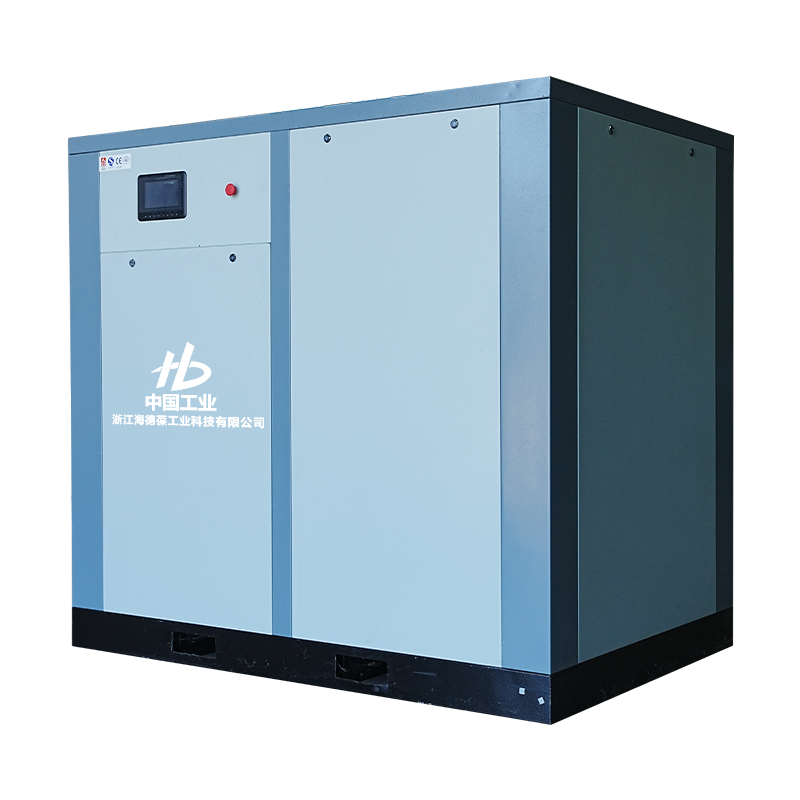
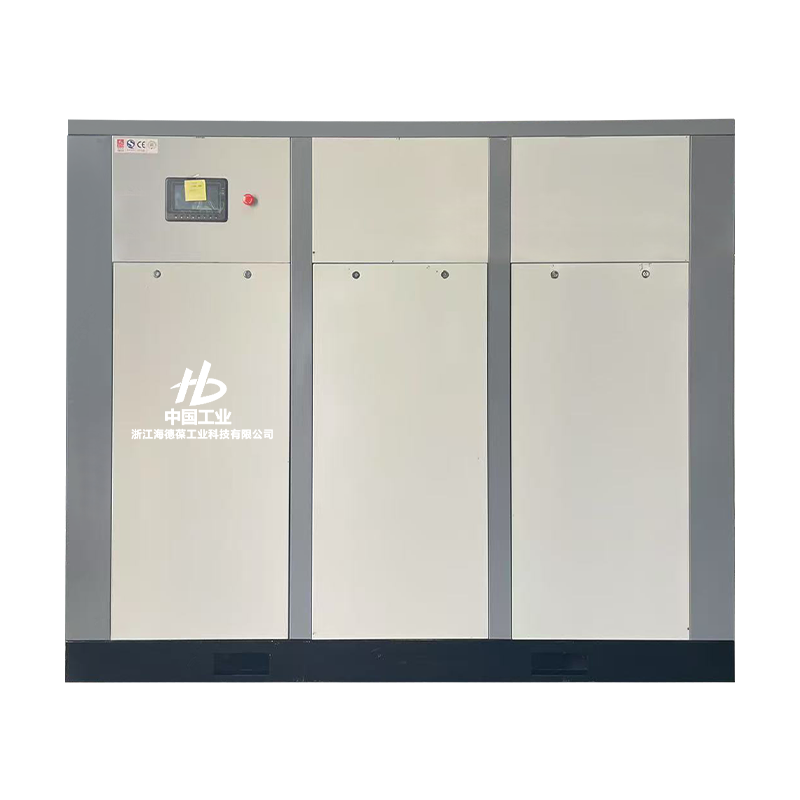
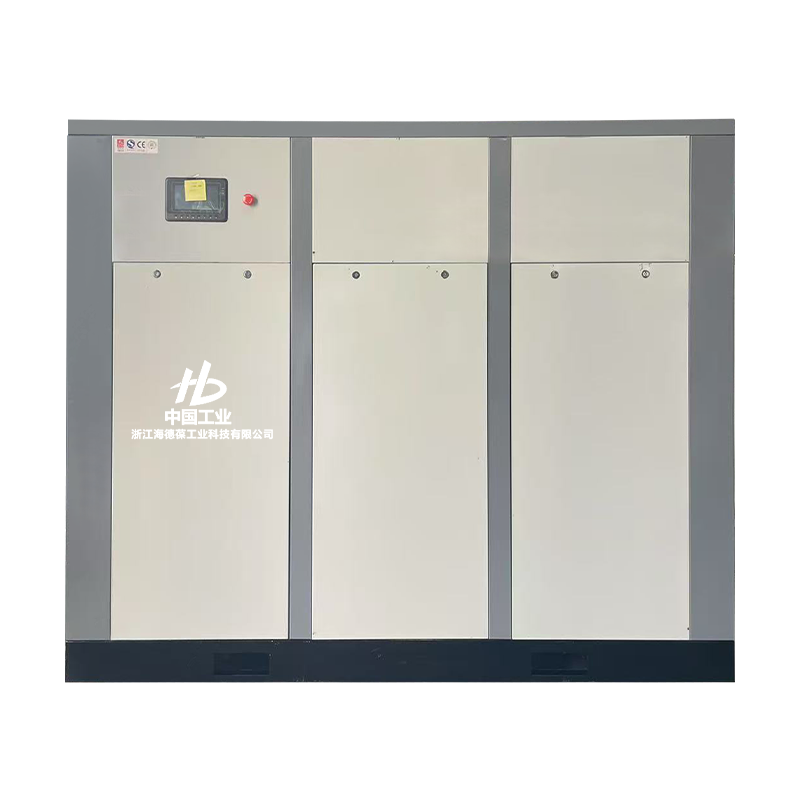
 Micro-Oil Single Stage Screw Compressor LineupThis supplier range covers 10 to 75 HP micro-oil twin screw compressors with frequency conversion to adjust speed by load, supporting the energy-saving pressure optimization discussed here.View Product →
Pressure adds its own cost. For the same airflow, every extra bar of discharge pressure raises input power by roughly 7%. If your highest-consuming tool is rated at 90 psig, set the unload pressure at the lowest point that keeps the network above that level, even if the compressor is capable of much more.
Electricity accounts for roughly 70–75% of the total lifecycle cost of an industrial air compressor. The motor nameplate tells you nominal output power, but the true input draw at the terminals includes motor losses, cooling fans, and controls. In this comparison, assume a 50 hp class single-stage screw draws 39 kW at full load and that a comparable two-stage unit with 10% lower specific power draws 35 kW to produce the same free air delivery at 116 psig. At an industrial electricity price of $0.12/kWh, the annual difference is easy to quantify.
| Operating hours per year | Single-stage energy cost | Two-stage energy cost | Annual saving with two-stage |
|---|---|---|---|
| 2,000 h | $9,360 | $8,400 | $960 |
| 4,000 h | $18,720 | $16,800 | $1,920 |
| 6,000 h | $28,080 | $25,200 | $2,880 |
| 8,000 h | $37,440 | $33,600 | $3,840 |
A two-stage unit in this class typically costs 15–30% more initially, which for a 50 hp package means several thousand dollars of extra first cost. At 2,000 annual operating hours, the energy saving does not justify that premium. At 8,000 hours, the saving of about $3,840 per year pays the premium back in two to three years, and then keeps paying. The first question in any compressor room decision should therefore be running hours and load pattern, not which technology is more advanced.
Verification matters just as much as the calculation. Brochure values without a declared test standard are a procurement risk. A manufacturer that publishes ISO 1217 FAD results and performs an individual factory test on each production unit lets you commit to an energy budget with confidence.
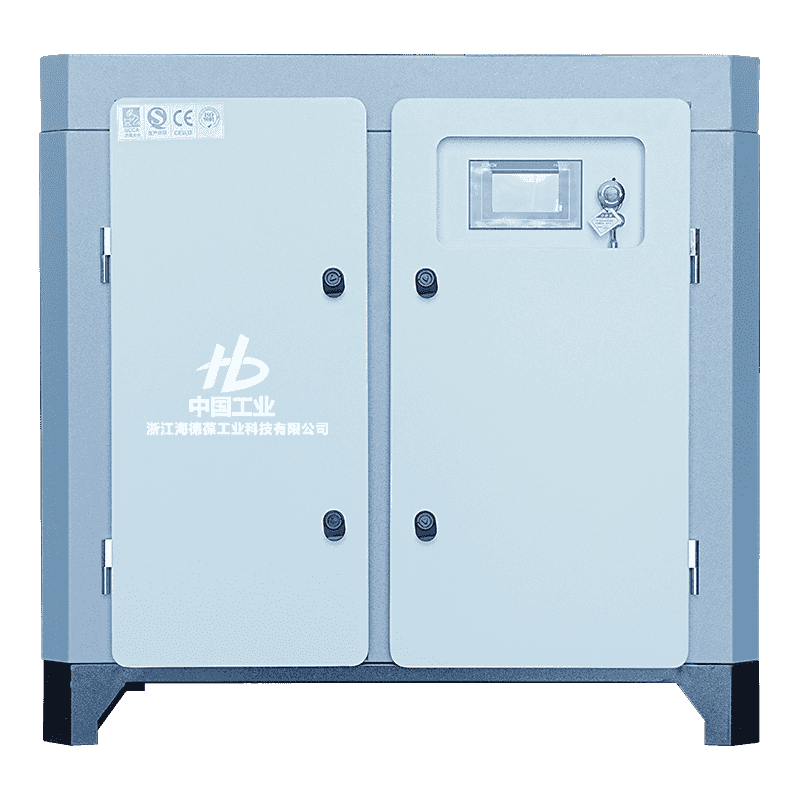
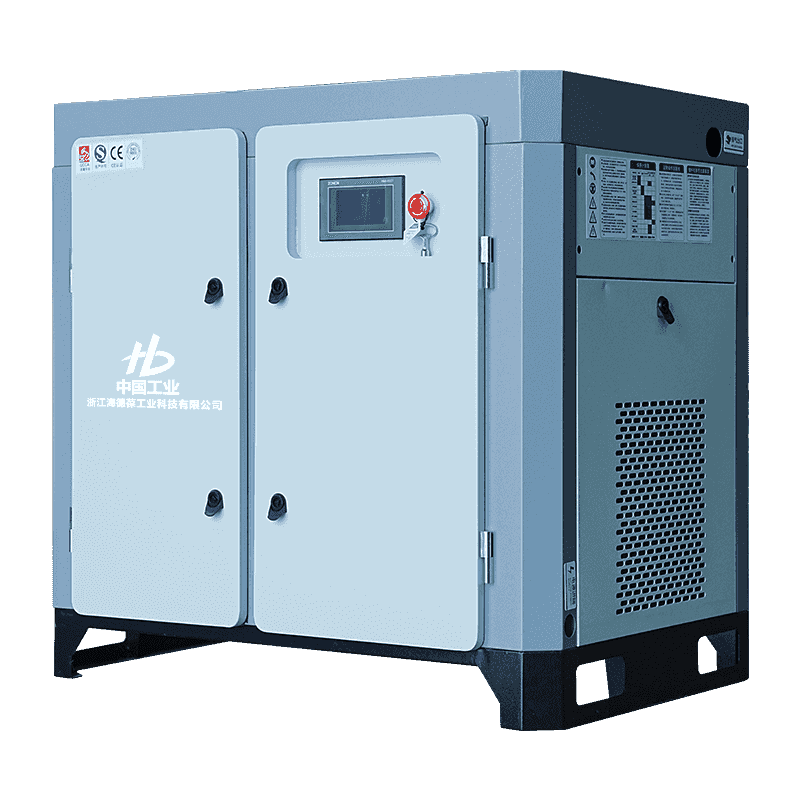
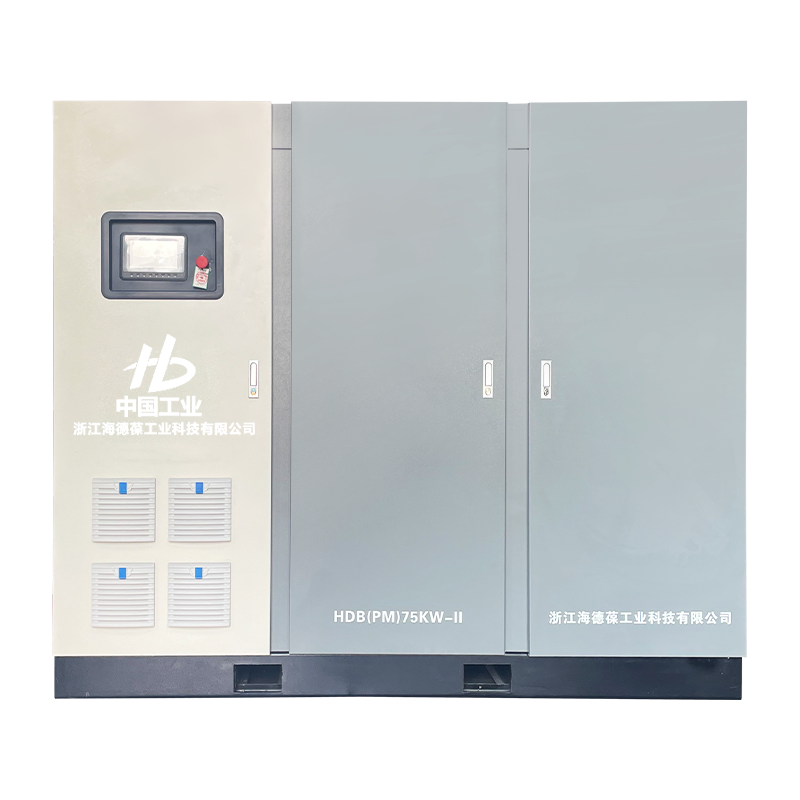
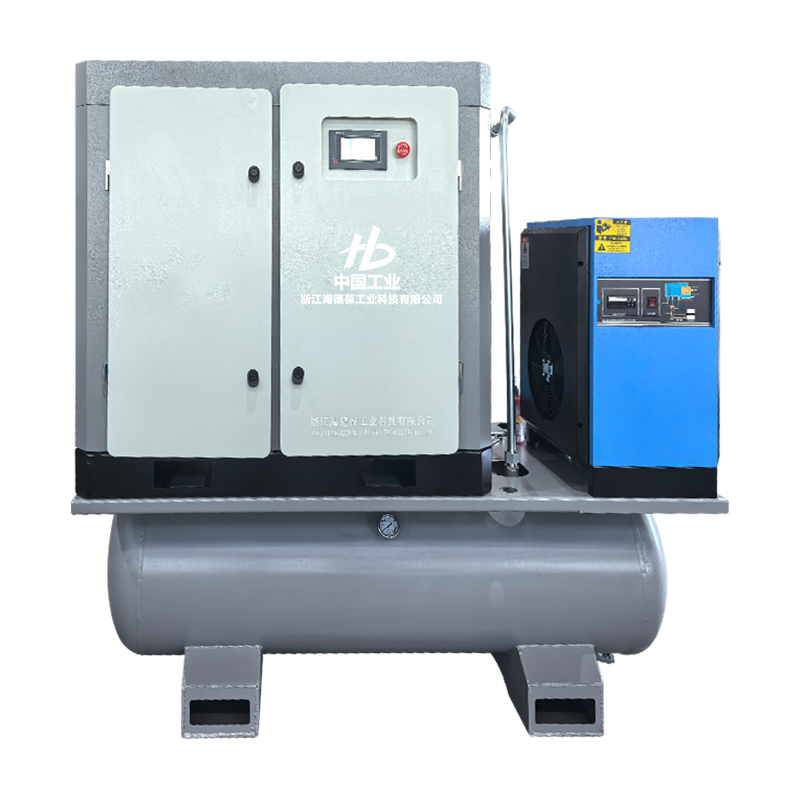
 50HP Micro-Oil Twin Screw Single Stage CompressorA 37 kW unit with permanent magnet motor and published nameplate flow, relevant for verifying ISO 1217 FAD data and planning service intervals like filter and separator replacement.View Product →
Single-stage screw compressors fail less from the thermodynamics of compression than from contamination, heat, and poor service discipline. The regular service kit for an oil-injected single-stage screw consists of an air filter, an oil filter, compressor oil, and a separator element, with replacement typical at 2,000 hours for the filters and 4,000–8,000 hours for the separator depending on differential pressure. Keep the oil cooler clean and logged: discharge temperature that runs 10°C hotter than baseline cuts oil life by roughly half.
Heat is the main difference between single-stage and two-stage machines. A single-stage screw discharges hotter air, so cooling maintenance is not optional. In a confined compressor room with poor ventilation, the same machine can derate severely on a summer afternoon. Always verify the maximum ambient air temperature the enclosure and cooling fan are designed for, usually 40°C in standard industrial packages. The two-stage machine runs cooler, but it adds an intercooler to clean, more seals to monitor, and more surfaces where leaks can develop.
Condensate management is another design point that buyers forget. Compressed air holds a limited amount of water vapor, and when it cools, that water condenses in the receiver, the piping, and the tools. A properly sized separator and drain, plus a refrigerated dryer when the application needs it, matter more than the difference between one stage and two.
For processes that cannot tolerate oil at all, the solution is not to add filtration to a microoil machine but to select an oil-free single-stage screw. ISO 8573-1 defines air purity classes; a Class 0 or Class 1 oil requirement for food, pharmaceutical, or electronics production eliminates the oil-injected option from the start.
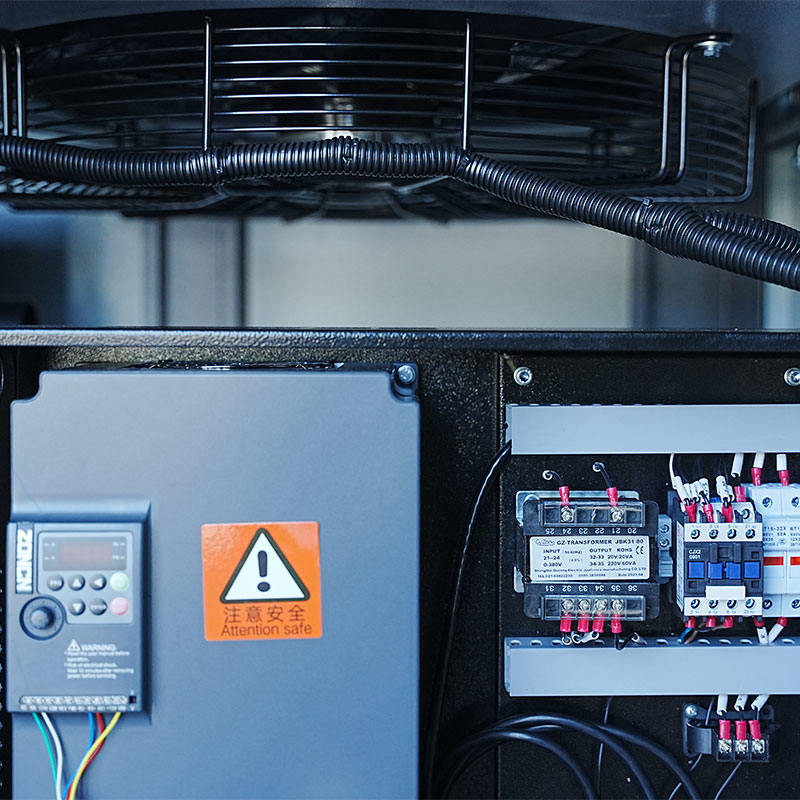
Oil-Free Single Stage Screw Compressor OptionsThis oil-free design with permanent magnet synchronous motor and frequency conversion suits Class 0 or Class 1 oil requirements, offering an alternative for oil-sensitive processes.View Product →
Buying from a manufacturer that controls the complete production flow reduces commissioning risk. Haidebao, for example, operates its own factory and equipment base in Quzhou, applies an ISO 9001-based quality system to every unit, and issues CE-marked products for the European market. Seeing the test bench before buying is worth more than any specification sheet.
Before you issue a purchase order, confirm each of the following points with the supplier:
For a broader comparison of all compressor families, from piston to screw to centrifugal, see our guide to air compressor types, uses, and buying considerations. The same principles of pressure, duty, and measured flow apply across every technology.
Choose a single-stage rotary screw compressor when your working pressure is between 80 and 125 psig, your average load is below 85%, and your priorities are lower first cost and simpler maintenance. Choose a two-stage machine when the plant runs most of the year at pressures above 125 psig with heavy continuous load, because the energy saving repays the higher purchase price within two to three years. In both cases, ask for certified FAD, compare specific power at your real operating pressure, and buy from a manufacturer that can show you the factory floor and the test records before you sign.
Your email address will not be published. Required fields are marked *

A dedicated after-sales service department is established, consisting of a professional sales team and skilled technical engineers. They are committed to providing year-round support, traveling to customer locations to deliver prompt and high-quality service.

Tel:86-0570-7221666

E-mail:[email protected]

Add: No.2 Qiming Road, Zhejiang Longyou Economic Development Zone, Mohuan Township, Longyou County, Quzhou City, Zhejiang Province, China
Copyright © Zhejiang Haidebao Industrial Technology Co., Ltd.

Custom Industrial Screw Air Compressor Manufacturers