
 EN
EN  English
 Español
 عربى
عربى

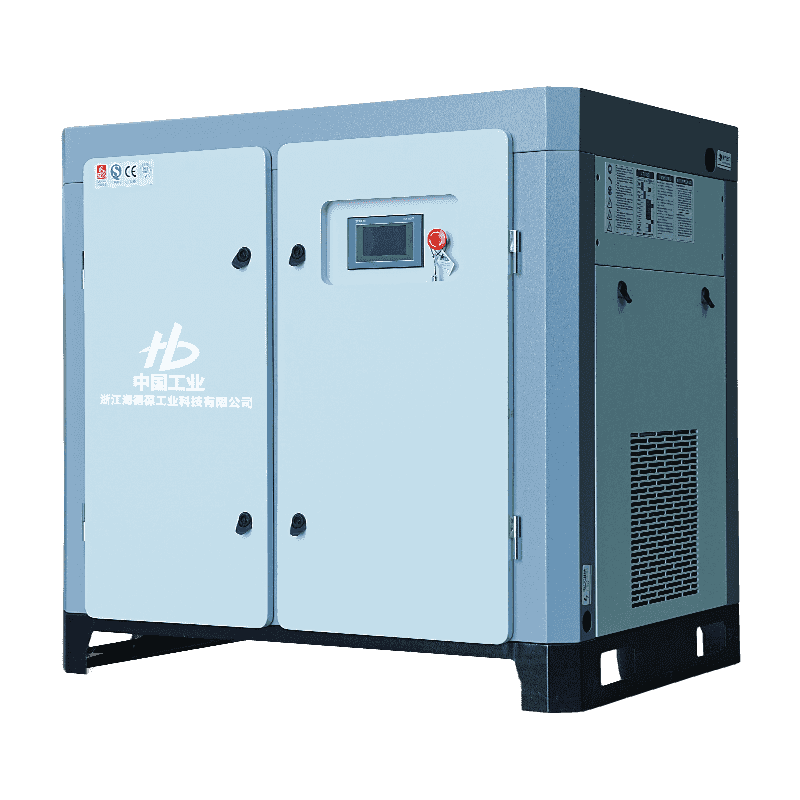
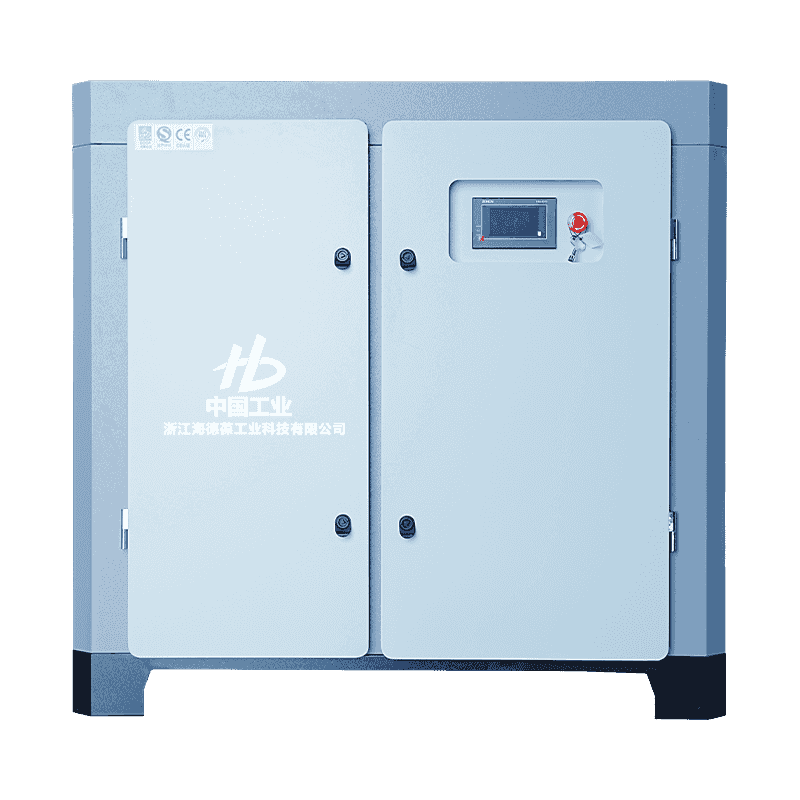
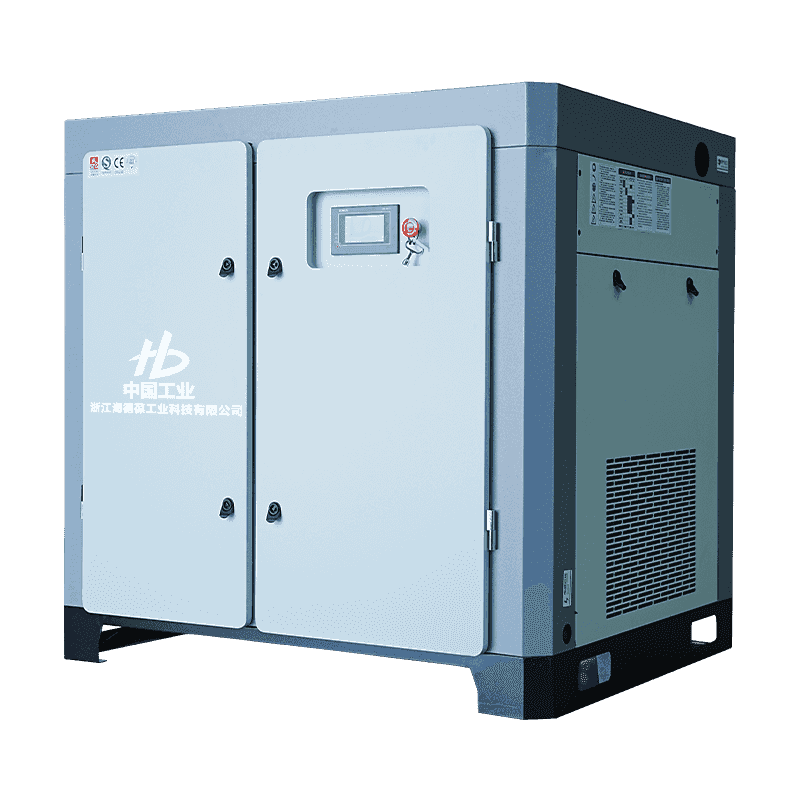
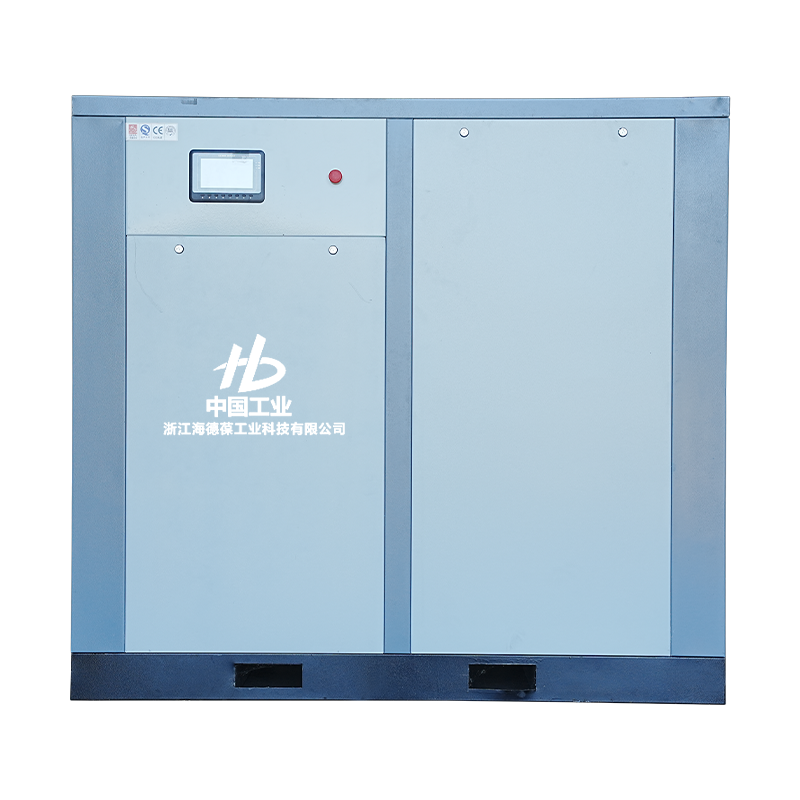
Product Consultation
Your email address will not be published. Required fields are marked *

A maintenance manager planning a new compressed air room for a small machine shop usually faces a familiar question: should the system use a single stage screw compressor or a two-stage unit? The short answer is that a single stage machine is often the right choice when the required system pressure remains between 80 and 125 psi and the plant does not need continuous output at very high pressure. Single stage screw compressors have a lower purchase price, a more compact package, and fewer moving parts to service than two-stage designs, while still delivering reliable air supply for the most common industrial pressure range.
All rotary screw compressors use two meshing rotors inside a closely machined air end. In a single stage screw compressor, atmospheric air enters through an inlet valve, is trapped between the rotor lobes, and is compressed in one continuous pass before it reaches the discharge port. There is no second compression stage to raise the pressure further. The complete compression ratio is achieved within one rotor set, and manufacturers size the rotor length, speed, and clearance to match the target discharge pressure.
Like most rotary screw machines, a single stage unit depends on oil injection. The oil seals the internal clearances, absorbs the heat of compression, lubricates the bearings, and helps flush contaminants out of the compression chamber. After the air-oil mixture leaves the air end, a separator tank and coalescing filter remove the oil before the compressed air enters the distribution line. The oil circuit also supplies an oil cooler, which allows the machine to run continuously without overheating.
The practical result is a steady flow of compressed air, usually at 100–150 psig, without the pulsation of a piston compressor. Some engineering references state that a single stage screw compressor can reach pressure levels up to 250 psig, but industrial models from most manufacturers are normally rated at 100–150 psig, with 175 psig available on selected frames. A two-stage unit, by comparison, uses two consecutive rotor sets to reach higher pressures, sometimes up to 500–600 psig in specialized designs, and tends to use less energy per unit of air when the discharge pressure is high.
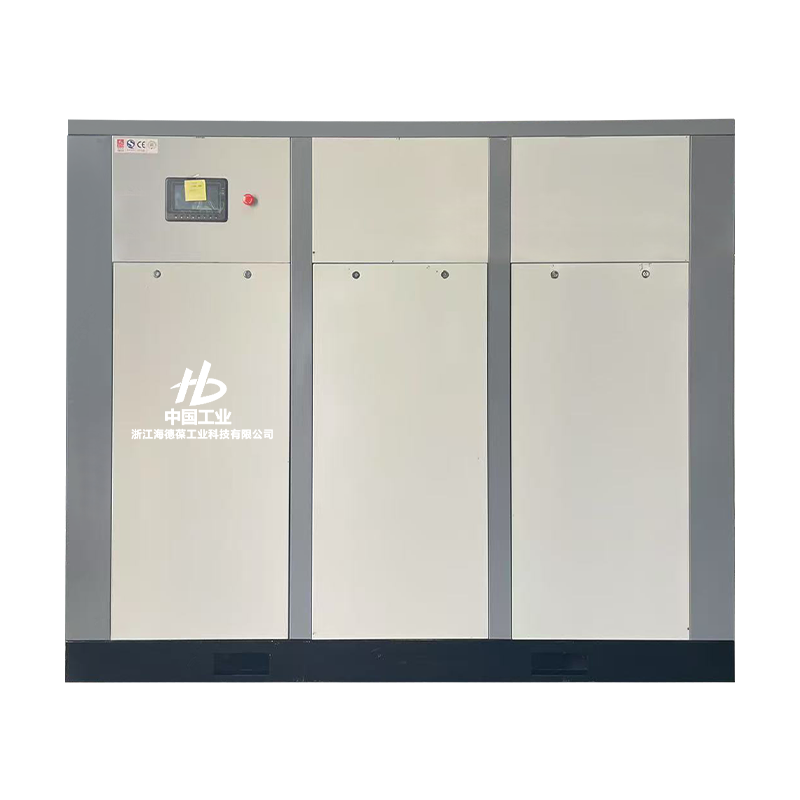
At first glance, a single-stage machine and a two-stage machine look similar. Both packages include a canopy, a motor, a controller, and an air end. The difference becomes visible when the enclosure is opened. A two-stage air end contains two rotor sets, sometimes with an intercooler between them, while a single-stage air end contains one rotor set. That extra hardware adds cost and footprint, but it also changes the thermodynamic performance.
To understand the practical effect, compare the two designs under ordinary operating conditions:
| Comparison Factor | Single-Stage | Two-Stage |
|---|---|---|
| Number of compression stages | One rotor set | Two rotor sets |
| Typical maximum pressure | 100–150 psig, up to 250 psig in some designs | 150–600 psig, depending on design |
| Efficiency at standard pressures | Good at 80–125 psig | Better at higher pressures |
| Initial purchase cost | Lower | Higher |
| Footprint and weight | Smaller and lighter | Larger and heavier |
| Maintenance complexity | Fewer parts, simpler service | Additional air end and intercooler to service |
| Ideal application profile | General workshop, light industrial | High-pressure or continuous heavy-duty processes |
For the majority of standard compressed air consumers, the single-stage package represents the simpler and more economical machine. It is not a cheap alternative; it is the correctly scaled solution for a specific operating envelope.
The practical advantages and limitations of a single stage screw compressor can be summarized in a short list.
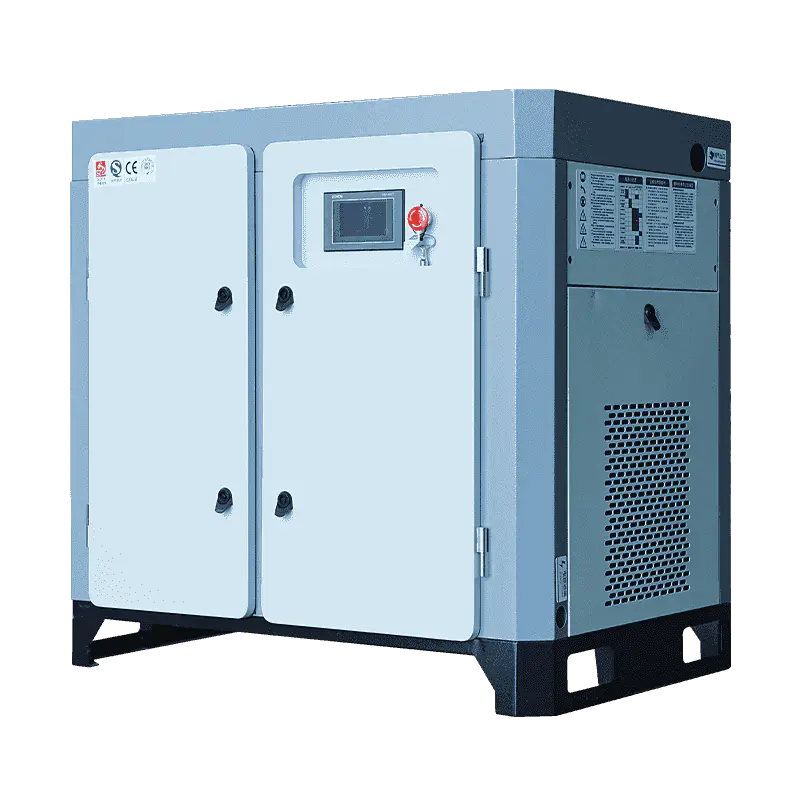
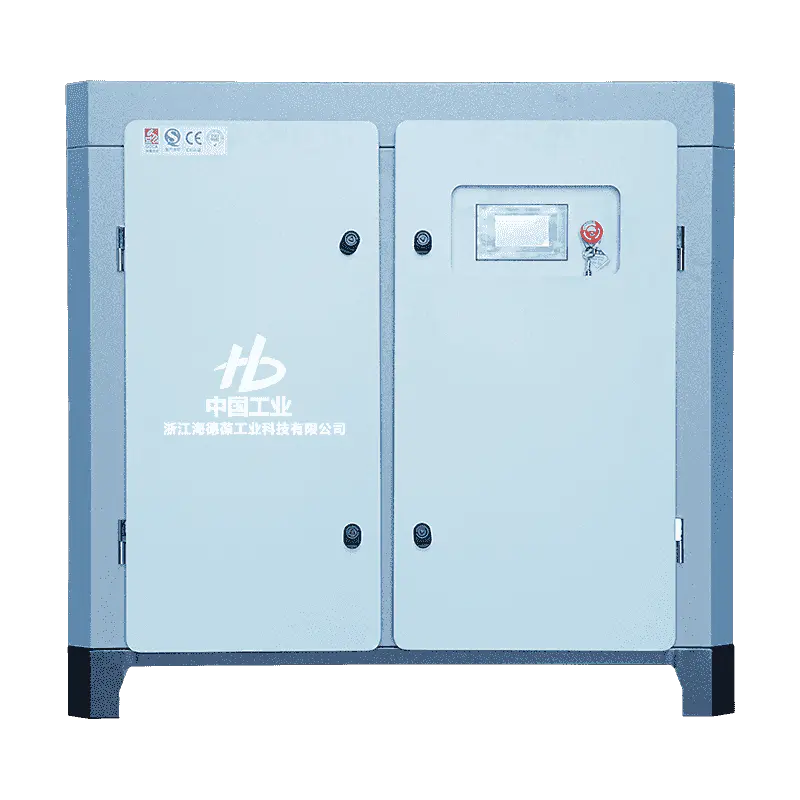
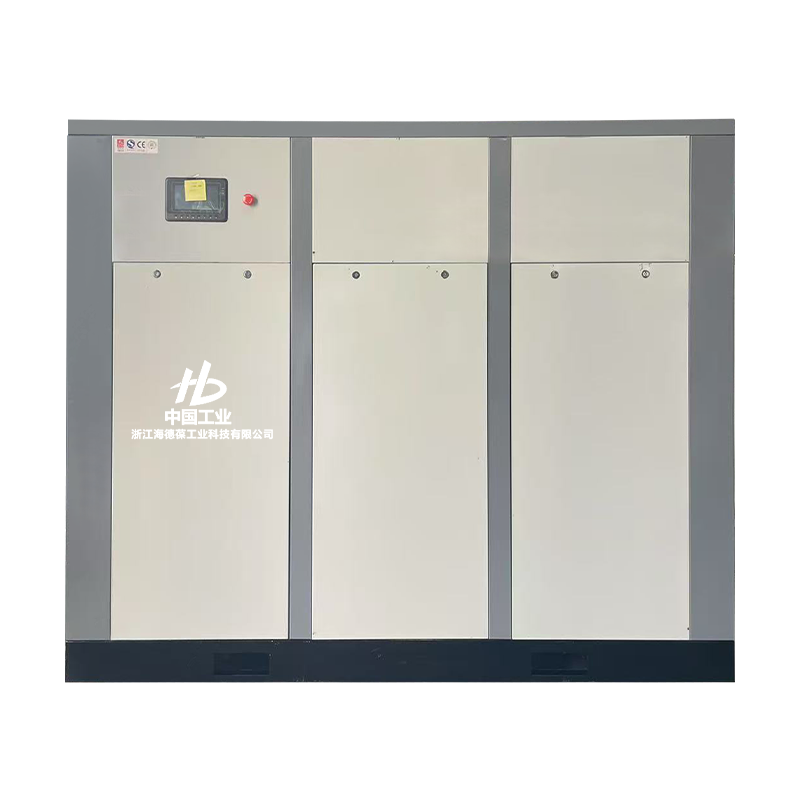
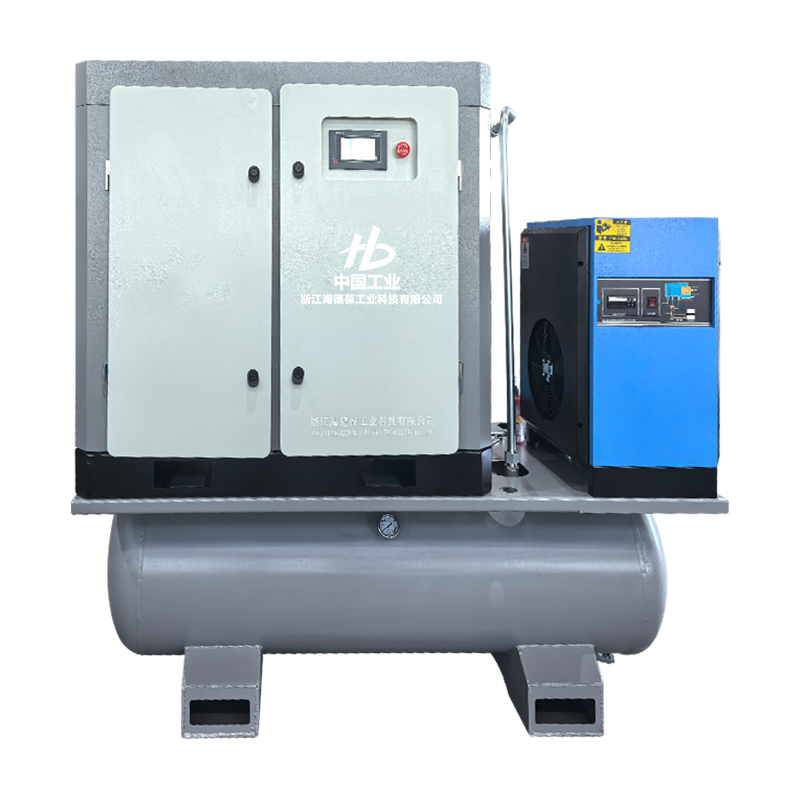
This is why it is essential to define the actual pressure band and load profile before buying. A manufacturer that offers both single-stage and two-stage machines can help you avoid over-buying efficiency you will never use. For workshops that stay within the common duty band, the compact single-stage design fits nicely. One example is the 30 hp micro-oil twin-screw single-stage compressor, which is sized for facilities that need a serious upgrade without adding a large air end.
 30 HP Single-Stage Twin-Screw Compressor with PM MotorThis 22 kW single-stage unit suits workshops needing a serious upgrade without a larger air end. Its permanent magnet motor and low oil carryover help keep energy and maintenance costs within the pressure band discussed here.View Product →
Many buyers choose a compressor based on purchase price, but the purchase price is only a small part of the lifetime cost. Electrical energy typically accounts for 70–80 percent of the total cost of operating an industrial air compressor over a ten-year period. A slightly less efficient machine can therefore cost more in one year than the price difference at the moment of purchase.
To estimate the impact, use a rough formula: annual energy cost equals motor power in kilowatts, multiplied by loaded hours, multiplied by average load factor, multiplied by electricity price. For example, a 50 hp compressor draws roughly 37 kW at full load. Run it for 5,000 hours per year at a 70 percent load factor and electricity at USD 0.15 per kWh, and the annual energy cost will be about USD 19,400. That makes the efficiency difference between a single-stage and a two-stage unit financially meaningful over time.
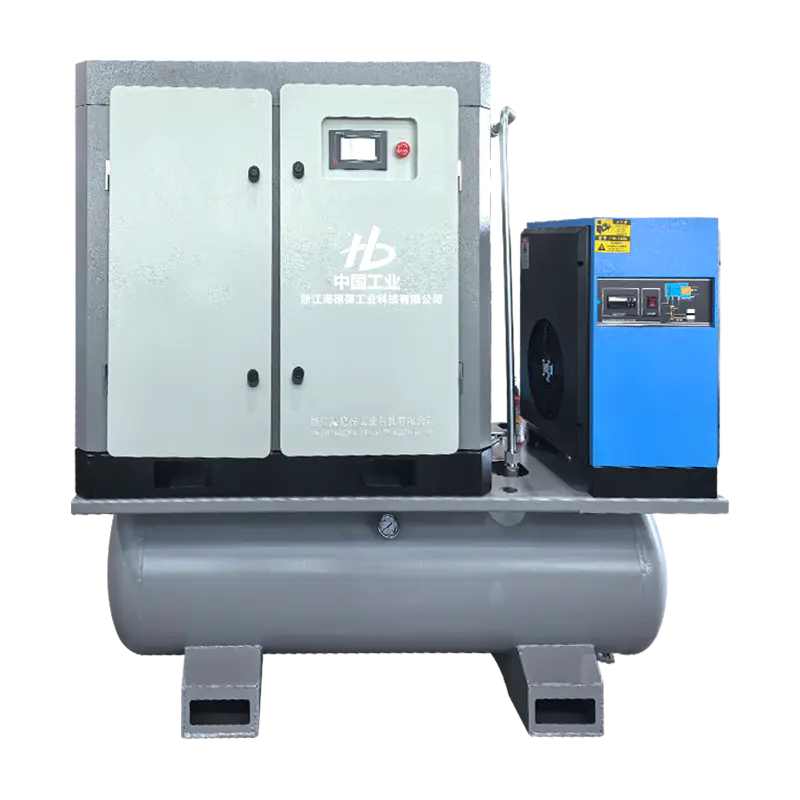
At 100 psig, a single-stage screw compressor is usually efficient enough to keep this energy cost reasonable. At 145 psig or above, the two-stage design's lower specific power can save an estimated 8–12 percent of the energy consumption. If the plant pressure exceeds 150 psig and the load factor is high, the two-stage machine is worth the extra purchase cost. If the requirement is under about 125 psig, the single-stage machine is normally the economic winner. For lower-pressure continuous duty, a properly sized 50 hp single-stage unit is a practical choice.
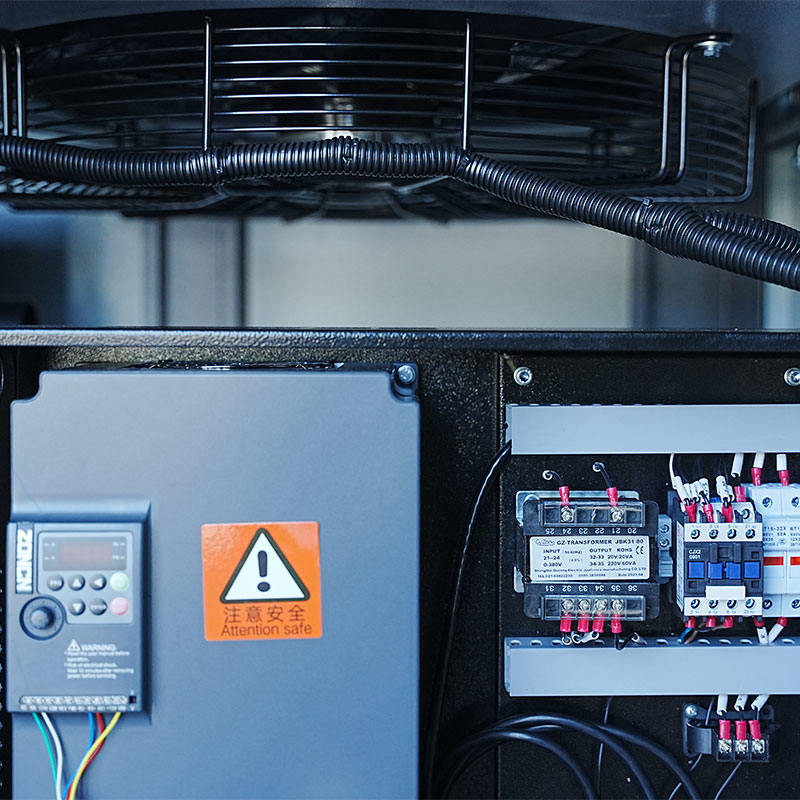 50 HP Single-Stage Twin-Screw Compressor for Lower-Pressure DutyFor continuous duty below about 125 psig, this 37 kW single-stage machine is the economic choice. It delivers stable flow and efficient output, fitting plants that prioritize simplicity and lower upfront cost.View Product →
Choosing the correct machine is not simply about matching horsepower. You need to compare the free air delivery (FAD) at your operating pressure, the maximum allowable working pressure, the ambient temperature range, the control system, and the quality of the air end. If the compressor will be the only air source in the plant, you should also consider redundancy and service access.
Before committing, use the manufacturer's engineering support to simulate your load profile. A reputable supplier will ask about your shifts, pipe layout, and process variability. When evaluating suppliers, look for documented quality systems and certifications, because those documents reflect the repeatability of production and testing. A compressor factory that maintains ISO 9001 and CE marking under controlled processes is more likely to deliver consistent product quality.
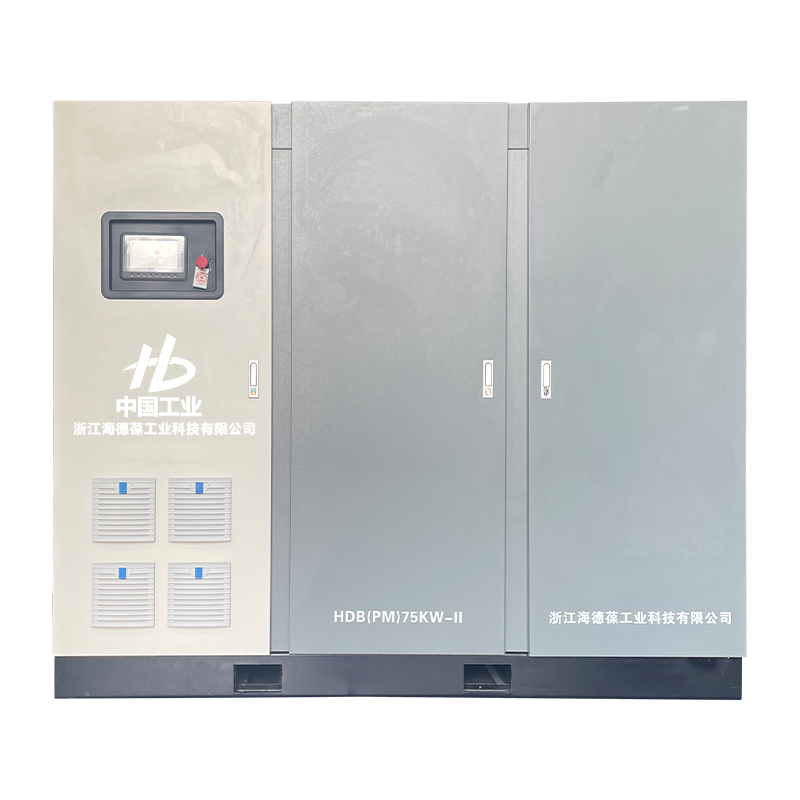
For a small to medium factory, the 30 hp and 50 hp single-stage models cover a large share of typical demand. Larger plants with central networks often prefer the 75 hp class, especially when the system pressure stays below 145 psig.
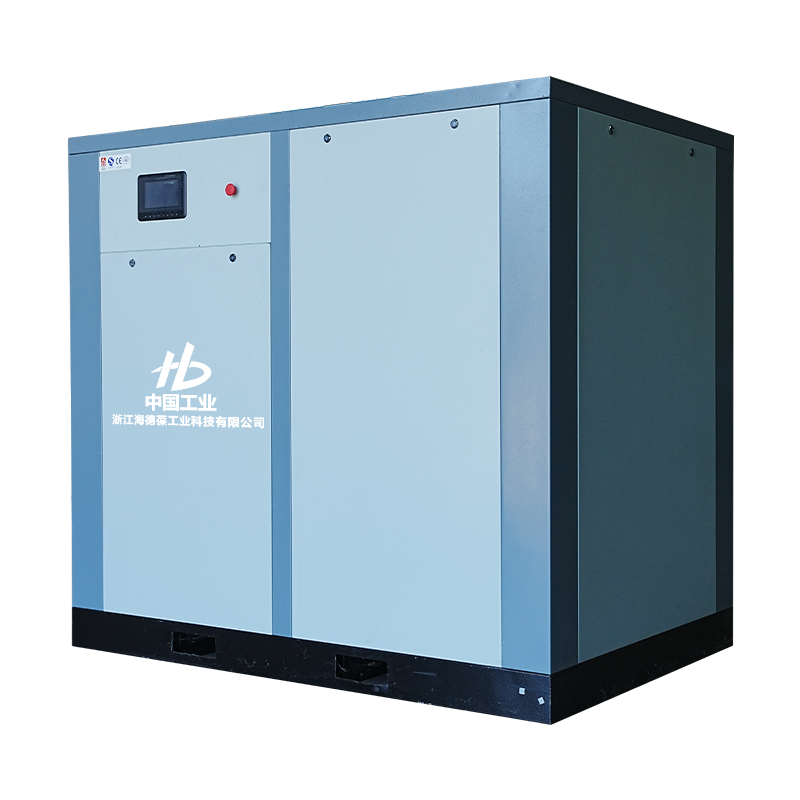
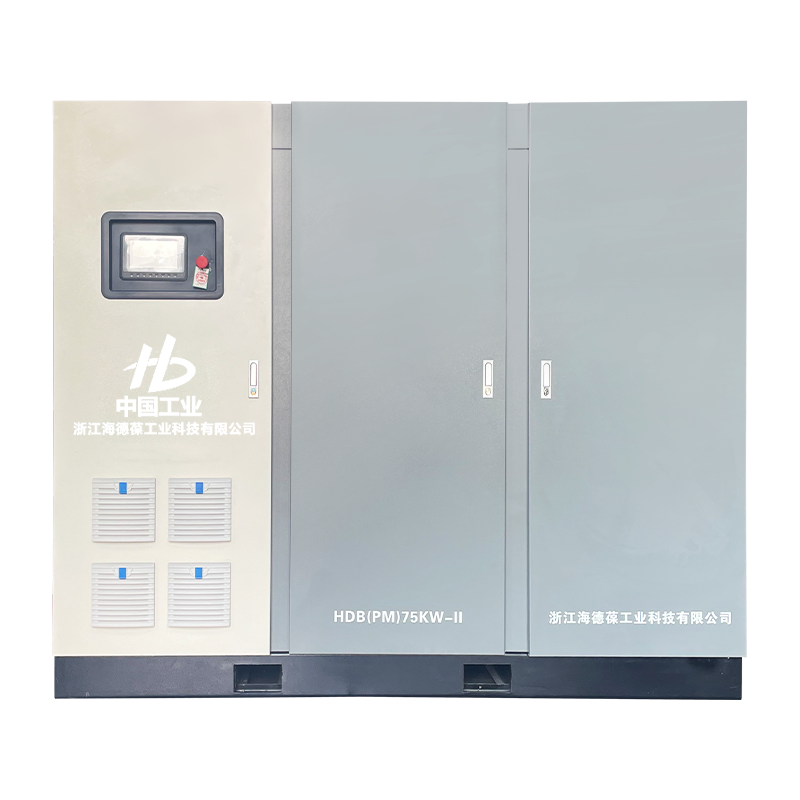
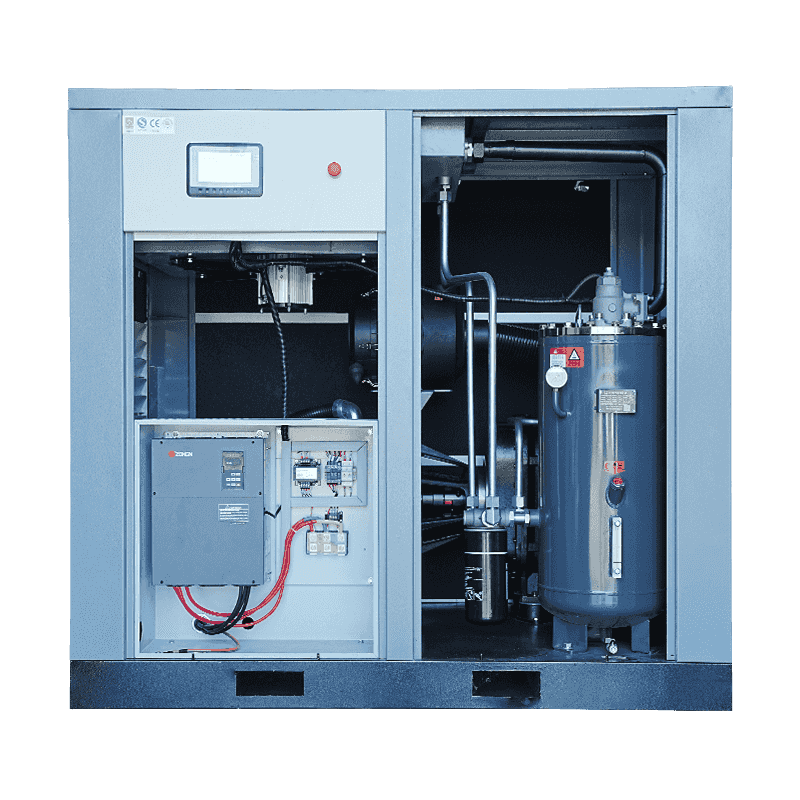 75 HP Single-Stage Twin-Screw Compressor for Plant NetworksLarger plants with central networks often select this 55 kW class when system pressure stays below 145 psig. Its finite element analysis design supports reliable high-load operation, making it a practical energy-saving option.View Product →
Single-stage screw compressors are common in machine shops, assembly lines, packaging operations, automotive workshops, woodworking, plastics processing, and general manufacturing. The common thread is that these facilities need a steady supply of 80–125 psig air, often for several shifts per day, and they value simplicity and uptime.
Also, verify the supply voltage and frequency. A machine designed for 50 Hz operation may need derating for 60 Hz operation, or vice versa. This is a common mistake in export markets and can affect flow, pressure, and motor life.
The decision between a single stage screw compressor and a two-stage machine is not about which one is better in theory. It is about which one matches your pressure, load factor, energy cost, and service capacity. In most standard industrial applications, a single-stage unit will do the job with lower first cost and simpler maintenance. Use the operating data from this guide, inspect the quality certification behind the machine, and contact the manufacturer to confirm after-sales support and spare parts availability.
Your email address will not be published. Required fields are marked *

A dedicated after-sales service department is established, consisting of a professional sales team and skilled technical engineers. They are committed to providing year-round support, traveling to customer locations to deliver prompt and high-quality service.

Tel:86-0570-7221666

E-mail:[email protected]

Add: No.2 Qiming Road, Zhejiang Longyou Economic Development Zone, Mohuan Township, Longyou County, Quzhou City, Zhejiang Province, China
Copyright © Zhejiang Haidebao Industrial Technology Co., Ltd.

Custom Industrial Screw Air Compressor Manufacturers