
 EN
EN  English
 Español
 عربى
عربى
Product Consultation
Your email address will not be published. Required fields are marked *

Air compressors are vital in many industrial and commercial applications, providing compressed air for machinery, pneumatic tools, and process operations. Among various types, micro-oil twin screw compressors and single-screw compressors are commonly used due to their reliability and performance characteristics. Understanding the efficiency differences between these two types of compressors requires examining their mechanical design, operational behavior, and energy consumption patterns. Efficiency in this context refers to how effectively the compressor converts mechanical input into usable compressed air while minimizing losses.
Micro-oil twin screw compressors feature a pair of intermeshing rotors that rotate in opposite directions within a precisely machined casing. The twin screw design enables continuous compression and smooth airflow, reducing pulsation and providing consistent delivery pressure. Single-screw compressors, in contrast, use a single main rotor with two idler rotors to compress air. The mechanical arrangement in single-screw compressors tends to create more internal leakage and uneven flow compared to twin screw designs. These structural differences directly affect operational efficiency and energy usage.
The twin screw design offers higher compression efficiency due to the continuous meshing of rotors, which minimizes internal slip and maintains tighter clearances. This results in more consistent air delivery and reduced energy losses during compression. Single-screw compressors, while simpler in design, may experience slightly higher volumetric losses due to gaps between the main rotor and idlers. Consequently, a micro-oil twin screw compressor generally provides higher volumetric and overall efficiency, particularly in applications requiring continuous or variable air demand.
Energy efficiency is a critical factor in compressor operation, especially in industrial settings with long duty cycles. Micro-oil twin screw compressors tend to operate more efficiently under variable loads because the twin rotor arrangement allows smoother adjustment of airflow and pressure without significant energy spikes. Single-screw compressors, due to their mechanical configuration, may consume more energy to maintain the same delivery pressure, particularly when operating at partial load or under fluctuating demand. Properly maintained twin screw compressors often show lower kWh consumption per cubic meter of compressed air delivered.
Both micro-oil twin screw and single-screw compressors utilize oil for sealing, lubrication, and cooling. In twin screw compressors, the micro-oil injection enhances rotor sealing, reduces friction, and maintains stable temperatures, which positively influences efficiency. Single-screw compressors also benefit from oil injection, but the complex rotor geometry may result in higher oil carryover and slightly increased internal friction, affecting overall energy efficiency. Maintaining optimal oil quality and levels is essential for both types to sustain reliable and efficient operation.
Efficient heat management contributes to compressor performance and longevity. Twin screw compressors produce smoother compression and less localized heating, which reduces energy loss associated with thermal expansion and cooling requirements. Single-screw compressors may develop higher temperature gradients in localized areas due to uneven compression, potentially reducing overall efficiency. Enhanced cooling systems and careful design of rotor cavities in twin screw compressors help maintain stable operating temperatures, further supporting energy-efficient operation.
Maintenance practices also impact the comparative efficiency of twin screw and single-screw compressors. Micro-oil twin screw compressors require precise alignment, rotor clearance management, and routine oil monitoring to maintain peak efficiency. Single-screw compressors, while generally simpler to maintain, may experience gradual efficiency losses if rotor wear or internal leakage is not addressed. Regular inspection and preventive maintenance are essential for both types to sustain consistent energy performance and air delivery quality.
| Factor | Micro-Oil Twin Screw Compressor | Single-Screw Compressor |
|---|---|---|
| Mechanical Design | Intermeshing twin rotors with continuous compression | Single main rotor with two idlers; intermittent compression |
| Compression Efficiency | Higher volumetric and overall efficiency due to reduced internal slip | Moderate efficiency; higher leakage potential |
| Energy Consumption | Lower energy per cubic meter of air, especially under variable loads | Higher energy use under partial or fluctuating loads |
| Heat Generation | Smoother compression reduces localized heating | Uneven compression may create higher temperature gradients |
| Oil Injection Impact | Improves sealing, reduces friction, stabilizes temperature | Benefits present but potential for higher oil carryover and friction |
| Maintenance Sensitivity | Requires precise rotor alignment and clearance control to maintain efficiency | Less complex maintenance; efficiency gradually affected by wear and leakage |
In applications where continuous or high-volume air supply is required, micro-oil twin screw compressors are generally preferred due to their stable output, consistent pressure, and lower energy consumption per unit of air. Single-screw compressors may be suitable for moderate duty cycles or intermittent applications but may show reduced efficiency under prolonged or variable demand. Decision-making regarding compressor selection should consider energy efficiency, load profile, and maintenance capabilities to optimize overall operational performance.
Energy-efficient operation not only reduces operational costs but also lowers environmental impact by minimizing electricity consumption and associated carbon emissions. Micro-oil twin screw compressors, due to their higher efficiency, can contribute to lower energy usage over time, translating to cost savings and reduced environmental footprint. Single-screw compressors may incur higher energy costs, particularly in continuous-duty applications, highlighting the importance of selecting the appropriate compressor type for specific operational conditions.
Overall, micro-oil twin screw compressors tend to offer higher energy efficiency and more consistent air delivery compared to single-screw compressors. Factors such as rotor design, oil injection, thermal management, and load adaptability contribute to this efficiency advantage. While single-screw compressors provide simpler mechanical designs and lower initial costs, their efficiency may be lower under variable or continuous load conditions. Understanding these differences enables manufacturers and facility operators to select the most appropriate compressor type based on energy consumption, operational requirements, and long-term performance goals.
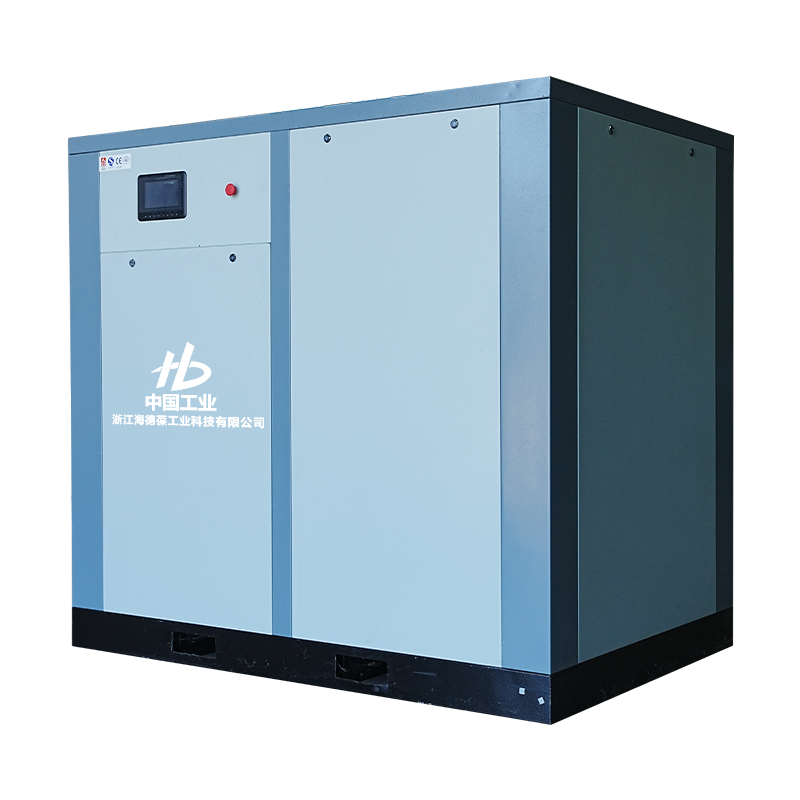
Does the micro-oil twin screw air compressor offer any practical advantages in terms of energy consumption control?

A Compressor That Tries to Keep Things Simple: Micro-Oil Twin Screw Single Stage Compressors
Your email address will not be published. Required fields are marked *

A dedicated after-sales service department is established, consisting of a professional sales team and skilled technical engineers. They are committed to providing year-round support, traveling to customer locations to deliver prompt and high-quality service.

Tel:86-0570-7221666

E-mail:[email protected]

Add: No.2 Qiming Road, Zhejiang Longyou Economic Development Zone, Mohuan Township, Longyou County, Quzhou City, Zhejiang Province, China
Copyright © Zhejiang Haidebao Industrial Technology Co., Ltd.

Custom Industrial Screw Air Compressor Manufacturers